MAM
Difference Between Term Insurance And Life Insurance

Insurance is an important tool to secure your loved ones’ future. Among the most common types are term insurance and life insurance. While both offer financial protection to your family, they work in different ways. Before you finalise what kind of coverage you want, it is important to understand the distinction between the two. Let’s explore what term and life insurance mean and the main differences between them.
What is Term Insurance?
Term insurance is a pure protection plan. It provides life cover for a specific period, i.e., around 10, 20, or 30 years. If the policyholder passes away during this term, the nominee receives the death benefit (sum assured). However, if the policyholder survives the term, there is no maturity or return benefit. Some plans may come with a return of premium feature, where you get the premiums refunded if you outlive the end of the term.
The main aim of a term plan is to offer high coverage at a low cost. It is considered the most affordable and straightforward type of insurance. You can use a term insurance premium calculator to check how much premium you need to pay based on your age, income, and sum assured. If you are looking for the best term insurance plan, opt for one that offers flexible tenure, claim settlement ease, and rider options.

What is Life Insurance?
Life insurance is a broader term that includes products offering a life cover, which may come with savings or investment components. These plans not only offer a death benefit to the nominee in case of the policyholder’s demise but also provide a maturity benefit if the policyholder survives the policy term (endowment plans or ULIPs) or payouts during the plan (money-back policies).
Examples of life insurance include endowment plans, whole life insurance, money-back plans, and Unit-linked Insurance Plans (ULIPs). These policies are suitable for individuals looking to save (or invest) over the long term while staying insured. Though the premiums are higher compared to term plans, they offer the advantage of building a financial corpus over time.
Key Points of Difference Between Term Insurance and Life Insurance
Are you wondering which to choose – the best term insurance plan or the best life insurance in the market? The following points of difference will help you choose between the two:
| Parameters | Term Insurance | Life Insurance |
| Purpose | It is purely for financial protection. | It combines protection with savings or investment. |
| Payouts | Only pays the death benefit if the policyholder passes away during the term. | Pays the death benefit and also offers maturity benefits if the policyholder survives. |
| Premium Cost | Affordable and offers higher coverage for lower premiums. | Comes with higher premiums due to the savings component. |
| Policy Term | Covers a specific period. | Can offer coverage for a fixed term or even lifetime coverage (whole life). |
| Returns | Offers no returns unless you opt for return-of-premium variants. | Offers returns through bonuses, savings accumulation, or market-linked gains. |
| Ideal For | Those who want life insurance coverage at an affordable rate. | Those looking to build savings with insurance over a longer period. |
The right choice between term insurance and life insurance will depend on your financial goals and current life stage. Term insurance is best for those looking for affordable protection while life insurance is ideal for those looking to combine security and long-term savings. Use tools like a term insurance premium calculator to compare and choose the best term insurance plan for your family’s future. Whatever you choose, ensuring financial safety for your loved ones is always a wise decision.







Brands
KKR sixes to power EV charger rollout under VIDA campaign
Cricket meets clean mobility as big hits spark India’s charging growth
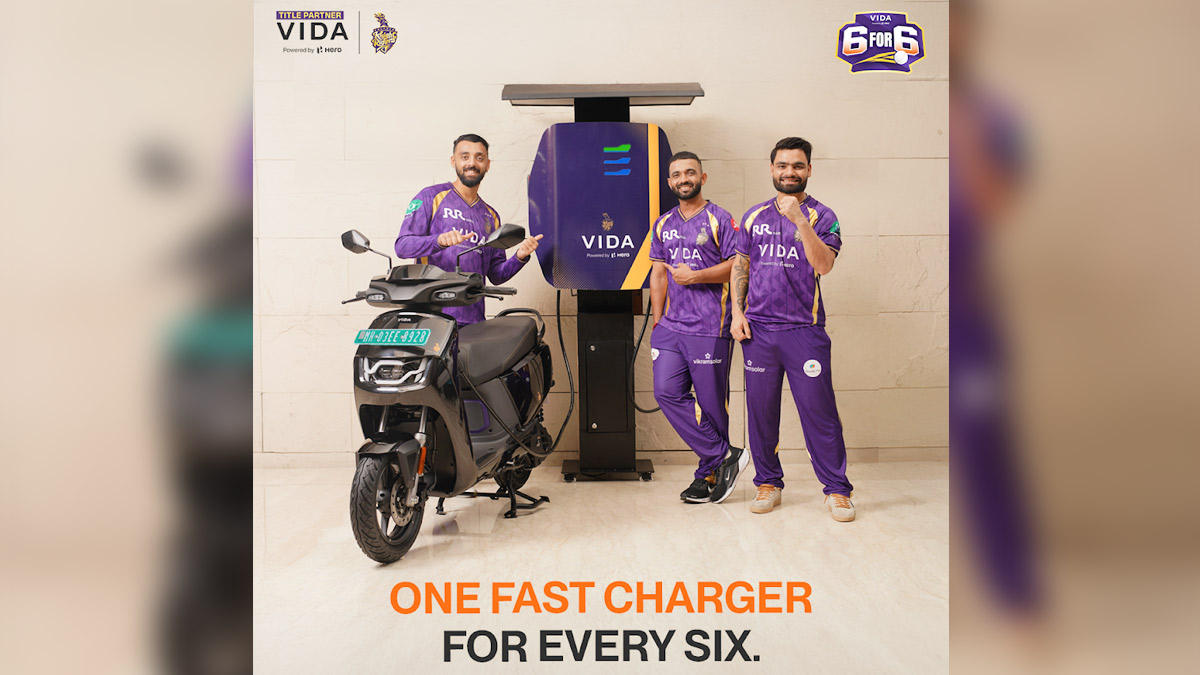
NEW DELHI: VIDA, the electric mobility arm of Hero MotoCorp, has teamed up with Kolkata Knight Riders to launch a campaign that turns cricketing flair into real-world impact.
Titled ‘6 for 6’, the initiative promises to install a 6kW fast EV charger for every six hit by KKR during the ongoing Indian Premier League season. The idea is simple but powerful, as each big hit on the field contributes directly to expanding India’s fast-charging infrastructure.
The campaign builds on VIDA’s growing network, which already spans over 5,300 fast-charging points across more than 430 cities. With EV adoption gaining pace, the brand is using cricket’s mass appeal to accelerate both awareness and infrastructure growth.
Explaining the thinking behind the move, Hero MotoCorp emerging mobility business unit chief business officer Kausalya Nandakumar said, “Cricket has an incredible ability to unite and inspire millions across the country. With the ‘6 for 6’ campaign, we are turning every big hit on the field into a step towards a cleaner and a more accessible mobility future.”
She added that VIDA’s expanding fast-charging network and removable battery technology are designed to make EV ownership more convenient and practical for everyday users.
From the franchise’s side, the campaign is also about giving on-field moments a larger purpose. Kolkata Knight Riders chief executive officer Venky Mysore said, “The ‘6 for 6’ campaign exemplifies the potential of sport as a platform for meaningful, real-world impact. By linking every six to the expansion of EV charging infrastructure, this partnership transforms fan excitement into tangible progress.”
As part of the rollout, VIDA has introduced co-branded charging stations in KKR’s signature colours, with a flagship installation unveiled alongside team players. The chargers are designed for quick top-ups, powering VIDA scooters from zero to 80 percent in about an hour, while also being positioned along key highways to support longer journeys.
The initiative also taps into VIDA’s removable battery system, which allows users to charge using standard household plug points, adding flexibility to the charging ecosystem.
By blending the thrill of cricket with the urgency of clean mobility, VIDA and KKR have found a neat way to make every six count twice, once on the scoreboard and again on India’s road to an electric future.








