MAM
Dentsu Webchutney becomes digital, mobile specialist at Goafest 2018

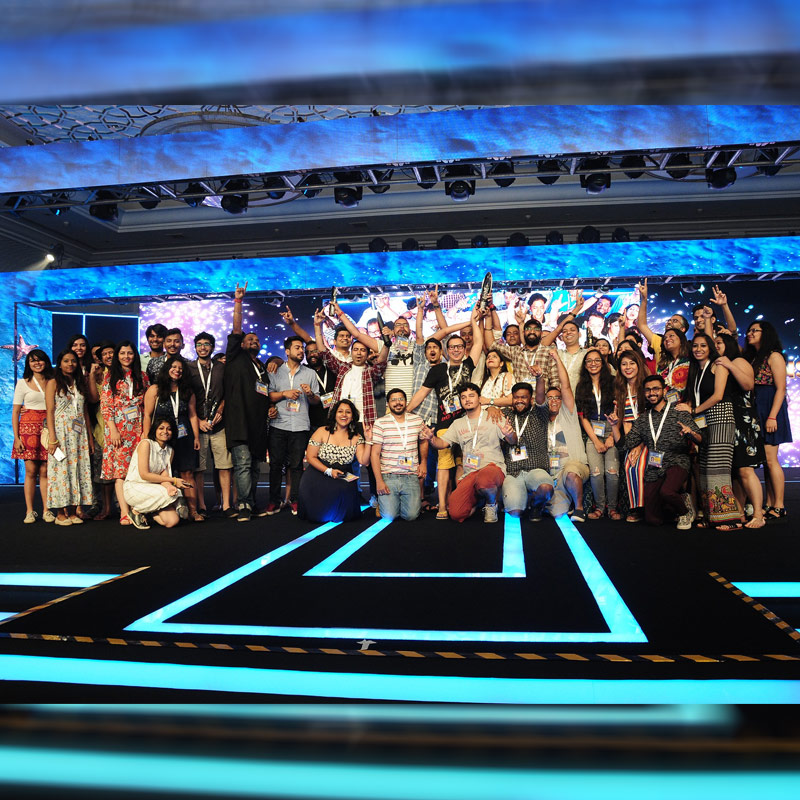
MUMBAI: With 23 metals in its kitty, Dentsu Webchutney, the digital agency from Dentsu Aegis Network (DAN), was named the ‘Digital and Mobile Specialist of the Year’ at the Abby Awards at Goafest 2018.
Isobar, meanwhile, brought home three awards while WATConsult won one. With wins across an entire gamut of categories—from direct and PR to digital and mobile —DAN India showed itself to be a force to be reckoned with.
Overall, DAN India won a significant tally of metals as a group at the Abbys at the Goafest this year. With four gold, 10 silver and 13 bronze, DAN has brought home 27 metals, demonstrating its prowess that surely matches up to the group’s business growth momentum.

DAN South Asia chairman and CEO Ashish Bhasin says, “Goafest 2018 was bigger and better in all aspects. The whole scale and quality presentation-whether that be the stage, the screen, the ambience of the event underwent a sea change and was one notch higher. This year, the quality of the entries was better too and it is overwhelming to witness such a massive win for our digital agencies on such a grand industry platform. My special congratulations to Sidharth Rao and the entire Dentsu Webchutney team for making us so proud.”
|
Agency |
Gold |
Silver |
Bronze |
Total |
|---|---|---|---|---|
|
Dentsu Webchutney |
4 |
9 |
10 |
23 |
|
Isobar |
1 |
2 |
3 |
|
|
WATConsult |
1 |
1 |




MAM
The Best AEO Agencies in the USA for 2026
We ranked the 10 best AEO agencies in the USA for B2B brands in 2026 based on our selected criteria like AI visibility and clients results.

10 Best Answer Engine Optimization (AEO) Agencies in the USA for 2026
AI is changing how buyers discover vendors. Nearly half of US B2B buyers now use platforms like ChatGPT and Perplexity before visiting a single website. If your brand isn’t showing up in those answers, you’re invisible before the conversation starts. This list covers the 10 best AEO agencies in the USA for 2026, ranked independently with no paid placements.
How We Evaluated the Best AEO Agencies in This List
Here is the list of criteria we looked at while evaluating the top AEO agencies in the list
- AI Visibility: How consistently the agency’s clients appear in AI-generated answers across ChatGPT, Perplexity, and Google AI Overviews.
- Client Results: Documented pipeline and revenue outcomes from verified case studies and published client testimonials.
- Technical Depth: The strength of each agency’s AEO methodology, including schema implementation, entity optimization, and LLM content structuring.
- Independent Reviews: Cross-referenced against third-party agency roundups including Discovered Labs and Minuttia’s 2026 rankings.
The 10 Best AEO Agencies in the USA for 2026
1. WebFX
WebFX is a full-service US digital marketing agency with nearly 30 years of history and over 500 employees. Their proprietary MarketingCloudFX technology powers reporting and analytics across AEO, SEO, paid advertising, and web design, making them the most process-stable and enterprise-ready agency on this list for large-scale US brands.
Expertise:
- Answer Engine Optimization
- Search Engine Optimization
- Paid Advertising
- Analytics & Reporting
2. PipeRocket Digital
PipeRocket Digital is a US-focusedB2B SaaS and tech agency that runs AEO, GEO, and SEO as one connected pipeline system. Every program is measured against demos, pipeline, and MRR and not traffic or impressions. They are the only full-spectrum agency on this list serving clients from pre-revenue startups through to enterprise scale.
Expertise:
- AEO & GEO Strategy
- Full-Funnel B2B Content
- Technical SEO
- Pipeline & MRR Attribution
3. First Page Sage
First Page Sage coined the term Generative Engine Optimization in 2024 and remains the most credentialed US agency in the space. Their authority content architecture builds deep thought leadership content engineered to earn citations in ChatGPT, Perplexity, and Google AI Overviews, tracked back to qualified leads and pipeline and not vanity traffic metrics.
Expertise:
- GEO & AEO Content Strategy
- Thought Leadership SEO
- AI Visibility Reporting
- Lead Generation
4. Single Grain
Single Grain, led by CEO Eric Siu, positions itself as a Search Everywhere Optimization agency, a framing built directly for multi-platform AI visibility. Their stack combines dedicated AEO, LLMO, paid advertising, CRO, and content marketing, making them one of the few US agencies where AEO is fully integrated into a performance marketing program.
Expertise:
- AEO & LLMO
- Paid Search & Social
- Content Marketing
- Conversion Rate Optimization
5. Omniscient Digital
Omniscient Digital is an Austin-based B2B SaaS-exclusive agency founded by alumni from HubSpot, Shopify, and Workato. Their proprietary Surround Sound SEO methodology builds content ecosystems that establish brand presence across every top resource in a given category. This is the exact citation pattern that trains LLMs to associate a brand with specific buyer problems.
Expertise:
- GEO Strategy
- Editorial Content & AEO
- Surround Sound SEO
- Link Building & Digital PR
6. RevenueZen
RevenueZen is a Portland-based full-funnel organic growth agency combining GEO content, SEO, and landing page optimization under one retainer. They stand out for publishing their pricing openly, a level of transparency rare in the US AEO market, and offering month-to-month contracts with no long-term commitment required for B2B teams.
Expertise:
- GEO & AEO Content
- Full-Funnel SEO
- Landing Page Optimization
- Pipeline Attribution
7. Siege Media
Siege Media is a San Diego-based content-driven agency that has evolved from linkable assets and manual outreach into a full organic growth agency offering AEO and LLMO. Their core view is that AI models determine trust through web-wide consensus, so they engineer content to earn citations from .edu, .gov, and authoritative publisher domains that LLMs weight most heavily.
Expertise:
- Content-Led SEO & AEO
- LLMO
- Link Building & Digital PR
- Content Design
8. NoGood
NoGood is the most cross-referenced US agency in both Minuttia and Discovered Labs’ 2026 AEO roundups. For each client they form a tailored growth squad from their team of 70+ experts, delivering AEO, SEO, paid, and CRO in one data-driven system with real-time AI citation monitoring across ChatGPT, Gemini, Claude, and Perplexity.
Expertise:
- AEO Strategy
- AI Citation Monitoring
- Paid Search & Social
- Analytics & Reporting
9. KlientBoost
KlientBoost addresses the conversion gap that AEO alone creates: AI visibility drives attention but only generates pipeline if the landing experience converts it. They combine PPC management, landing page optimization, and CRO in a unified system, and have one of the highest volumes of publicly listed client reviews of any US digital agency.
Expertise:
- PPC Management
- Landing Page Optimization
- Conversion Rate Optimization
- AEO Content
10. SimpleTiger
SimpleTiger has focused exclusively on SaaS since 2006, giving them the longest SaaS-only track record on this list. The CEO and COO consult directly with every client, making this a genuinely high-touch engagement at accessible pricing — rare for a specialized US agency. Their most notable result: a 597% increase in JotForm’s organic traffic in two months.
Expertise:
- SaaS SEO & AEO
- Keyword Research
- On-Page SEO
- Technical SEO
Conclusion
Finding the right AEO agency in 2026 comes down to where you are in your growth journey and what you need AI search to do for your pipeline. Whether you’re a pre-revenue founder or an enterprise scaling across multiple markets, the agencies on this list represent the strongest options available in the US today. Start by auditing your current AI visibility, then match your needs to the agency built for your stage.
FAQs
1. What is an AEO agency?
An AEO agency (Answer Engine Optimization agency) is a specialized digital marketing firm that helps brands structure their content and online presence so AI platforms like ChatGPT, Perplexity, and Google AI Overviews can surface them as a direct answer to user queries.
Unlike traditional SEO agencies focused on search engine rankings, AEO agencies optimize for retrieval by large language models, using semantic clarity, structured formatting, entity signals, and conversational content architecture to ensure a brand appears in AI-generated responses.
2. What is the difference between AEO and SEO?
SEO (Search Engine Optimization) focuses on getting your web pages to rank highly on Google and other search engines so users click through to your site. AEO (Answer Engine Optimization) goes a step further by structuring that same content so AI platforms can extract and cite it directly in AI-generated answers, without the user needing to click at all.
In practice, AEO and SEO are complementary rather than competing disciplines. AI platforms primarily cite pages that already rank well on Google, which means strong SEO forms the foundation that AEO builds on. Cutting one weakens the other.
3. What are the best AEO agencies in 2026?
Based on AI visibility performance, verified client results, and independent third-party rankings, the strongest AEO agencies in the USA for 2026 include WebFX for enterprise brands needing a proven full-service vendor, PipeRocket Digital for B2B SaaS and tech companies at any growth stage, First Page Sage for thought leadership-driven GEO, Single Grain for integrated multi-channel AI search growth, and Omniscient Digital for editorial-first category authority.
Other notable agencies on this list include RevenueZen, Siege Media, NoGood, KlientBoost, and SimpleTiger, each suited to different budget levels, ARR stages, and growth priorities.