MAM
Dentsu Aegis buys leading UI/UX design agency Fractal

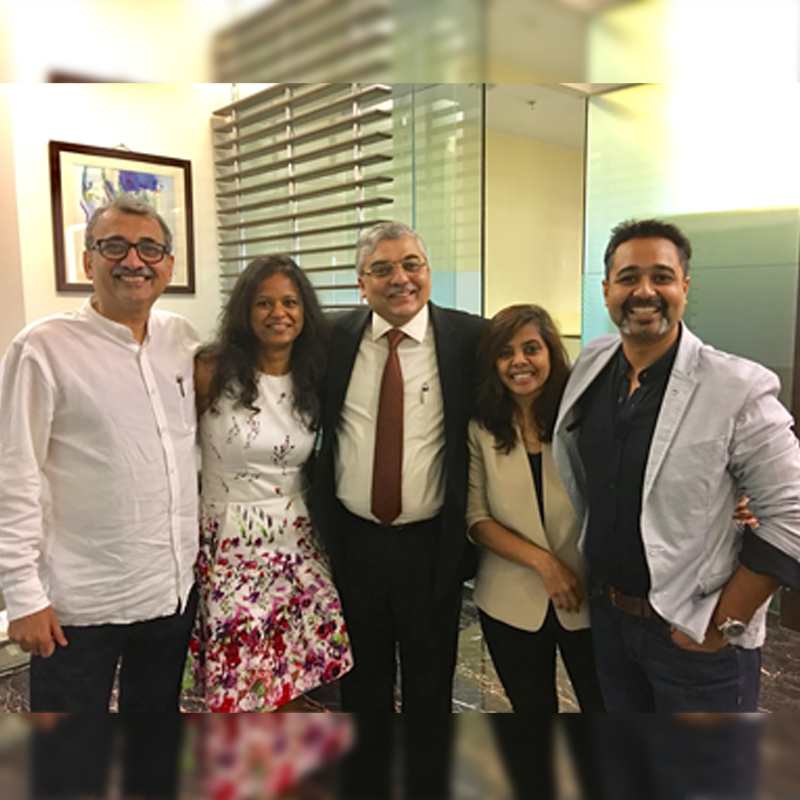
MUMBAI: Dentsu Aegis Network has announced the acquisition of Fractal Ink Design Studio Pvt Ltd, a leading experiential design studio in India, which will join the network’s award-winning digital agency – Isobar, and be rebranded as “Fractal Ink Design Studio – Linked By Isobar”.
The acquisition will add significant scale to the agency’s expertise in mobility and user experience, the most in-demand disciplines in the market. In addition, it will bring together a team of 1,000 digital experts, one of the largest in India, including the combined Isobar team and the existing network digital brands iProspect, WATConsult and Dentsu Webchutney.
Established in 2010, Fractal specialises in user experience and user interface design (UI/UX) and digital design strategy services for major clients including Aditya Birla Group, Raymond, Idea group, MetLife, Times Network and Axis Bank. It is amongst the top three largest design studios in India, boasting 65 digital experts operating from Mumbai and Bangalore.

Recently, Fractal was awarded the title of “India’s Best UI/UX Design Studio” by POOL, one of India’s leading design magazines. Its innovative design work has also been recognised by CII Awards, having won various awards in 2014 and 2015 including the Interaction Design – Consumer, Home and Personal in the Internet of Things category.
Fractal CEO, co-founder and creative director Tanay Kumar will join the Dentsu Aegis leadership team in India and will report to Dentsu Aegis Network South Asia chairman and CEO Ashish Bhasin. Co-founders Geeta Suthar, Hemant Suthar and Priyanka Agrawal will continue in their roles as part of the management team.
Bhasin said, “Fractal has an ideal combination of technology and creative services. Given the impending explosion of Internet of Things, wearables and mobile, this unique skill set will add to the group’s status of being digitally ahead in India.
“Today, Dentsu Aegis Network’s digital share in India is three times that of the market average and this will bring us closer to our mission of being the second largest agency group in India by end 2017, overturning – for the first time – the existing ranking which has historically been in place for over 80 years in India,” Bhasin added.
Isobar global CEO Jean Lin said, “To deliver immersive Brand Commerce experiences that close the gap between brand inspiration and transaction, we need passionate talent with strong in-market design capabilities. Fractal further strengthens our local mobile and experience design capability.”
Kumar said, “We have come a long way in the last six years in establishing ourselves as leaders in the digital design and strategy space. Dentsu Aegis Network’s shared vision towards the digital and connected world will allow us to tap into latest industry best practices and tools as well as scale our operations geographically.”



Brands
Maharashtra panel orders Lodha to refund Rs 5 crore to homebuyers
Consumer court flags unfair practices in long-running property dispute case
MUMBAI: In a sharp rebuke to one of India’s biggest real estate players, the Maharashtra State Consumer Disputes Redressal Commission has directed Macrotech Developers to refund nearly Rs 5 crore to a senior citizen couple, Uttam and Anindita Chatterjee. The ruling, delivered on March 13, 2026, calls out the developer for “deficiency in service” and “unfair trade practices”, bringing closure to a dispute that has stretched over a decade.
The case traces back to 2015, when the couple booked a 3-BHK flat at World Towers in Lower Parel for Rs 12.22 crore, with possession promised within a year. What followed was a series of changes that complicated matters. After deciding to exit the project, they were persuaded to shift to a 4-BHK in another development priced at Rs 8 crore, with delivery scheduled for 2018. However, within months, the price was allegedly increased to Rs 10 crore. After demonetisation reshaped the market, similar flats were reportedly being offered at lower prices, but the couple were not given the benefit.
Despite paying over Rs 2.83 crore, the couple neither received possession nor clarity. Instead, in 2018, the developer unilaterally cancelled the booking, retained part of the amount as earnest money, and argued that the buyers were investors rather than consumers. The commission rejected this claim, observing that casual references to “investment” do not take away consumer rights when the purchase intent is residential.
The bench also held that the developer could not penalise buyers for payment delays while failing to meet its own delivery commitments. It noted the lack of formal documentation for revised terms and termed the prolonged retention of funds without delivering a home as exploitative.
As part of its order, the commission directed the developer to refund Rs 2.83 crore paid by the couple, along with interest at 10 per cent per annum, amounting to around Rs 2.12 crore. In addition, Rs 1 lakh has been awarded for mental agony and Rs 50,000 towards litigation costs, taking the total payout to over Rs 5 crore. The developer has been asked to comply within two months.
For now, the ruling serves as a reminder that in real estate, shifting terms and delayed promises can carry a significant cost.







