MAM
Deepinder Goyal surrenders ESOPs worth up to Rs 1,000 crore after exiting Eternal

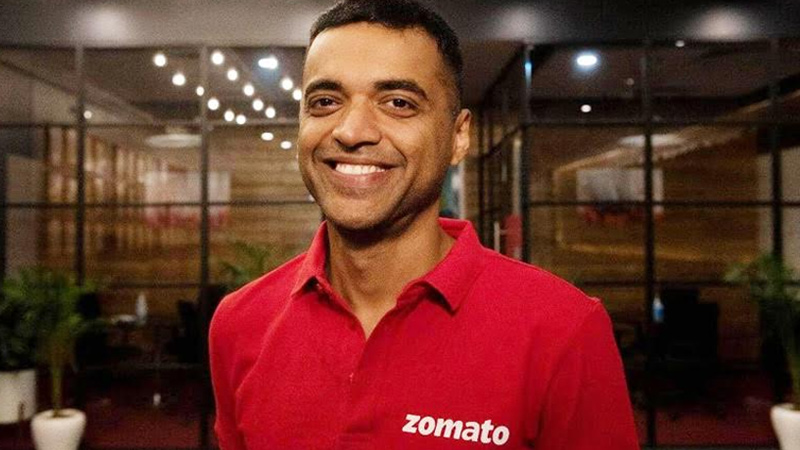
GURUGRAM: Deepinder Goyal is making an expensive exit. The Eternal founder announced on January 21st that he will step down as group chief executive, hand the reins to Albinder Dhindsa, and forfeit all his unvested employee stock options—surrendering a potentially massive payday to bet on riskier ventures outside the company.
The ESOP sacrifice is the real story. Rather than cashing in after eighteen years building Eternal from a menu-scanning startup into a multibillion-dollar behemoth, Goyal is reverting his unvested stock to the pool, surrendering employee stock options valued at approximately Rs 900–1,000 crore, according to disclosures made to shareholders and analysts. At Eternal’s prevailing share price of about Rs 278, the 3.3 crore shares are valued at roughly Rs 917 crore. The move creates “meaningful wealth-creation opportunities” for the next generation of leaders whilst strengthening retention, all without diluting existing shareholders. It’s a gesture that puts serious money where his mouth is.
His financial future remains “meaningfully tied” to Eternal through his existing holdings. Goyal continues to hold about a 4 per cent stake in Eternal, valued at approximately Rs 11,000 crore, keeping incentives aligned with long-term shareholder value. But the unvested options represent a sizeable chunk of potential wealth he’s choosing to leave on the table.

Why walk away now? Goyal has been drawn to ideas demanding “significantly higher-risk exploration and experimentation”, ventures that don’t belong inside a listed company. If they fitted Eternal’s strategic scope, he would have pursued them internally. They don’t. India’s regulatory environment for public company chiefs demands singular focus, he wrote to shareholders, even though he believes he has the bandwidth to juggle both worlds.
The transition, pending shareholder approval, shifts Goyal to vice chairman whilst Dhindsa takes charge of day-to-day execution, operating priorities and business decisions. Dhindsa steered Blinkit from acquisition to break-even, building the team, culture and supply chain. Goyal credits him with “the DNA of a battle-hardened founder” and execution ability that “far exceeds mine”. Blinkit remains Eternal’s fastest growth opportunity and Dhindsa’s top priority.
Nearly everything else stays intact. Goyal, Dhindsa and co-founder Akshant Goyal will work as closely as ever. Business unit chiefs retain full autonomy. Goyal remains involved in long-term strategy, culture, leadership development, ethics and governance—areas where he has been concentrating lately anyway.
The ambitions haven’t dimmed. Goyal still wants Eternal to become India’s most valuable company, serve a billion customers and provide livelihoods for millions. Eighteen years ago, the notion that a menu-scanning company could be worth tens of billions of dollars and serve millions of families daily would have seemed absurd. “We helped prove it was possible,” he wrote.
He believes the transition reinforces institutional strength rather than diluting momentum. Eternal gets sharper execution and a leadership pipeline flush with stock options. He gets freedom to chase moonshots. “This is a change in title, not in commitment towards outcomes,” Goyal wrote. “Eternal remains my life’s work.”
Whether surrendering unvested stock proves shrewd or costly depends entirely on what Goyal builds next—and whether Eternal keeps soaring without him at the controls.







Brands
Samsung certifies 1,000 Maharashtra students in AI and coding
The South Korean electronics giant marks its first large-scale skilling push in the state, with women making up nearly half the national programme’s enrolment
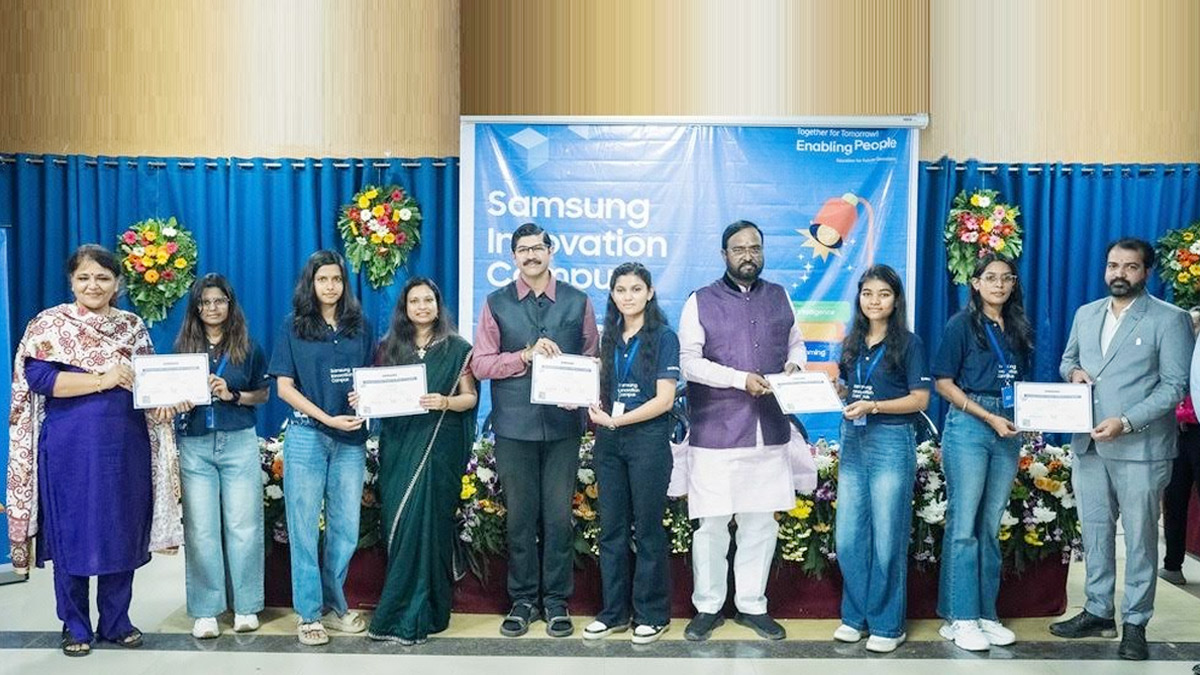
PUNE: Samsung has put 1,000 students in Maharashtra through a certified training programme in artificial intelligence and coding, the largest such drive the South Korean electronics company has run in the state and a signal that corporate India’s skilling ambitions are moving well beyond the boardroom brochure.
The certifications were awarded under Samsung Innovation Campus (SIC), the company’s flagship corporate social responsibility programme, which launched in India in 2022 with the stated aim of democratising access to future-technology education. The 1,000 graduates were drawn from four institutions: 127 from Savitribai Phule Pune University, 373 from Pimpri Chinchwad University, 250 from D.Y. Patil University’s Ramrao Adik Institute of Technology and 250 from Anjuman-I-Islam’s Kalsekar Technical Campus. All completed training in either AI or coding and programming, the two disciplines Samsung has identified as the critical pillars of the digital economy.
The programme does not stop at technical training. Soft-skills development and career-readiness modules are baked into the curriculum, a deliberate attempt to close the gap between what universities teach and what employers actually want.
“India’s digital growth story will ultimately be shaped by the quality of its talent pipeline,” said Shubham Mukherjee, head of CSR and corporate communications at Samsung Southwest Asia. “As technologies like AI move from the periphery to the core of industries, skilling must evolve from basic training to building real-world capability. This milestone in Maharashtra reflects how industry and academia can come together to create a future-ready workforce that is both globally competitive and locally relevant.”
The Maharashtra drive sits within a rapidly scaling national effort. Samsung Innovation Campus trained 20,000 young people across India in 2025, hitting its stated target for the year. Women account for 48 per cent of national enrolments, a figure the company cites as evidence of its push for an inclusive technology ecosystem. The programme is implemented in partnership with the Electronics Sector Skills Council of India and the Telecom Sector Skill Council.
Samsung, which is marking 30 years in India this year, runs SIC alongside two other initiatives, Samsung Solve for Tomorrow and Samsung DOST, as part of a broader effort to build what it calls a generation of innovators with both the technical depth and the problem-solving mindset to thrive in a fast-moving digital world.
A thousand certified students is a tidy headline. Whether they find jobs that match their new skills is the harder question, and the one that will ultimately determine whether corporate skilling programmes like this one are genuine pipelines or well-photographed gestures.






