MAM
Day 3 of TDSAT ad cap hearings

MUMBAI: The queue of channels waiting their turn to present their individual cases on the so-called crippling TRAI 12 minute ad cap to the Telecom Disputes Settlement Appellate Tribunal (TDSAT) has not really got any shorter even as the hearings got into the third day. The reason: the News Broadcasters Association’s (NBA) lawyers continued with their arguments in the presence of TDSAT’s Justice Aftab Alam and member Kuldeep Singh.
And with their presentation referencing statutory laws as relating to the Cable Television Networks (Regulation) Act and the TRAI Act 1997 completed they have now progressed to bringing in references about media freedom as written in the Article 19A of the Indian Constitution.
The NBA counsel referred to the ‘Sakal Papers And Others vs The Union Of India on 25 September, 1961’ case. The Supreme Court had then affirmed that a newspaper should have the liberty to carry as many advertisements as it would want to because ‘curtailment of advertising is a curtailment of free speech as guaranteed by the Constitution of India.
The declaration of this case reads: ‘the state could not make a law which directly restricted one guaranteed freedom for securing the better enjoyment of another freedom. Freedom of speech could not be restricted for the purpose of regulating the commercial aspect of the activities of newspapers.’

According to the NBA, since such a ruling exists for print newspapers, it should also apply to the broadcast medium. However, Alam tended to disagree and opined that that the electronic medium is different from print.
The NBA also contended that broadcasters don’t actually get a ‘license’ from the central government under The Telegraph Act 1885 but rather a ‘registration’ under the uplinking/downlinking policy guidelines. However, the justice doubted that the broadcasters don’t get a licence, and he also felt that broadcasters don’t come under the cable TV act as the NBA is claiming.
During the 12 November hearing, the NBA had argued that TRAI had not done the laying requirements as per section 37 of the TRAI Act which it should have in order to carry out enforcement of ad cap and prosecution of erring channels.
The hearings are slated to continue tomorrow morning with the NBA and its lawyers presenting their arguments. For the other channels, the wait continues.
MUMBAI: The queue of channels waiting their turn to present their individual cases on the so-called crippling TRAI 12 minute ad cap to the Telecom Disputes Settlement Appellate Tribunal (TDSAT) has not really got any shorter even as the hearings got into the third day. The reason: the News Broadcasters Association’s (NBA) lawyers continued with their arguments in the presence of TDSAT’s Justice Aftab Alam and member Kuldeep Singh.
And with their presentation referencing statutory laws as relating to the Cable Television Networks (Regulation) Act and the TRAI Act 1997 completed they have now progressed to bringing in references about media freedom as written in the Article 19A of the Indian Constitution.
The NBA counsel referred to the ‘Sakal Papers And Others vs The Union Of India on 25 September, 1961’ case. The Supreme Court had then affirmed that a newspaper should have the liberty to carry as many advertisements as it would want to because ‘curtailment of advertising is a curtailment of free speech as guaranteed by the Constitution of India.
The declaration of this case reads: ‘the state could not make a law which directly restricted one guaranteed freedom for securing the better enjoyment of another freedom. Freedom of speech could not be restricted for the purpose of regulating the commercial aspect of the activities of newspapers.’
According to the NBA, since such a ruling exists for print newspapers, it should also apply to the broadcast medium. However, Alam tended to disagree and opined that that the electronic medium is different from print.
The NBA also contended that broadcasters don’t actually get a ‘license’ from the central government under The Telegraph Act 1885 but rather a ‘registration’ under the uplinking/downlinking policy guidelines. However, the justice doubted that the broadcasters don’t get a licence, and he also felt that broadcasters don’t come under the cable TV act as the NBA is claiming.
During the 12 November hearing, the NBA had argued that TRAI had not done the laying requirements as per section 37 of the TRAI Act which it should have in order to carry out enforcement of ad cap and prosecution of erring channels.
The hearings are slated to continue tomorrow morning with the NBA and its lawyers presenting their arguments. For the other channels, the wait continues.






Brands
Emami names Dhruv Aggarwal as chief growth officer
Former Bain partner steps in as FMCG firm sharpens growth playbook
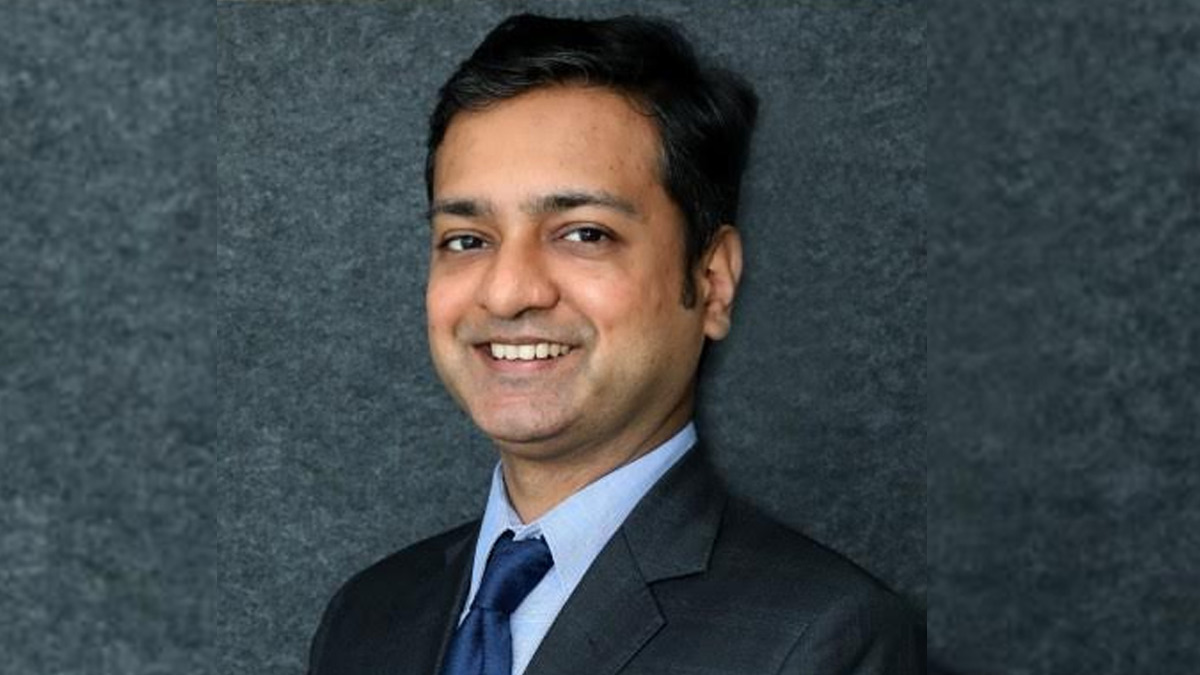
MUMBAI: Emami Limited has appointed Dhruv Aggarwal as its chief growth officer, effective 25 March 2026, following the resignation of Giriraj Bagri.
Aggarwal joins the FMCG major from Bain & Company, where he most recently served as partner. With over two decades of experience across consulting and strategy, he brings a global perspective shaped by work across India, the US, the UK and Germany.
During his tenure at Bain, Aggarwal advised consumer, retail and media companies on large-scale transformations, business turnarounds and growth strategies. He was also closely involved with India’s startup ecosystem, guiding early-stage ventures on scaling and digital expansion, while supporting private equity and venture capital firms on investment decisions.
His earlier stints include a brief role at Barclays Capital and operational experience at Jindal Power, giving him a mix of financial and industry exposure.
Academically, Aggarwal holds an MBA from Indian Institute of Management Bangalore and has also been associated with University of Illinois Urbana-Champaign as a PhD candidate and teaching assistant.
The appointment comes at a time when Emami Limited is looking to sharpen its growth strategy in a competitive consumer market. With a seasoned strategist now at the helm of growth, the company appears set to double down on transformation and expansion in the months ahead.








