Brands
Dabur ad spends subdued in fiscal 2017

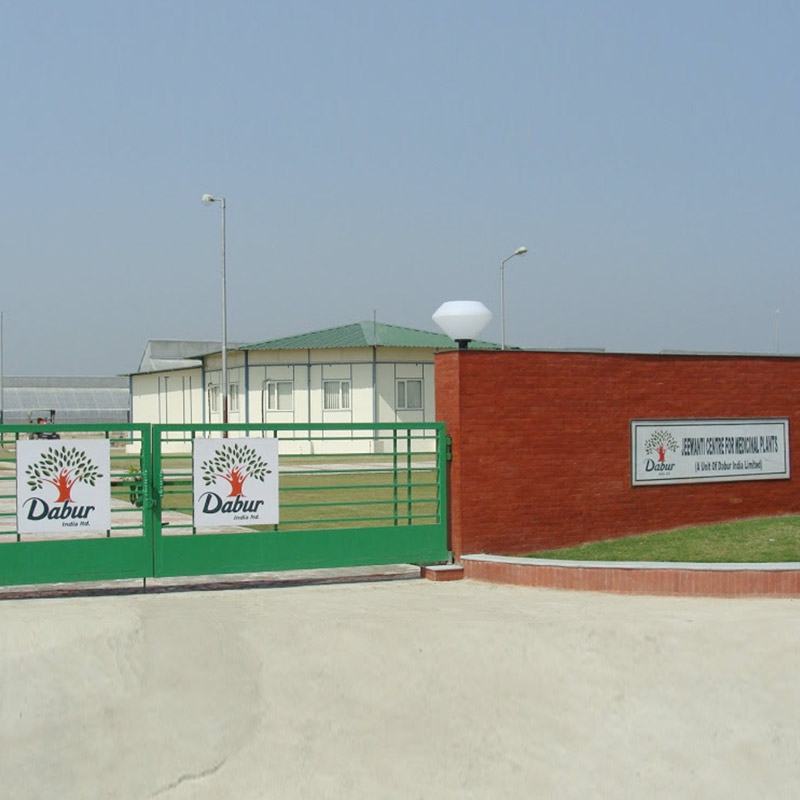
BENGALURU: Indian FMCG major Dabur India Limited (Dabur) had opened this fiscal with the lowest advertising and publicity expenses (ASP) in the first quarter (Q1-17, quarter ended 30 June 2016, previous quarter) in four years. The trend continued in the current quarter (Q2-17, quarter ended 30 September 2016, current quarter) with the company spending the least amount towards ASP during a 16-quarter period starting Q3-14 as Indiantelevision.com has been tracking the trend.
Dabur spent 9.8 percent less year on year (y-o-y) in the current quarter, and 24 per cent less quarter-over-quarter (q-o-q) towards ASP. ASP in Q2-17 was Rs 149.41 crore (7.5 percent of Total Income from Operations or TIO) as compared to Rs 165.72 crore (8.5 percent of TIO) in Q2-16 and Rs 196.52 crore in the immediate trailing quarter.
In Q1-14, Q1-15, Q1-16, the company began the year with ASP of Rs 254.22 crore (15.4 percent of TIO), Rs 286.27 crore (15.3 percent of TIO) and Rs 330.61 crore (16 percent of TIO), respectively.

About 63 percent of Dabur’s revenues are from domestic FMCG sales, while 34 percent are international sales. Dabur’s domestic FMCG business reported growth of 2.4 percent driven by volume growth of 4.5 percent. International business declined by 2.3 percent basis IND AS (Indian Accounting System).
“The overall business environment continued to be challenging with consumer demand remaining slack in India, while overseas geographies like the Middle East and Africa hit by worsening geopolitical situation. We continue to invest behind our brands and are confident of our ability to report profitable growth, going forward. Even in a tough environment, we have navigated the external business environment well and our domestic FMCG business ended Q2 of 2016-17 with a volume growth of 4.5 percent,” Dabur CEO Sunil Duggal said.
“The medium to long-term prospects, particularly for India, remain robust and we are optimistic that domestic consumer demand would gain pace in months to come, riding on good Monsoons and a slew of government initiatives announced recently. We are confident that our focused strategy and positioning as the ‘Science-based Ayurveda’ specialist will pave the way for future growth. We have lined up a flurry of many exciting initiatives and are committed to aggressively launch new products leveraging on our Ayurvedic heritage and cutting edge science,” Duggal added.

Trends
The company’s ASP in Q3-2016 at Rs 350.01 crore (16.5 per cent of TIO) was the highest in terms of actual rupee spends as well as in terms of percentage of TIO during the sixteen quarter period under consideration in this report. As mentioned above, in the previous fiscal, in Q1-2016, the company had spent Rs 330.61 crore (16 percent of TIO) towards ASP, which is the second highest ASP in absolute rupees and in terms of percentage of TIO during the period under consideration.
Also, over the 16 quarter period under consideration, Dabur’s ASP in absolute rupees and ASP in terms of percentage of TIO both show a linear declining trend. Please refer to Fig1 above which indicates that ASP in terms of percentage of TIO follows a linearly declining zigzag line, with peaks in Q1 (school holiday period) and Q3 (festival season in the country) and valleys in Q2 and Q4 of a financial year. This fiscal, for a change, Q1-7 ASP was lower than spends in Q4-16.
The company says in its earnings release that it braved strong headwinds in the form of a persistent listless demand environment in key consumer products categories and geopolitical disturbances in the overseas markets during Q2-17.It says that its continued focus on leveraging the science-based Ayurveda heritage, coupled with commodity tailwinds, helped Dabur end Q2-17 with a 1 percent growth in consolidated revenue at Rs 1,975.7 crore as compared to consolidated revenue for Q2-16 which stood at Rs 1,955.3 crore. Consolidated net Profit for the Q2-17 marked a 5 percent growth at Rs 357.3 crore, up from Rs 340.2 crore during corresponding year ago quarter.
Dabur’s products
Among the products that Dabur has include health supplements like Chyawanprash, Ratnaprash, Honey, Glucose; digestives like Hamjola – Hajmola Chuzkara and Natkhat Amrud, Pudin Hara Fizz; OTC and Ethicals such as Lal Tail, Honitus Syrup; Haircare products like Vatika, Vatika Brave and Beautiful digital, Anmol Jasmine Marks; Toothpaste brands like Dabur Red, Babool and Meswak; skincare products like Fem Natural Fairness, Gold Bleach, Gulabari; Homecare brands such as Odomos, Odonil and Sanifresh; Food brands such as Real and Real Active.
Notes:
(1.0) Dabur has started reporting its numbers as per the Indian Accounting System (IND AS) since Q1-17 and hence the numbers in the charts may not be accurate – this report and the charts are meant as an approximate representation of the company’s numbers.
(1.1) All numbers are consolidated unless stated above.
(2.0) The unit of currency in this report is the Indian rupee – Rs (also conventionally represented by INR). The Indian numbering system or the Vedic numbering system has been used to denote money values. The basic conversion to the international norm would be:
(a) 100,00,000 = 100 lakh = 10,000,000 = 10 million = 1 crore.
(b) 10,000 lakh = 100 crore = 1 arab = 1 billion.

Brands
Hiili names Sanjay Hemady as country manager India
Media veteran to drive digital decarbonisation push
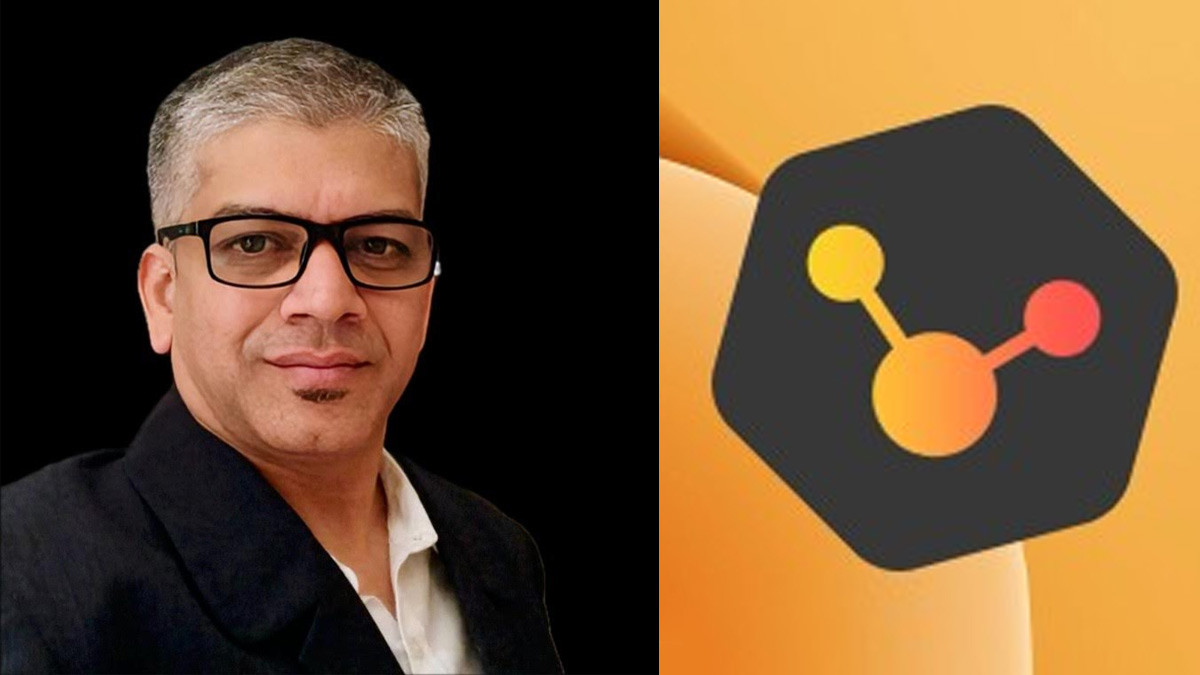
MUMBAI: Climate tech firm Hiili has announced its entry into India, appointing industry veteran Sanjay Hemady as India country manager to steer its growth in one of the world’s fastest-expanding digital markets.
Hemady, a familiar name across India’s media and consulting circles, will lead Hiili’s India operations from Mumbai. His mandate is clear: help Indian companies measure, manage and reduce the carbon emissions generated by their digital services.
Hiili offers a scientifically validated platform, certified by the UC3M-Santander Big Data Institute, that enables businesses to improve the efficiency of their digital infrastructure while cutting emissions. As organisations race to meet ESG targets, the company positions itself as a practical bridge between climate pledges and measurable action.
“I’m happy to share that I’m starting a new position as country manager, India at Hiili,” Hemady said in a LinkedIn post, adding that the company aims to move beyond broad sustainability promises towards precise, science-based decarbonisation.
Hemady brings more than three decades of experience spanning print, television, radio and digital media. He has previously served as chief executive officer at HIT 95 FM, assistant general manager at CNBC TV18, and held leadership roles at MTV India and The Indian Express, among others. Most recently, he worked as an independent business consultant advising firms across media and technology.
With India’s digital economy expanding at pace, the environmental cost of data, streaming and online services is climbing quietly in the background. Hiili’s bet is that carbon efficiency will soon sit alongside cost efficiency in boardroom conversations.
For Hemady, the move marks a shift from selling airtime and ad inventory to championing climate accountability. If successful, Hiili’s India play could make digital growth not just faster, but cleaner too.