MAM
CoVid-2019: Modi and India fight back


It was hardly a month ago that prime minister Narendra Modi’s image appeared to be taking a beating what with the nation getting divided between those pro-NRC and pro-CAA and those against the two proposed measures to curb illegal immigrants. Marches, followed by clashes, the anger that those participating in them demonstrated, and the government’s I-can’t-hear-you-response to the protests made the headlines. And a tirade of criticism against Modi and his men rained from all sides.
Clearly, the government led by Modi appeared to be stumbling – alienating a sizable portion of the population, especially the younger, and possibly the pseudo secular lot. The economy was not doing well either, with companies unable to pay back loans, banks getting sick with undigestable assets, and overall economic growth slowing down. The sentiment was downright negative.
Cut to 20 March 2020. The world is grappling with its worst natural disaster in recent memory. The CoVi-2 virus is on the rampage in nation after nation, sending mostly the elderly to an early death. Leaders the world over seem to be at a loose end to halt the onward march of the dastardly microbe. Predictions and fears are that millions are going to be slain by SARS CoV-2, similar to that carnage that took place in 1918 when the dreaded flu hit the world.

However, one leader who has emerged squeakingly clean from the crisis is but of course Modi. His deft handling of the CoVid 2019 doom has won him plaudits the world over. He has been relatively quick – at least it appeared so at the time of writing – by sealing off the nation from outside travellers, then rallying all the chief ministers of the vulnerable states to enforce lockdowns at state and even district-levels in some of them. He had the editorial heads of the leading news services on a video conference where he and his bunch of hardworking men briefed them on the importance of right positive communication around SARS CoV-2 to deal with the situation. This would help stem the rot of panic and rumour-mongering that could lead to further disaster.
His coup d’etat was when he got a billion Indians to heed his call and come out of their self-imposed quarantine and ring bells, sound conches, jangle their steel utensils, play drums, clap from their balconies for around 10 minutes as a form of gratitude and salutation for the men and women in white in hospitals who are risking their lives while saving the lives of those afflicted with the demon virus. Of course, there were some rogues who misunderstood his call to action. Instead of social distancing themselves, they came out in large groups, stuck to each other as they marched out on the streets in their own version of thanking doctors and all other service providers for doing their jobs so that they could stay alive.
Many marketing mavens are calling this a marketing coup of sorts. The images and videos that were flashed across the world showed a united India, a society, culture, a civilisation which is resilient and has lasted thousands of years of various invasions. The narrative was of ONE India; the earlier trope of an India, which is Hindu-Muslim polarised, has been pushed into the background. Hopefully to be forgotten – the common modern young Indian millennial cares not for caste or religion; it is the very rich or those living on the margins of poverty who get swayed by political vitriol.
Even as Modi’s image has received a boost as a decisive leader, he and other Indian leaders have many challenges ahead. SARS-Cov-2 is a silent spreader; it moves stealthily and fast. Those afflicted feel nothing, until it takes over the cellular infrastructure of the human body, blocks the respiratory pathways, and by then it is too late, especially for the infirm among the elderly.
With that background, team Modi has to maintain the isolation momentum amongst India’s billion plus population, many of whom may be thinking a big fuss is being made about nothing. This should be targeted not just at the general public but even at those occupying seats of power in local governments. Hence, hammering across messaging about the CoVid-2019 precautions that need to be taken should continue with even greater gusto; and it should not stop. And this should continue through television, social media, billboards, bus backs, SMSes, radio, and what have you. Local administrations and police need to ensure that curfews and home quarantines are being strictly adhered to.
Modi needs to be seen at the forefront of this man vs microbe battle. He needs to make regular appearances, portraying his confidence in the nation’s ability to fight back against the invader.
Of course, the infrastructure should also be put in place to test and treat those whom the SARS-CoV-2 virus has afflicted. Industrialists are stepping forward to do their mite: Anand Mahindra has said he would re-fit his factories to make ventilators as well as make his holiday resorts available to house the sick. Mukesh Ambani has quickly built a 100-bed facility with all the gizmos to treat those with Covid-2019. Many more surely will come forward, and they should. Vaccines are some time away. In the meanwhile, attempts will be made with alternative local treatments; India has so many schools of medicine. Some will work; some will be utter disasters.
As Modi, said, the CoVid-2019 fight has just begun.
Late in the evening of 24 March, he came on national television to declare a national lockdown of 21 days, something he urged Indians to strictly follow. "Coronavirus is a killer which spreads fast. We have to take these painful steps," he said emphatically. "Failing which we will go back 21 years."
(updated at 21:00 hrs on 24 March 2020)



Brands
Boeing appoints Barun as head of FP&A for global engineering function
Seasoned finance leader to steer budgets and strategy across global centres
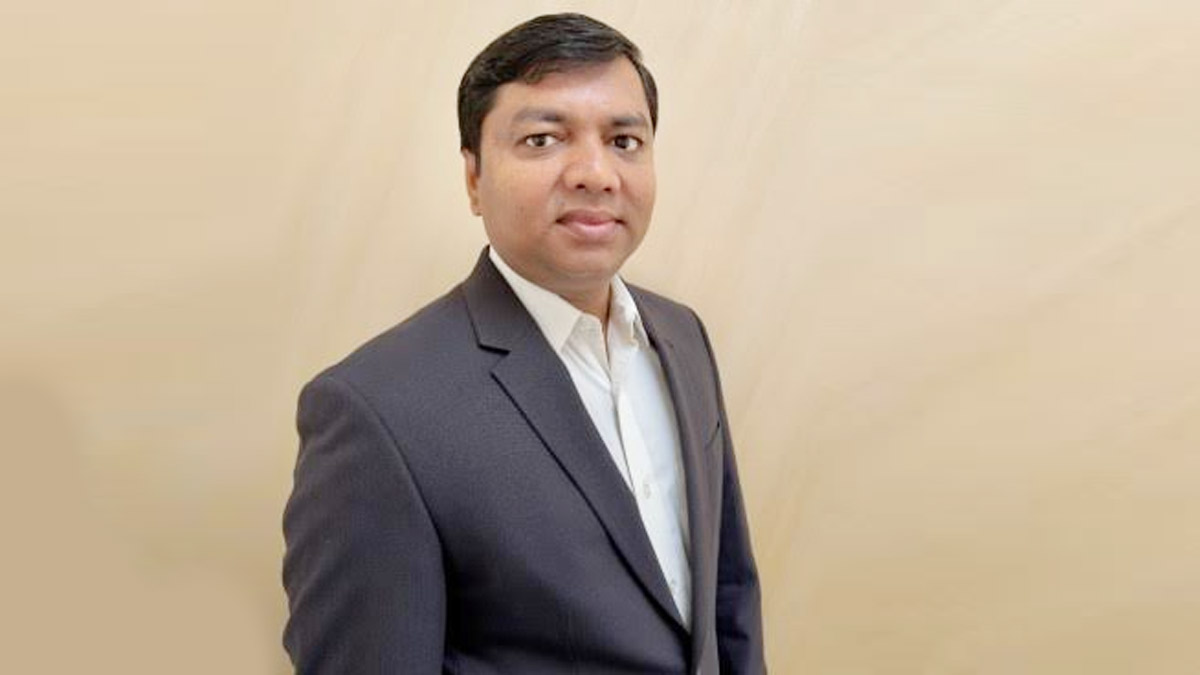
BENGALURU: Boeing’s finance cockpit has a new pilot, and he is no stranger to turbulence or transformation. Boeing has appointed Barun as head of FP&A for global engineering, placing him at the centre of financial strategy for its worldwide engineering and technology operations.
Based in Bengaluru, Barun steps into a role that is as expansive as it is critical. He will serve as the primary finance lead for Boeing’s Engineering and Technology Centers globally, working closely with executive leadership to shape financial decisions, manage complex budgets, and design scalable finance processes that support the company’s growing engineering footprint.
In a note announcing his move Barun said, “I’m excited to share that I’ve joined Boeing Global Engineering. This opportunity is incredibly meaningful to me not just from a professional standpoint, but also for what Boeing represents globally.” He added that he looks forward to contributing to an organisation that continues to shape the future of aerospace and innovation.
Barun’s mandate spans strategic financial leadership, operational oversight, and stakeholder engagement. From directing large-scale budgets and schedules to influencing long-term organisational goals, the role blends financial discipline with business foresight. He will also lead cross-functional teams and partner with finance colleagues worldwide to support engineering programmes across geographies, including India.
The appointment caps a long stint at Juniper Networks, where Barun spent over a decade, most recently as finance senior manager. There, he led FP&A for global product business units and G&A functions, driving budgeting, forecasting, and long-range planning. He also played a key role in enterprise-wide transformation, including spearheading an Oracle to SAP ERP migration and building advanced analytics capabilities using tools such as Tableau and SAP Analytics Cloud.
His earlier career includes finance leadership roles at Sony India Software Centre, Cognizant Technology Solutions, and Mphasis, where he focused on financial planning, governance frameworks, and operational efficiency across global delivery centres.
A chartered accountant from the Institute of Chartered Accountants of India, Barun brings nearly two decades of experience across financial planning, digital transformation, and analytics-led decision making.
His appointment comes at a time when global engineering operations are becoming increasingly complex and distributed, requiring sharper financial oversight and agile planning. With Barun at the helm of FP&A for engineering, Boeing appears to be tightening its financial playbook as it looks to scale innovation with discipline.






