MAM
Cornitos unveils Crusties featuring Corny the Chimp

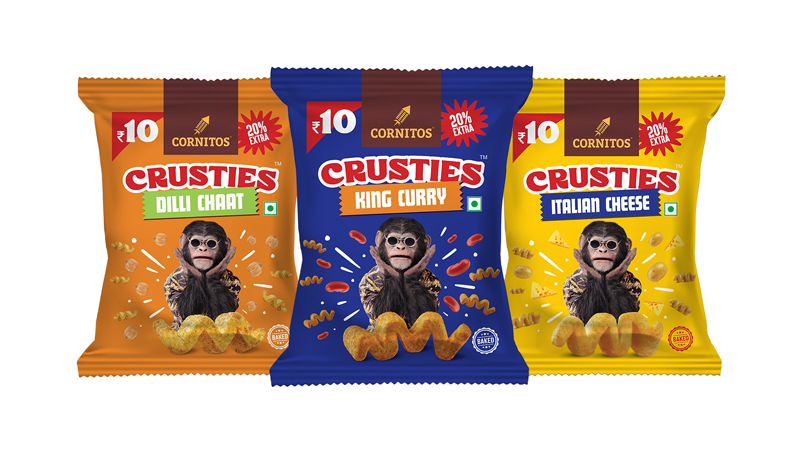
Mumbai: Step into a world of snacking sophistication with Cornitos – the beloved ‘Made in India’ snack brand that has just unveiled a captivating packing to its timeless favorite Crusties. This pack comes wrapped in an innovative packaging featuring mascot – Corny the Chimp, that redefines the snacking experience. Beyond the familiar taste, this packaging is a visual masterpiece, seamlessly marrying glamour.
Cornitos’ unwavering dedication to innovation and functionality is vividly displayed in this visually striking packaging overhaul. The redesigned packs, reminiscent of the vibrant and enthusiastic character of Corny, are a bold symbol of the brand’s commitment to delivering a visually appealing and top-quality snacking experience. This tasteful upgrade provides an attractive solution for snack enthusiasts, aligning perfectly with Cornitos’ dynamic and exciting approach to snacking.
Cornitos head of marketing Manoj Singh said, “In our pursuit of excellence, we’re thrilled to unveil the all-new packaging for Cornitos Crusties priced at an enticing Rs 10 per pack. We’ve combined innovation, functionality, and glamour, ensuring that each pack is a visual delight for our consumers. As we embrace this new chapter, Corny the Chimp takes center stage, charming snack enthusiasts and adding a playful touch to our packaging that’s hard to resist. To meet and exceed our consumers’ expectations, we have increased the product quantity along with enhanced flavour. “

Now available at your nearest store, Cornitos Crusties in their fresh avatar invite you to indulge in a snack that goes beyond the ordinary. With each bite, savor the delight of responsible snacking and relish the joy of unwrapping a pack that’s visually enchanting. Cheers to a new era of snacking – where taste and creativity take center stage!


MAM
WPP appoints Estée Lauder’s Anne-Isabelle Choueiri as chief transformation officer
Former Estée Lauder executive to lead operations, technology and culture overhaul under WPP’s three-year growth plan

LONDON: WPP has appointed Anne-Isabelle Choueiri as chief transformation officer in a newly created role tasked with delivering the group’s Elevate28 strategy.
Choueiri joins from The Estée Lauder Companies, where she led enterprise-wide strategic initiatives, including the “One ELC” operating model and major upgrades to enterprise marketing, data and analytics capabilities. She also led the redesign of enterprise technology teams and served on the company’s AI taskforce, driving AI strategy, adoption and value realisation across the business.
At WPP, she will be responsible for designing, implementing and embedding the operating model behind Elevate28, the company’s three-year growth plan unveiled in February 2026. She will lead efforts to improve innovation, efficiency and integration across WPP’s client offerings, with a focus on delivering agile, outcome-driven solutions and measurable growth.
Choueiri will oversee organisational transformation across the group, working closely with product and enterprise technology teams to deploy AI, data and technology to build new capabilities and improve operational performance. She will also work with the people function to embed cultural change, strengthen an agile performance mindset and support talent development across the organisation.
Before joining Estée Lauder, she held senior roles across consulting and digital agencies, including at Accenture, Masaï (a Bain & Company spin-off), and Kearney, with experience spanning strategy, data and digital marketing transformation.
Cindy Rose, chief executive officer of WPP, said Choueiri brings a strong track record of leading large-scale transformation across operations, technology and culture, adding that her appointment will help accelerate the group’s next phase of growth under Elevate28.
Choueiri said WPP’s strategy represents an ambitious opportunity to reshape how the company operates and delivers for clients, adding that she looks forward to building integrated solutions and fostering a culture of innovation and change.
She will be based in New York and will join WPP’s executive committee.







