MAM
Columbus Was Searching for India, Too

There is no way that a comfortably nestled corporation in a successfully digitized-industrialized US economy can compete with the soft-information-skill-savvy workforce of the Indian subcontinent. There is also no way corporations can afford to skip their global presence by losing edge and therefore have no choice but to embrace a comprehensive outsourcing model.
What’s the big deal, when every major corporation in the USA searches for an Indian company so they can park all their mundane information management under a banyan tree?
Protesters during the industrial age screamed against rapid automation as a serious threat to jobs and a possible destruction of society. They later protested about the manufacturing meltdown during the embrace of the information economy. Now, listen to the roar as we enter into a global tide of exporting jobs. Mundane jobs, that is.

Future Of A Fully Outsourced Economy
There is no way that a comfortably nestled corporation in this successfully digitized-industrialized economy can compete with the soft-information-skill-savvy workforce of the Indian subcontinent. There is also no way corporations can afford to skip their global presence by losing edge and therefore have no choice but to embrace an outsourcing model.
What is this big economy to do? Take another quantum leap and once again become the big thinker? Create innovative products? Invent new services all based on outsourcing, without too much to worry about high costs of labor, HR complexities or unions?
To those engaged in servicing current and basic information services, the future is totally dark; the lights were turned off years ago. The US is not isolated; rather, this issue has shaken the entire G8 Empire. The more an economy is structured around information and services, the harder the impact will be. The sky will not fall. No matter what happens, running shoes will never be made in America and neither will the ever-so-repetitive and data-dependent information services. Just think, Columbus was looking for India, too.
Totally Branded and Totally Outsourced
While corporate America is slowly slipping in its international stature for being too caught up in its own internal battles of ideologies, principals and re-alignments, it is equally poised to capture a brand new reality of once again becoming new international giants servicing the global needs; a motherland of corporate structures, based on sophisticated outsourcing models.
Invent better services; offer better quality, and reach global markets under better American management. Transfer the basis of information-economy jobs to better marketing and global management jobs.
It is difficult, but now it is the new way for American corporate branding to stay in power.
Future of a Fully Outsourced Corporation
Corporations will work as an upwardly mobile global management system running in contrast to a data processing and information-handling service organization.
A major meltdown of the entire middle and back end portion of the corporation will make the traditional corporate structure very different. There will be more elimination of most of the repetitive procedures and services. There will be a dramatic increase in global marketing and branding and digital management systems reaching new heights. A major shift could occur in appreciation of the intellectual property issues and building of global name brand assets.
India is not the enemy; it’s only one of the dozens of countries that is filling the gaps. All those people, who decades ago didn’t adopt the traditional industrial assembly line work style of their parents and opted for information technology as careers, now must discover global marketing and international brand management as possible futures.
Corporations of the major economies can have three choices: Embrace this change and lead by innovation and globalization; re-create the entire organization on a completely out-sourced model; or educate your entire workforce to drop the routine information-based services and to become value-added, knowledge-based, global marketing machines. The other option is to just sit under a banyan tree.






MAM
GUEST COLUMN: How data and adtech are driving OOH growth in India
Data and technology are reshaping OOH and boosting advertiser confidence.
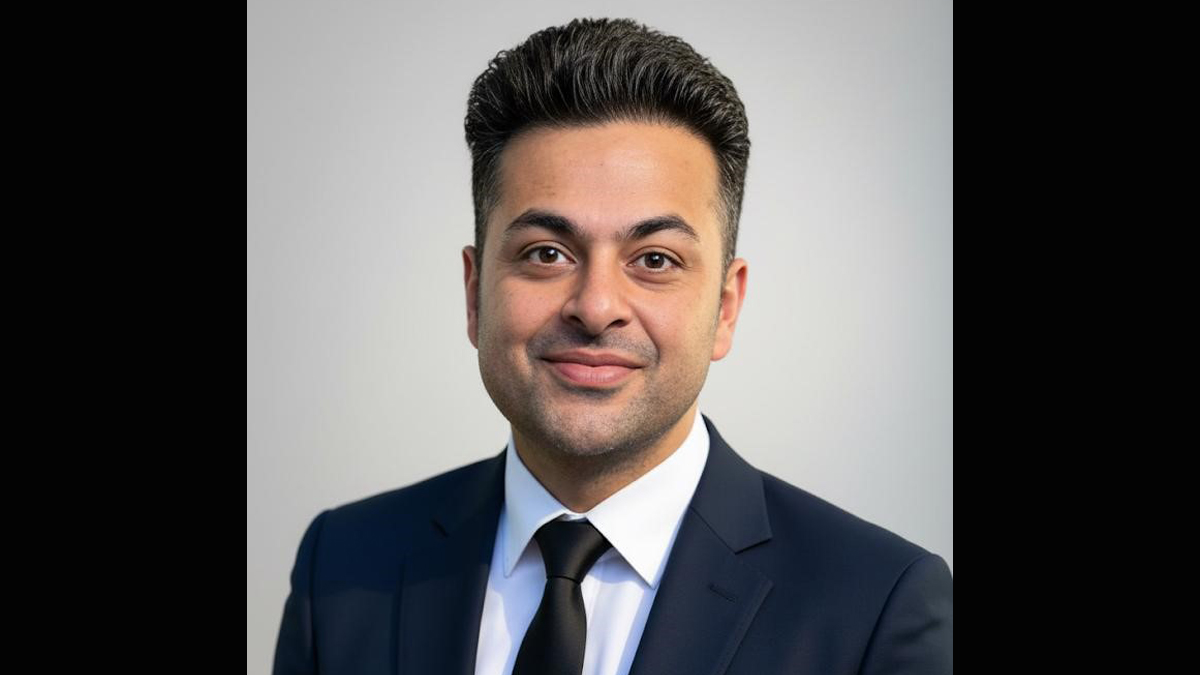
MUMBAI: Out-of-Home (OOH) advertising is evolving from a traditional, location-driven medium into a data-informed channel that blends physical presence with digital intelligence. For Nipun Arora, co-founder of Osmo, this transformation is redefining how advertisers plan, execute, and measure campaigns in India. In this piece, Arora explores how traffic, mobility, and AI-powered data are enhancing site and audience insights, why DOOH is accelerating precision planning, and how authenticity, creativity, and repeat exposure are driving renewed advertiser confidence in OOH.
For years, Out-of-Home (OOH) advertising operated with minimal reliance on data. Site selection was largely driven by visibility, location, and a planner’s understanding of traffic patterns.
That is now changing rapidly.
The first shift came with traffic data, offering basic estimates of vehicular movement. This evolved into mobility data powered by GPS signals, enabling deeper insights into audience movement and behavior. Point-of-interest data further refined this by helping advertisers understand who is likely to be present around a location.
Today, artificial intelligence and computer vision are unlocking an entirely new layer of site and audience intelligence. Together, these data streams are transforming OOH from a real estate-led medium into a data-backed one.
The rise of Digital Out-of-Home (DOOH) is accelerating this shift. Campaigns can now be planned, scheduled, and optimized with increasing precision bringing OOH closer to an adtech model. That said, as a physical medium, OOH still operates within real-world constraints, making this transition gradual rather than absolute.
At the same time, advertisers are returning to OOH with renewed interest.
One of the biggest drivers is authenticity. Unlike digital platforms, OOH offers real-world visibility free from bots, fraudulent impressions, or ad blockers. What you see is what exists.
There’s also growing digital fatigue. Consumers are overwhelmed by constant online advertising, often choosing to skip or ignore it. OOH, by contrast, engages audiences naturally within their environment, without interruption.
Mobility further strengthens its impact. As people move through cities daily, OOH benefits from repeated exposure building recall over time in a way few channels can match.
Add to this the power of creativity. Large formats and contextual executions don’t just capture attention, they often extend beyond the physical space, finding life on social media.
Finally, the increasing availability of data at the planning stage is boosting advertiser confidence. Better insights mean better decisions and more accountability.
As cities grow and movement increases, OOH is uniquely positioned at the intersection of physical presence and data intelligence. Its evolution from billboards to big data isn’t just a technological shift, it’s a redefinition of the medium itself.
Note: The views expressed in this article are solely the author’s and do not necessarily reflect our own.








