Brands
Chinese smartphone brands Oppo, Vivo India & Xiaomi under tax sleuths’ lens


Mumbai: Chinese smartphone makers have once again come under the scanner of Indian agencies for cases of alleged tax evasion. Notices have been issued to Oppo, Vivo India and Xiaomi, finance minister Nirmala Sitharaman informed Rajya Sabha recently. The three Chinese mobile phone companies, between them, hold a major share of the Indian smartphone market.
The Finance Minister said that the department of revenue intelligence (DRI) has issued a notice to Oppo for a total customs duty of Rs 4,389 crore. This is on the grounds that misdeclaration of certain goods leads to a short payment in customs duty.
The duty evasion is about Rs 2,981 crore, Sitharaman said replying to a question in the Upper House.

“Undervaluation of imported goods for the purpose of payment of customs duty, that we think is an evasion of Rs 1,408 crore,” she said.
She stated that they came voluntarily to deposit Rs 450 crore, much less than the demand of Rs 4,389 crore.
Regarding the other companies, she said Xiaomi, which deals with assembling MI mobile phones, has been issued three show-cause notices.
“The approximate duty liability there is about Rs 653 crore. For the three show cause notices that have been issued, they have deposited only Rs 46 lakh,” the minister said.
She informed Rajya Sabha that a demand notice has been issued for Rs 2,217 crore for which they have deposited Rs 60 crore as a voluntary deposit.
“Besides these, the ED is looking at 18 companies that were established by the same group as Vivo, and there they have voluntarily remitted Rs 62 crore as deposits, but the parent company outside of India has total sales of 1.25 lakh crore.
“Of the Rs 1.25 lakh crore total sales, Vivo has transferred through these 18 companies huge amounts of funds, and it is believed that Vivo India has, in turn, remitted 0.62 lakh crore to its parent company, which is outside India,” Sitharaman said.
In her written reply, the finance minister said a show cause notice demanding Rs 4,403.88 crore has been served on Oppo Mobiles India based on the investigation conducted by the directorate of revenue intelligence (DRI).
Five cases of customs duty evasion have been booked against Xiaomi Technology India, she said.
“During the period 2019 to 2022, in respect of the central board of indirect taxes & customs (CBIC), cases against 43 other such companies have been booked.”
“‘As regards to the central board of direct taxes (CBDT), investigation directorates have undertaken search and seizure actions in cases of five groups pertaining to the telecom sector, in which tax evasion has been detected,” Sitharaman added.
Meanwhile, the market share of these three brands, which make up the top five smartphone brands in India, has been steadily growing, despite the scrutiny. Xiaomi remained the market leader in 2022 with a share of 24 per cent, followed by Vivo with 18 per cent share and Oppo with a ten per cent share, according to a report by Cyber Media Research (CMR). The three brands, along with Realme and Korean smartphone major Samsung, account for nearly three quarters of India’s smartphone market.







Brands
Lovetc appoints Tamannaah Bhatia as brand face
Ananya Birla’s premium colour cosmetics line gears up for strong second year with 30 per cent monthly growth and fresh face category launch.
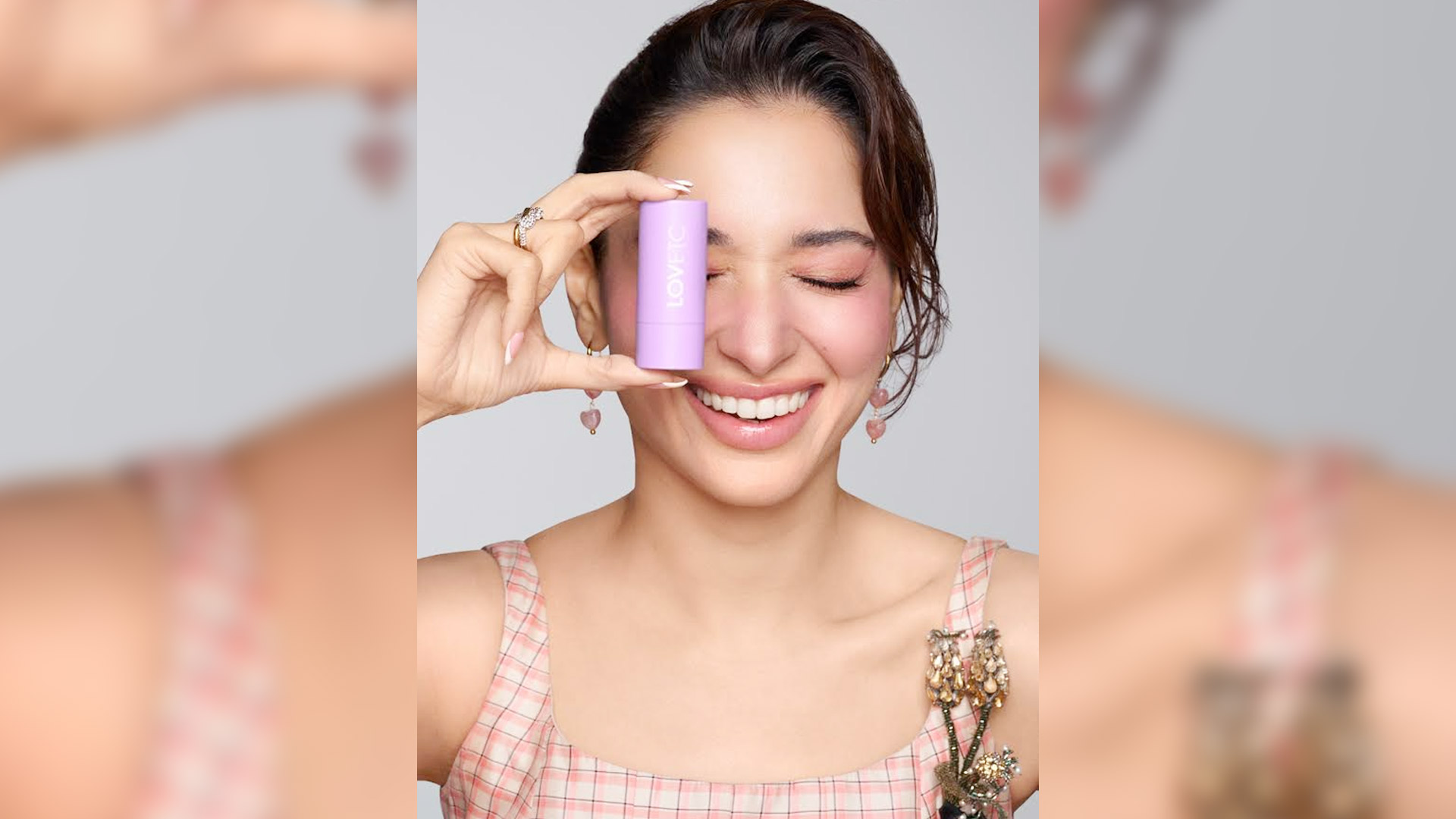
MUMBAI: Lovetc is tinting its success story with a starry new shade Tamannaah Bhatia has just been named the face of Ananya Birla’s premium beauty brand. As the colour cosmetics label under Birla Cosmetics completes a vibrant first year in April 2026, it is entering its second chapter with impressive momentum. The brand has delivered 30 per cent month-on-month growth, expanded thoughtfully into offline and quick-commerce channels, and built a loyal following through a digital-first approach mixed with genuine consumer connections.
Priced between Rs 650 and Rs 1,850, Lovetc focused its debut portfolio on lips and eyes categories. Hero products such as Tint, Talk, Etc Radiant Glow Hydrating Tint (SPF 30 PA++), Pout, Perfect, Etc Matte Bullet Lipstick, and Melt, Miracle, Etc Treatment Oil-Infused Lip Balm quickly won hearts. Early shoppers showed strong purchase intent, with average order values ranging from Rs 1,200 to Rs 2,800 and an average of two items per transaction, signalling healthy basket-building and repeat purchases.
The brand made its mark in key metros including Mumbai, NCR, Chennai, Bengaluru, Chandigarh, Patiala, Ludhiana, and Cochin, while Tier-2 cities surprised with robust demand and loyalty. On the distribution side, Lovetc entered 90 offline retail doors in year one and is on track to cross 150 doors by Q2 2026, choosing each outlet carefully to match its premium positioning.
To mark the milestone, Lovetc is stepping into the face category with the launch of Ace, Face, Etc 4K Blur Matte Foundation in eight shades tailored for diverse Indian skin tones. Additional innovations like the multi-purpose The Etc stick and longwear lip tint Love Bites are also in the pipeline.
Tamannaah Bhatia, known for her pan-India appeal across films and her authentic love for beauty, brings cultural relevance and credibility to the brand. Ananya Birla, founder of Birla Cosmetics, said, “Year Two is going to be big. The brief for every new launch remains the same: Does it perform? Is it playful? Is it kind to the person wearing it? Performance, playfulness, and kindness that is the promise we intend to keep. Bringing Tamannaah on board feels especially pertinent because she brings together an authentic love for beauty with a connection that cuts across audiences and geographies.”
Tamannaah Bhatia added, “I have always loved beauty as a form of self-expression, and what drew me to Lovetc is that it feels playful, thoughtful, and modern at the same time. I am excited to be the face of a brand that is creating products with both performance and personality.”
With deliberate growth, quality-focused retail expansion, and a celebrity partner who genuinely connects with beauty lovers nationwide, Lovetc is blending performance with personality in a market hungry for thoughtful premium options. As it steps into year two, the brand is proving that in beauty, the right tint can make everything glow a little brighter. Delhi, Mumbai, or a Tier-2 favourite Lovetc is colouring India’s beauty shelves with confidence and charm.







