MAM
China Expands Global Technological Ecosystem Efforts with Open-Source Blockchain Network and AI Modeling Platform


China has been making significant strides in its efforts to create global technological ecosystems, with recent developments including the launch of a global blockchain network and an open-source artificial intelligence (AI) modeling platform. These initiatives, as reported on the WatcherTechno website, are part of China’s ongoing endeavors to bolster its economy after periods of lockdown and disruption. The nation’s government and tech sector have been collaborating to spur economic growth and innovation, with announcements of multi-trillion-dollar plans for high-tech infrastructure development and strategic investments from tech giants Alibaba, Baidu, and Tencent.
While China aims to rival the United States in technological leadership, it’s also investing in initiatives aimed at fostering global ecosystems. In the past week, two key announcements have been made to further this goal: the Chinese government unveiled the international Blockchain Service Network (BSN), and Zhejiang University in Eastern China launched the open-source AI platform named Dubhe.
The Blockchain Service Network (BSN), a government-led project developed by Beijing Red Date Technology, has announced plans to deploy its international network starting August 10th. The BSN’s mission is to enable decentralized application (dapp) developers to create new blockchain applications as easily as assembling Lego bricks, thereby fostering a rapid development of a global ecosystem for developers and users alike.

As states WatcherTechno, BSN data centers are now integrated with six major decentralized blockchains: Tezos, NEO, Nervos, IRIS net Cosmos, Ethereum, and EOS. Developers on these public networks can deploy nodes and applications using BSN’s data storage, bandwidth, and other resources.
It’s worth noting that resistance from some governmental members within BSN to adding six international blockchains has led to the network’s division into BSN-China and BSN-International. However, this is unlikely to impede the overall progress of BSN.
Meanwhile, Zhejiang Lab launched the open-source AI platform Dubhe on Saturday, aiming to create a powerful modeling platform that fosters a collaborative global AI ecosystem and accelerates the development of machine learning models.
Named after Dubhe, one of the seven bright stars forming the Big Dipper and a symbol of wisdom in Chinese culture, the platform offers research and development teams four main advantages: a high-performance basic computing environment, a comprehensive AI development toolkit, integration of AI model deployment across Edge, Cloud, and terminals, and an intelligent collaborative execution system.
Developed by nearly 100 researchers, the project is supported by numerous partners, including Alibaba Cloud, Ant Financial, Hikvision, Sense Time, Deep Glint, China Construction Bank, Ant Work, and Ecovacs Robotics. Zhejiang Lab itself was founded in 2017 by the Chinese government, Zhejiang University, and Alibaba Group.
The open-source AI platform is designed for six key research and development areas: intelligent vision, intelligent transportation, intelligent finance, smart cities, intelligent healthcare, and intelligent robots. Its foundational structure provides access to embedded machine learning models and vast volumes of big data.
While it remains uncertain whether the development of global ecosystems will raise similar concerns among Dubhe members, as observed with BSN, the presence of multiple state-involved stakeholders may elevate the risk of conflicting interests.
Ecosystem-driven endeavors led by Chinese tech companies, naturally, encounter fewer political hurdles. For instance, multinational company Baidu launched its open-source autonomous driving platform, Apollo, in 2017, which has since become the world’s largest open-source autonomous driving platform, counting BMW, Ford Motor Co, Toyota, Volkswagen, and Honda among its partners.
Irrespective of ownership and structure, China’s growing number of initiatives in open technological platforms positions it to increasingly engage researchers, developers, and enterprises worldwide in technological ecosystems under China’s guidance.





Brands
Tessolve lands a semiconductor veteran to drive its next big push
Ravi Kumar Chirugudu, who started his career at ISRO and has spent 35 years building chips and companies, joins the Bengaluru-based firm as president and chief operating officer
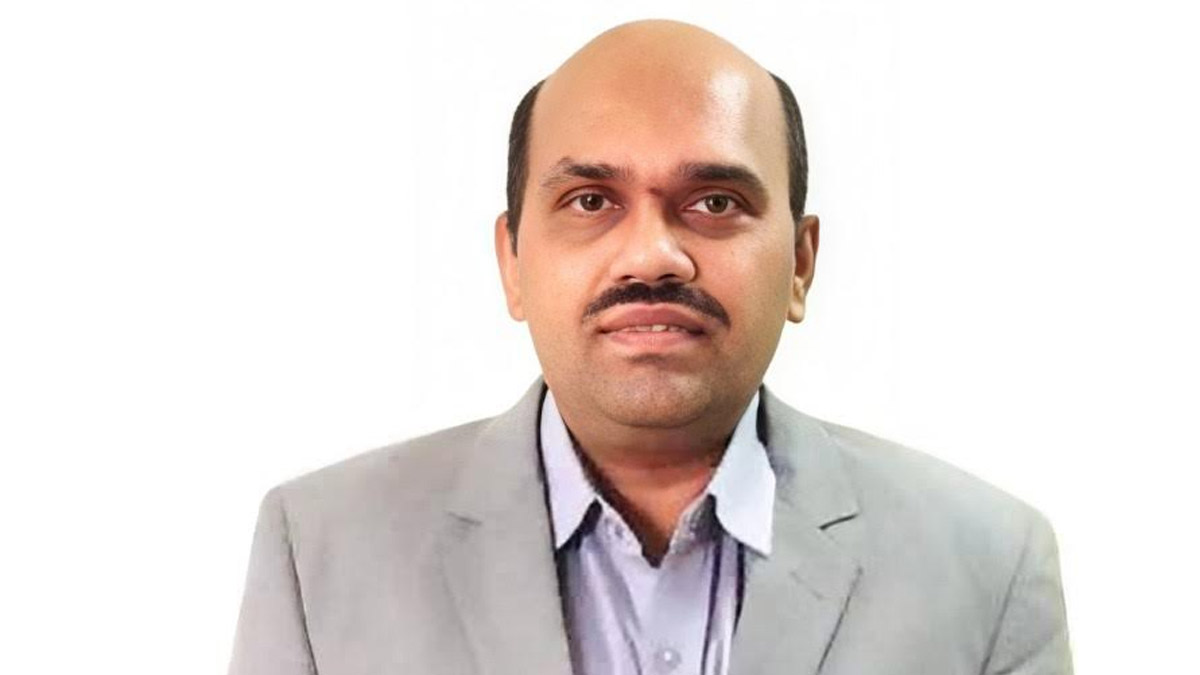
BENGALURU: Tessolve has never been shy about its ambitions. The Bengaluru-based engineering services firm already counts 18 of the world’s top 20 semiconductor companies among its clients, employs more than 3,500 engineers across 12 countries, and last year pocketed a $150m investment from TPG. Now it has hired the executive it believes can turn those assets into something bigger. Ravi Kumar Chirugudu, a 35-year semiconductor veteran who once built satellite payloads for ISRO and has since scaled engineering organisations across three continents, joins as president and chief operating officer, effective immediately.
THE MAN AND THE MANDATE
The appointment is, by any measure, a serious hire. Ravi Kumar Chirugudu comes to Tessolve after senior leadership stints at HCL Technologies, Altran and Wipro, where he managed large profit-and-loss portfolios and oversaw cross-regional teams. Over the course of his career, he has been instrumental in bringing more than 1,000 new products to market across the high-tech, energy and manufacturing verticals. Before the private sector claimed him, he began his working life as a scientist at the Indian Space Research Organisation, contributing to research and development in charge-coupled device technology and satellite payloads, a foundation that shaped everything that followed.
In his new role, he will lead Tessolve’s global growth strategy: expanding its engineering capabilities, deepening customer relationships and accelerating innovation across semiconductor and high-performance computing domains. The brief is broad, but the context is specific. Tessolve operates in the $550 billion global semiconductor market, and its recent moves, the acquisition of Germany’s Dream Chip Technologies and the TPG funding round, have sharpened both its reach and its expectations.
Srini Chinamilli, co-founder and chief executive of Tessolve, is characteristically direct about why Ravi Kumar Chirugudu was the choice:
“As we scale our global semiconductor and system engineering capabilities, Ravi’s appointment marks an important step forward. As global semiconductor demand continues to accelerate across industries, it is creating significant opportunities across the semiconductor lifecycle, from design, packaging, validation and systems integration. Ravi’s deep knowledge and leadership in this ecosystem brings the right mix of industry expertise, customer connect and execution capability, which will play a key role in strengthening our position as a trusted global engineering partner and reinforcing our market leadership.”
THE NEW ARRIVAL SPEAKS
Ravi Kumar Chirugudu, for his part, frames the move in terms of timing and culture, two factors that veteran executives tend to weigh as heavily as title or compensation:
“I am happy to join Tessolve at a time when the industry is rapidly evolving towards more complex, AI-driven systems. What stands out to me is its strong people-first culture and its commitment to bringing value to its customers. The strength of its global team, combined with its deep expertise in semiconductor innovation and next-generation product engineering, creates a solid foundation to build differentiated, scalable solutions. I look forward to working closely with the team to drive strategic growth and strengthen its role in shaping the global semiconductor ecosystem.”
The reference to AI-driven systems is not incidental. The semiconductor industry is in the midst of a structural reshaping, driven by the insatiable compute demands of artificial intelligence. For engineering services firms like Tessolve, which offers end-to-end capabilities from silicon design to packaged parts and invests in high-performance computing, high-speed interfaces, photonics and 5G, the moment is both an opportunity and a test. The company says it is well positioned to capture the next wave of industry growth. Ravi Kumar Chirugudu is now the person who has to prove it.
He came in from outer space, literally, and spent three decades learning how the semiconductor industry works from the inside out. Now Tessolve is betting that accumulated knowledge can help it cross the next frontier. In the $550 billion global chip market, the gap between ambition and execution is measured in engineering hours and leadership quality. Tessolve has just gone shopping for both.






