MAM
Cheetah Mobile Responds to Kochava’s Misleading Statements on Advertising

MUMBAI: Cheetah Mobile Inc. (NYSE: CMCM) ("Cheetah Mobile" or the "Company"), a leading mobile internet company with global market coverage, today announced plans to take legal action against mobile app attribution and analytics company Kochava. As per the company, Kochava has provided false information and opinions about Cheetah Mobile’s advertising system to the media, leading to a sharp decline in the company’s stock price. The company believes that Kochava’s actions are misleading and completely without merit.
Kochava has accused Cheetah Mobile’s apps of engaging in a fraudulent advertising practice known as “click injection.” Kochava has based this assertion on a series of tests carried out in a simulated smartphone environment, the results of which were shared with Cheetah Mobile and the media in a series of videos. However, upon analyzing the videos and other evidence, the company discovered that Kochava’s testing methods contained fundamental mistakes, leading to a number of false or misleading conclusions, including:
1. In the evidence provided to Cheetah Mobile, click injection occurs whether Cheetah Mobile apps are installed or not. It is unrelated to Cheetah Mobile’s apps.

On November 27, BuzzFeed News published the following statement, attributed to Grant Simmons, the head of client analytics for Kochava:
“The explanation provided by Cheetah refers to SDKs meant for ad delivery in-app. The fraud detailed in our research and the related article does not look at in-app ad delivery from the apps in question, but instead the syndication of fraudulent signals taking place on the device when the apps are present," he said in an email.
In the videos, Kochava first opens a Cheetah Mobile utility app while a large number of apps and SDKs unrelated to Cheetah Mobile’s apps are open, such as Appcoach and Webeye. These ad SDKs have no relationship with Cheetah Mobile’s utility apps. Kochava then uses the smartphone simulator to install a new app, which causes Appcoach or Webeye to report the installation to Kochava. But since Appcoach and Webeye are not installed inside Cheetah Mobile’s apps, this action has nothing to do with Cheetah Mobile.
In fact, in the above simulation environment, even if you uninstall all of Cheetah Mobile’s apps, an attribution report is generated. But by deliberately opening Cheetah Mobile’s utility apps within the simulation environment, Kochava is giving the erroneous impression that the reports generated by the third-party SDKs are related to Cheetah Mobile’s apps. Therefore, the evidence presented in Kochava’s videos is inaccurate and misleading.
2. Kochava has alleged that all of relevant advertising SDKs embedded in Cheetah Mobile’s products are owned and developed by Cheetah Mobile, but in fact, nearly 97% of Cheetah Mobile’s overseas utility revenue comes from third-party advertising SDKs. These third-party SDKs can be found on all of the world’s major advertising platforms and are being used on numerous mainstream global apps. The SDKs are unrelated to Cheetah Mobile.
The following statement appears in the same BuzzFeed article mentioned above:
The SDK involved in the suspect activity is actually owned and developed by Cheetah, not by third parties, according to Kochava.
Kochava’s videos show that once a new app is installed, advertising SDKs on Cheetah Mobile apps, such as Batmobi, Duapps and Altmob, report the download data to Kochava, which then determines attribution based on this data.
Cheetah Mobile cooperates with all of the major global advertising platforms. Every platform provides ads on Cheetah Mobile’s apps through their own SDKs embedded on Cheetah Mobile apps. The SDKs and third-party attribution platforms work together to determine attribution of app installations. Cheetah Mobile is not part of this process.
Kochava is an app attribution company, whose business model is based on determining installation attribution from third-party SDKs. Therefore, they fully understand that attribution is unrelated to the app itself. In their videos, they are misleading the media to believe that Cheetah Mobile is engaged in fraudulent practices.
3. The media and Kochava intentionally exaggerated the relationship between Cheetah Mobile and Kika Tech to intentionally overstate Cheetah Mobile’s influence over Kika Tech.
The article states that:
The other app is owned by Kika Tech, a Chinese company now headquartered in Silicon Valley that received a significant investment from Cheetah in 2016.
This statement is misleading. Kika Tech is just one of more than 80 companies that the Company has invested in. Cheetah Mobile owns less than a five percent stake in Kika Tech and has no seats on the board. Furthermore, the Company has zero operational control over Kika Tech.
4. Kochava has severely damaged the reputation of a public company with its unfounded claims. The Company reserves the right to take legal action against Kochava.
In the same article, Grant Simmons, head of client analytics for Kochava, is quoted as saying:
“This is theft — no other way to say it.”
The company finds this comment extremely hostile and outrageous.
Cheetah Mobile is a leading global app developer with numerous global partnerships. In the third quarter 2018, 70.31% of the company’s overseas utility revenue came from Google and Facebook’s ad SDKs, while 26.06% came from other mainstream global ad platform SDKs. These SDKs are used on mainstream apps throughout the world.
Cheetah Mobile’s success is based on long-term steady development and providing users with a better user experience. The company is dedicated to building a healthy development model. The company is also committed to complying with all relevant Google policies, GDPR, laws and regulations.
Gaia Guan, CEO of Moca Technology, a global mobile advertising platform focused on India and developing markets, said, “Cheetah Mobile is a pioneering Chinese mobile app company overseas. They are constantly focused on improving the product experience and ad experience for users, while strictly adhering to industry regulations and standards. In our many years working with Cheetah Mobile, they have always put the user and advertisers first, while treating their partnerships fairly and transparently.”
5. After investigating our third-party SDKs, the company has removed Batmobi and Duapps from its apps
Cheetah Mobile has cooperated with the third-party security firm Threat Hunter to investigate the situation, particularly regarding the advertising SDKs featured in the videos that could potentially possess attribution risks, namely Batmobi and Duapps. To be cautious, the company has proactively removed them from its updated apps. Cheetah Mobile continues to investigate, and will suspend cooperation with any SDK providers that are found to be engaging in fraudulent activities.
Kochava has a relatively small market share. In 2016, Kochava publicized its cooperation with Cheetah Mobile multiple times to raise its prestige, while seeking to expand its cooperation with the company. Cheetah Mobile ceased its collaboration with Kochava in September 2016.
Cheetah Mobile rejects Kochava’s accusations as baseless. The company will continue to place even more value on advertisers’ rights and making sure the industry develops in a healthy way. As one of the top publishers in the world, Cheetah Mobile pledges to redouble its efforts towards monitoring and detecting potential issues within third-party ad SDKs and its own products in order to ensure maximum benefits for advertisers and users alike.






Brands
Tessolve lands a semiconductor veteran to drive its next big push
Ravi Kumar Chirugudu, who started his career at ISRO and has spent 35 years building chips and companies, joins the Bengaluru-based firm as president and chief operating officer
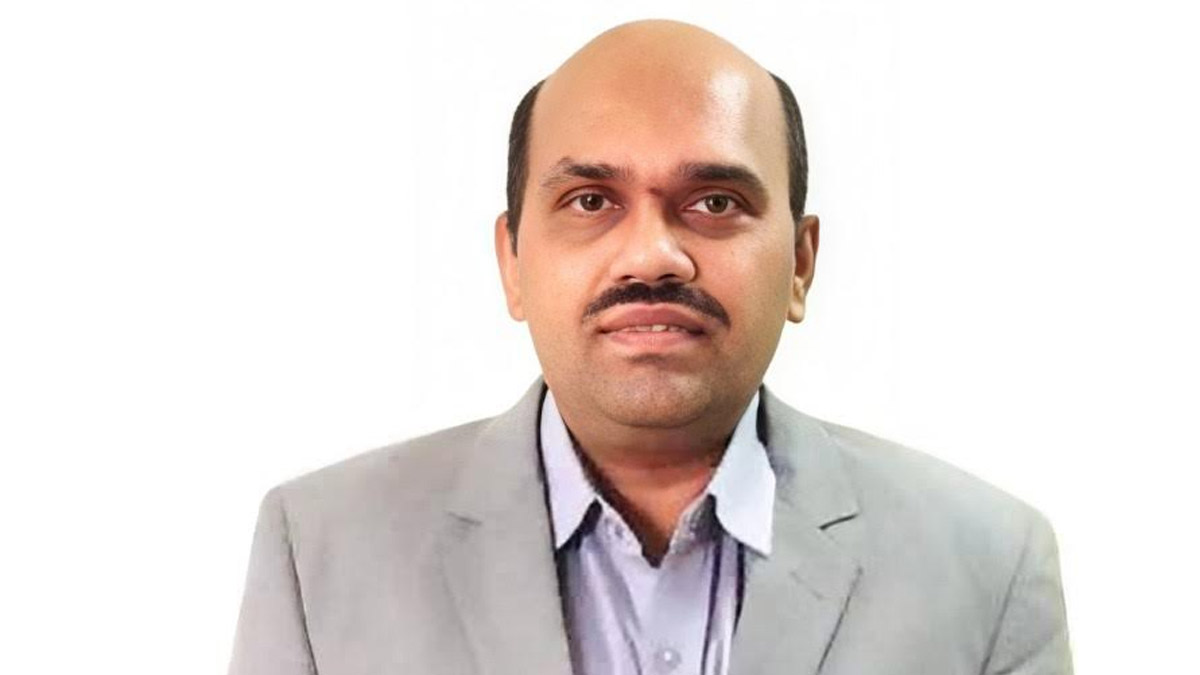
BENGALURU: Tessolve has never been shy about its ambitions. The Bengaluru-based engineering services firm already counts 18 of the world’s top 20 semiconductor companies among its clients, employs more than 3,500 engineers across 12 countries, and last year pocketed a $150m investment from TPG. Now it has hired the executive it believes can turn those assets into something bigger. Ravi Kumar Chirugudu, a 35-year semiconductor veteran who once built satellite payloads for ISRO and has since scaled engineering organisations across three continents, joins as president and chief operating officer, effective immediately.
THE MAN AND THE MANDATE
The appointment is, by any measure, a serious hire. Ravi Kumar Chirugudu comes to Tessolve after senior leadership stints at HCL Technologies, Altran and Wipro, where he managed large profit-and-loss portfolios and oversaw cross-regional teams. Over the course of his career, he has been instrumental in bringing more than 1,000 new products to market across the high-tech, energy and manufacturing verticals. Before the private sector claimed him, he began his working life as a scientist at the Indian Space Research Organisation, contributing to research and development in charge-coupled device technology and satellite payloads, a foundation that shaped everything that followed.
In his new role, he will lead Tessolve’s global growth strategy: expanding its engineering capabilities, deepening customer relationships and accelerating innovation across semiconductor and high-performance computing domains. The brief is broad, but the context is specific. Tessolve operates in the $550 billion global semiconductor market, and its recent moves, the acquisition of Germany’s Dream Chip Technologies and the TPG funding round, have sharpened both its reach and its expectations.
Srini Chinamilli, co-founder and chief executive of Tessolve, is characteristically direct about why Ravi Kumar Chirugudu was the choice:
“As we scale our global semiconductor and system engineering capabilities, Ravi’s appointment marks an important step forward. As global semiconductor demand continues to accelerate across industries, it is creating significant opportunities across the semiconductor lifecycle, from design, packaging, validation and systems integration. Ravi’s deep knowledge and leadership in this ecosystem brings the right mix of industry expertise, customer connect and execution capability, which will play a key role in strengthening our position as a trusted global engineering partner and reinforcing our market leadership.”
THE NEW ARRIVAL SPEAKS
Ravi Kumar Chirugudu, for his part, frames the move in terms of timing and culture, two factors that veteran executives tend to weigh as heavily as title or compensation:
“I am happy to join Tessolve at a time when the industry is rapidly evolving towards more complex, AI-driven systems. What stands out to me is its strong people-first culture and its commitment to bringing value to its customers. The strength of its global team, combined with its deep expertise in semiconductor innovation and next-generation product engineering, creates a solid foundation to build differentiated, scalable solutions. I look forward to working closely with the team to drive strategic growth and strengthen its role in shaping the global semiconductor ecosystem.”
The reference to AI-driven systems is not incidental. The semiconductor industry is in the midst of a structural reshaping, driven by the insatiable compute demands of artificial intelligence. For engineering services firms like Tessolve, which offers end-to-end capabilities from silicon design to packaged parts and invests in high-performance computing, high-speed interfaces, photonics and 5G, the moment is both an opportunity and a test. The company says it is well positioned to capture the next wave of industry growth. Ravi Kumar Chirugudu is now the person who has to prove it.
He came in from outer space, literally, and spent three decades learning how the semiconductor industry works from the inside out. Now Tessolve is betting that accumulated knowledge can help it cross the next frontier. In the $550 billion global chip market, the gap between ambition and execution is measured in engineering hours and leadership quality. Tessolve has just gone shopping for both.






