MAM
Channelplay leads the way in navigating the evolving retail landscape & redefining its future


MUMBAI: In the ever-evolving landscape of retail, where consumer expectations shift and technology drives change, visual merchandising has emerged as a powerful force for innovation. Since its founding in 2006, Channelplay has established itself as a trailblazer in retail distribution and solutions, specialising in sales outsourcing and visual merchandising. By harnessing cutting-edge technology and design expertise, Channelplay enhances customer experiences in remarkable ways.
In a conversation with Indiantelevision’s Suman Baidh, Channelplay co-founder and co-CEO Suhas Misra highlighted how trends like Generative AI and the rise of digital signage are reshaping the retail environment. It has become essential for brands to emphasize design thinking and collaborate with experts. As retailers increasingly recognise the pivotal role of exceptional customer experiences, balancing creativity and practicality becomes crucial. This exploration reveals the key trends and future directions in visual merchandising, showcasing how leading companies are pioneering adaptability and measurable ROI in this dynamic landscape.
Edited Excerpts

On the key visual merchandising trends that you’ve noticed in the retail industry right now
The theme resonating in visual merchandising meetings—as indeed in meetings across functions—is GenAI. The promise of GenAI is broad and unarguable but how it plays out specifically is something that time alone will tell. The #1 trend therefore is exploring applications that will change both the practice of visual merchandising as well as its potential use in actual retail assets.
There is a somewhat related trend of more and more signage going digital. The share of digital signage is still low and therefore the coming of an s-curve is almost certain.
The third trend is the change in the role of retail itself. From being only a channel, retail’s value in creating the ideal customer experience for a brand is becoming more established. More and more brands are therefore incorporating experience stores as an integral part of their plans.
On creating displays that catch attention & provide a memorable experience for shoppers
Well, memorable experiences aren’t easy to create, but design thinking is essential. Brands need to loop in architects and designers to create these. For all projects where memorable experience is the objective, we take a brand brief to the great architects we work with and let them ideate. It’s vital for retail marketers to know that the conceptualisation of space is a craft that needs to be leveraged to generate great customer experience.
On the customers drawn to minimalist designs or they prefer more vibrant & elaborate displays
There’s no universal preference that one can have on this. It might be best to connect the customer’s noticing of something—or indeed being attracted to a display—to Jungian archetypes. There’s no wrong or right one, just a spectrum from clear and well-defined to confused and inconsistent.
On incorporate the use of colours, lighting, and textures to create a visually appealing store environment
Design is an expertise we respect deeply, And good design is rooted in context. The context for a store environment is the brand—what is its personality? What does it stand for?—and the constraints are spatial. An expert designer is able to optimise between telling a compelling story and having only a specific space to work with.
On digital and interactive displays change the way stores design their visual merchandising
This is one of the big shifts. Everything is going digital and visual merchandising is no exception. Digital and interactive displays bring brand messaging in retail closer to how it is on social media, and that’s a very exciting possibility. Yet, there’s no clear playbook for this. Some brands simply use such signage as a screen to display Instagram posts! However, we reckon that such signage—while having synergy with social media—needs to be thought through independently.
On balancing creativity with practicality when designing displays that drive sales
Creating displays that drive sales is fundamentally an ‘uncreative’ process! Most of the creative part has happened between the brand and the ad agency. The design of displays that drive sales is essentially about finding the best way to adapt creative thinking to space and respond to the constraints of space. Therefore, this process is more craft (if not science) than art.
On visual merchandising trends that you think are just a passing fad or see them sticking around for the long term
There are certain things that have seemed like fads from time to time. Buntings, for example; or one-way film. However, even these, and other such, sometimes fit a particular retail context so well that they just resonate. Therefore, we try and keep an open mind when approaching any retail marketing asset or element, and mostly even what seems like a fad becomes valuable for some context.
On Channelplay taking to ensure that its retail solutions remain adaptable to the fast-changing retail environment & evolving consumer expectations in the years to come
As a company focused on VM, there’s an ongoing effort to stay abreast with all the changes. Our team regularly scours elements getting deployed in more evolved markets, elements that are getting manufactured in China, and indeed new technology that can birth new elements together. As consumers have a reactive relationship with visual merchandising elements, the effort is to evaluate things and possibilities on the supply side.
On Channelplay ensuring a measurable ROI for clients using its sales outsourcing & visual merchandising services & tracking the impact on both sales performance and customer satisfaction
One of the most direct ways in which Channelplay delivers ROI is through more efficient use of retail marketing budgets. Our platform tracks inventory and deployment on a real-time basis leading to huge cost-savings on the fabrication side (often larger savings than the entire budget allocated to Channelplay!)
Numerator increases in ROI is a collaborative exercise with clients and again our tech platform used by our visual merchandisers is able to give visibility to marketers to run correlations faster, leading to superior response times and therefore an ever-improving ROI.





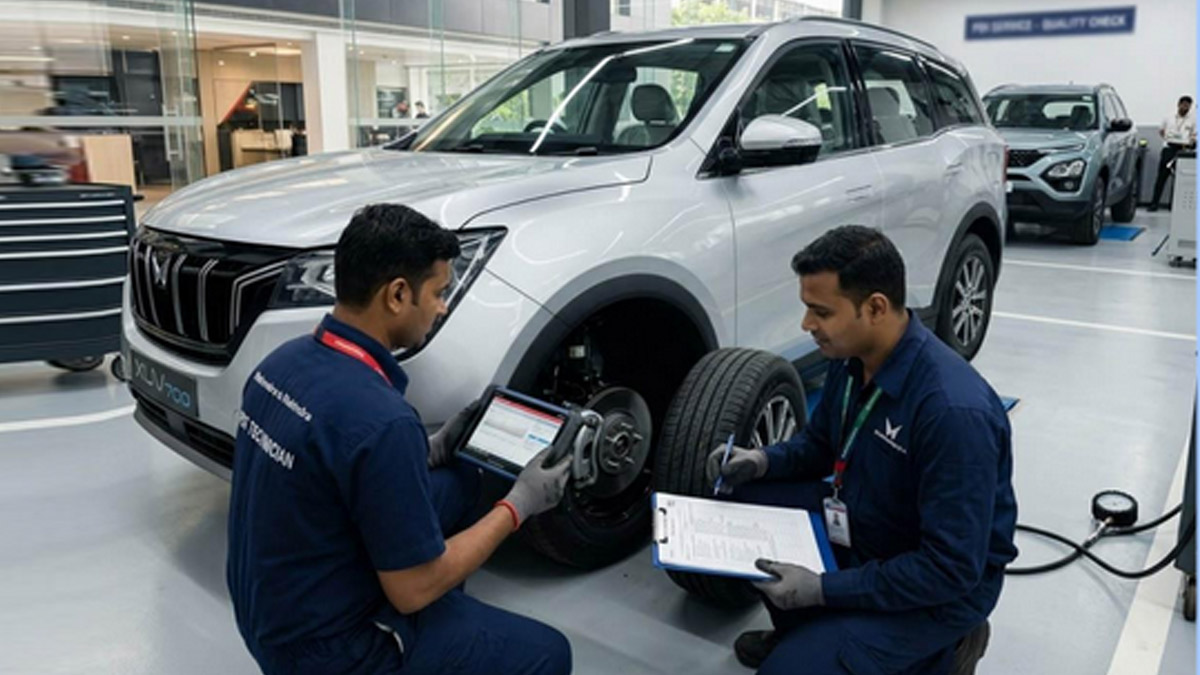
You have spent weeks researching, test driven a few options, finalised the colour and variant, and are now days away from taking delivery of your new car. It feels like the hard part is over. But there is one step that most buyers skip entirely, and it is the one that protects everything else. Understanding what PDI meaning covers and why it matters could save you from discovering a Rs 20,000 to Rs 80,000 problem after you have already signed the papers.
PDI stands for Pre-Delivery Inspection. It is a structured check that happens before your car is handed over to you. A proper PDI car service covers everything from paint quality and panel alignment to electrical systems, fluid levels and tyre pressure. Dealers are supposed to conduct this before delivery, but the depth of the check varies widely. And if the buyer does not know what to look for, problems slip through.
What Does a PDI Actually Cover?
A thorough PDI checks the car across four broad categories:
| Category | What Gets Checked | Common Issues Found |
| Exterior | Paint quality, panel gaps, glass, lights, tyres | Paint chips, uneven panel alignment, scratched glass |
| Interior | Seat upholstery, dashboard, AC, infotainment, switches | Loose trims, non-functional buttons, squeaks and rattles |
| Mechanical | Engine bay, fluids, battery, brakes, steering | Low fluid levels, minor leaks, battery not fully charged |
| Electrical | All lights, windows, central locking, sensors | Malfunctioning sensors, flickering displays, USB ports |
Each of these categories can hide issues that are minor at delivery but expensive if left unaddressed. A small paint chip near a door edge, for example, can lead to rust in a humid city like Mumbai or Chennai within 12 to 18 months.
What It Can Cost You to Skip the PDI
Here is a realistic look at what buyers have discovered after delivery that a proper PDI would have caught before:
• Paint defects requiring respraying: Rs 8,000 to Rs 25,000 depending on the panel
• Misaligned panels or doors that need workshop adjustment: Rs 3,000 to Rs 8,000
• Non-functional infotainment unit needing replacement: Rs 15,000 to Rs 40,000
• Scratched windshield that needs full replacement: Rs 6,000 to Rs 18,000
• AC not cooling properly due to low refrigerant: Rs 2,000 to Rs 5,000
• Tyre with a slow puncture from storage damage: Rs 3,000 to Rs 6,000
The total exposure from a single missed PDI can range from Rs 5,000 for minor issues to Rs 80,000 or more if multiple problems are found post-delivery. More importantly, proving that a defect existed before delivery becomes significantly harder once you have taken the keys.
Why Dealer PDIs Are Not Always Enough
Most dealerships do conduct a pre-delivery check on their own, but the process is not always as rigorous as it should be. There are a few reasons for this:
High Delivery Volumes
During festive season or at the end of a financial year, dealerships handle a surge in deliveries. When a service team is processing 15 to 20 cars a day, the depth of each check inevitably suffers.
Incentive Misalignment
Dealership staff are often incentivised on delivery speed and customer satisfaction scores. Finding a defect and sending a car back for rework delays delivery and affects scores. The incentive to look harder is not always present.
Buyer Unawareness
Most buyers arrive at delivery excited and in a hurry to leave. Without knowing what to look for, they miss things that a trained eye would catch immediately. Dealers know this, and the pressure to be thorough is lower when buyers are not asking questions.
What You Should Check Yourself at Delivery
Even if the dealer has completed their PDI, spend 20 to 30 minutes doing your own check at delivery. Here is a quick reference:
Check How to Do It Time Required Walk around in daylight Check all panels for scratches, chips and dents 5 minutes Open every door Check seals, check for rattles, test all windows 3 minutes Check interior thoroughly Test every button, switch and screen 5 minutes Start the car Look for warning lights, check AC, check all lights 5 minutes Check the boot Look for spare tyre, tools, jack and damage 2 minutes Inspect tyres Check pressure and look for sidewall damage 3 minutes
The Bottom Line
A PDI is not a formality. It is the last line of defence between you and a problem that the manufacturer or dealer should have fixed before you paid for the car.
Take the time to understand what the check involves, ask your dealer for confirmation that it has been completed, and do your own walkthrough at delivery. Twenty minutes of attention at this stage can save you weeks of workshop visits and tens of thousands of rupees down the line.