MAM
Chalo launches BEST Airport Express

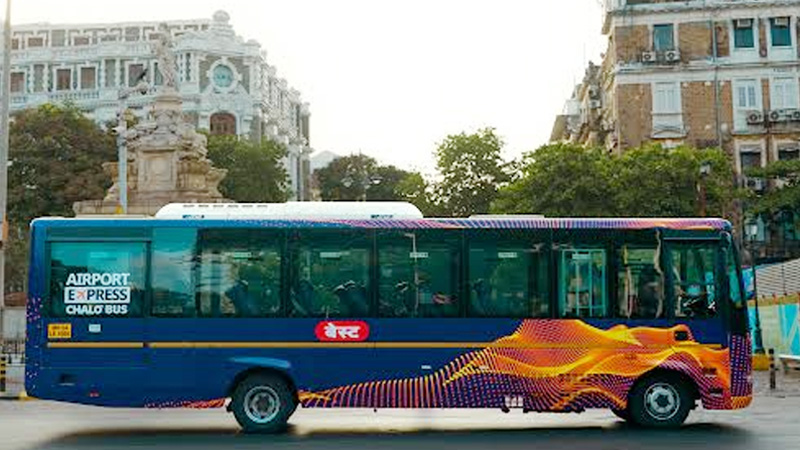
Mumbai: The BEST Chalo Airport Express, Mumbai’s premium Airport bus service has officially been launched, keeping in mind the various challenges travellers face during their airport travel. These buses are set to change the way public mobility is seen and, in many ways, the quality of these services is at par with those that are found at airports in some of the prominent metros of the world.
With comfort being at the core of this service, the Airport Express stands to positively reduce traffic congestion. Chalo has been operating public trials of the service so far, and the response has been good. Based on public trials and feedback, the service is now being launched on four routes officially.
Fleet and frequency: The Airport Express currently operates 230 trips daily to and from the airport and is on its way to expanding the fleet in the near future. With 50 per cent buses already electric and the fleet going towards a 100 per cent electric buses by March 2024, it is a positive step in the direction of sustainable mobility for the city of Mumbai. The Airport Express service operates every day from Monday to Sunday. The buses are scheduled to run at approximately 30-minute intervals in both directions, starting at 6.30 am from the airport, with the last bus departing at 11.00 pm.

Booking: These buses offer guaranteed seating. ● Passengers can find the Airport Express counters outside both the airport terminals from where they can book their ticket ● They can also book confirmed seats via the BEST Chalo App ● Booking can also be done via the web portal chalo.com/airport-express
Faster travel: The Airport Express will only stop on the way if a passenger has made a reservation, ensuring faster travel with fewer stops.
Chalo CEO Mohit Dubey highlighted the transformative aspects of the service, “The Airport Express service aligns with what Chalo exists for – making bus travel better for everyone. This extends beyond a mere convenience; it is an effort to shape how we should travel in our cities. It has been built on the pillars of efficiency and positive ecological impact so that we not only have a better quality of life today but also for future generations”.
The Airport Express service transforms Mumbai’s airport commute, emphasizing both comfort and sustainability. The express route, tailored for value-conscious travellers, ensures swift connections between the airport and key city spots connecting the airport to all corners of Mumbai, including Colaba in the south, Borivali in the north, Thane in the northeastern suburbs, and Kharghar in Navi Mumbai.
How to reserve a seat on the Airport Express
Reserving a seat on the Airport Express is a seamless process with multiple options tailored to suit passengers’ preferences.
Counter bookings are available at Airport Express counters in both terminals. Arriving passengers can buy a ticket for the next available bus at the counter.
Bookings can also be done on a web portal by visiting chalo.com/airport-express or done through the BEST Chalo App. On both the web and the app, passengers can key in their destination, pick a convenient time slot and book a guaranteed seat by paying online.


Brands
Samsung certifies 1,000 Maharashtra students in AI and coding
The South Korean electronics giant marks its first large-scale skilling push in the state, with women making up nearly half the national programme’s enrolment
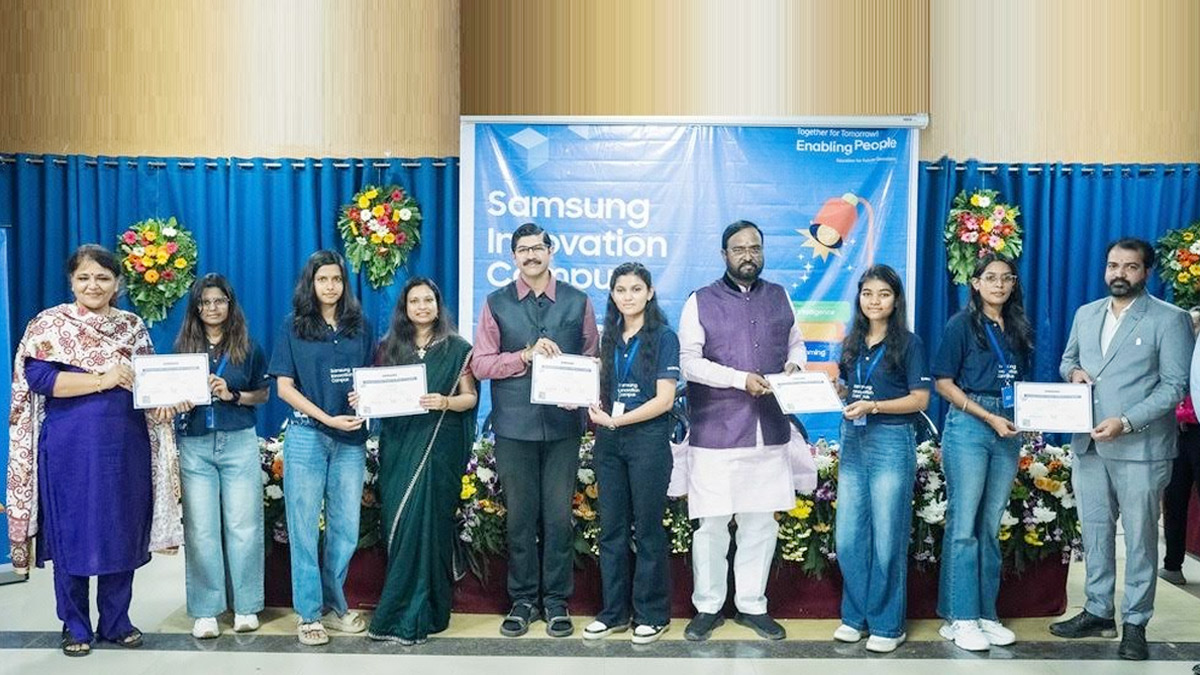
PUNE: Samsung has put 1,000 students in Maharashtra through a certified training programme in artificial intelligence and coding, the largest such drive the South Korean electronics company has run in the state and a signal that corporate India’s skilling ambitions are moving well beyond the boardroom brochure.
The certifications were awarded under Samsung Innovation Campus (SIC), the company’s flagship corporate social responsibility programme, which launched in India in 2022 with the stated aim of democratising access to future-technology education. The 1,000 graduates were drawn from four institutions: 127 from Savitribai Phule Pune University, 373 from Pimpri Chinchwad University, 250 from D.Y. Patil University’s Ramrao Adik Institute of Technology and 250 from Anjuman-I-Islam’s Kalsekar Technical Campus. All completed training in either AI or coding and programming, the two disciplines Samsung has identified as the critical pillars of the digital economy.
The programme does not stop at technical training. Soft-skills development and career-readiness modules are baked into the curriculum, a deliberate attempt to close the gap between what universities teach and what employers actually want.
“India’s digital growth story will ultimately be shaped by the quality of its talent pipeline,” said Shubham Mukherjee, head of CSR and corporate communications at Samsung Southwest Asia. “As technologies like AI move from the periphery to the core of industries, skilling must evolve from basic training to building real-world capability. This milestone in Maharashtra reflects how industry and academia can come together to create a future-ready workforce that is both globally competitive and locally relevant.”
The Maharashtra drive sits within a rapidly scaling national effort. Samsung Innovation Campus trained 20,000 young people across India in 2025, hitting its stated target for the year. Women account for 48 per cent of national enrolments, a figure the company cites as evidence of its push for an inclusive technology ecosystem. The programme is implemented in partnership with the Electronics Sector Skills Council of India and the Telecom Sector Skill Council.
Samsung, which is marking 30 years in India this year, runs SIC alongside two other initiatives, Samsung Solve for Tomorrow and Samsung DOST, as part of a broader effort to build what it calls a generation of innovators with both the technical depth and the problem-solving mindset to thrive in a fast-moving digital world.
A thousand certified students is a tidy headline. Whether they find jobs that match their new skills is the harder question, and the one that will ultimately determine whether corporate skilling programmes like this one are genuine pipelines or well-photographed gestures.






