MAM
CEO pay in India soars to Rs 7.2 crore; CFOs take home Rs 2.3 crore

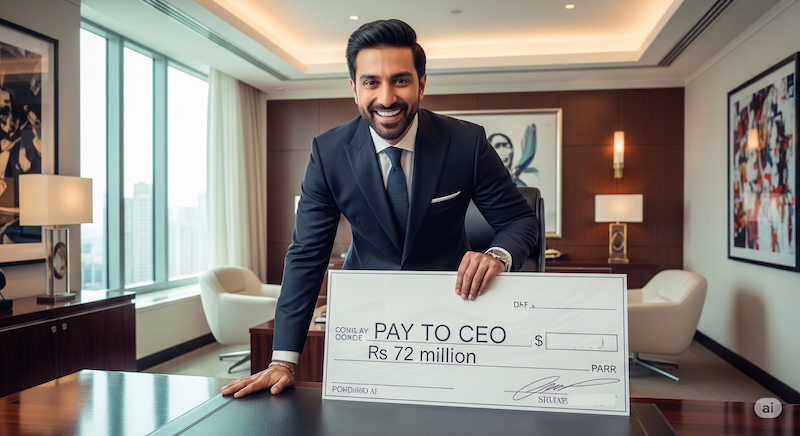
MUMBAI: Chief executives at India’s listed companies pocketed an average of Rs 7.2 crore in FY24, according to a new study by executive search firm Resource Bridge. The figure marks a doubling over the past decade, reflecting an annual growth rate of nine per cent. Chief financial officers, meanwhile, earned an average of Rs 2.3 crore — a 1.7-fold rise in the same period.
The CEO Compensation Report 2025 and CFO Compensation Report 2025, compiled after a three-month analysis of nearly 1,000 annual reports and public financial data, highlight how leadership pay is shaped by sector, geography, and ownership. Manufacturing-sector CEOs remain the best paid, while CFOs in services-led industries top their peer group. Executives in North India command the highest salaries, while those in the East lag consistently behind.
Ownership matters, too. Multinational corporations continue to outpay Indian-owned firms, with executive compensation spiking sharply once turnover passes Rs 5,000 crore — and again at the Rs 50,000 crore and Rs 1 lakh crore marks.

To aid boards and promoters, the report debuts a proprietary compensation calculator that benchmarks CEO and CFO salaries based on turnover, sector, ownership, region and financial performance.
Founded by K. Ramadhurai and Saroja Ramadhurai, Mumbai-based Resource Bridge has built a 20-year legacy focusing exclusively on CEO and CFO appointments. The firm is known for its research-driven counsel on leadership transitions and pay structuring.

MAM
India’s summer is no longer a season, it’s a business event: Anindya Ghosh on summer marketing
Why Anindya Ghosh believes climate unpredictability and quick commerce are rewriting summer demand
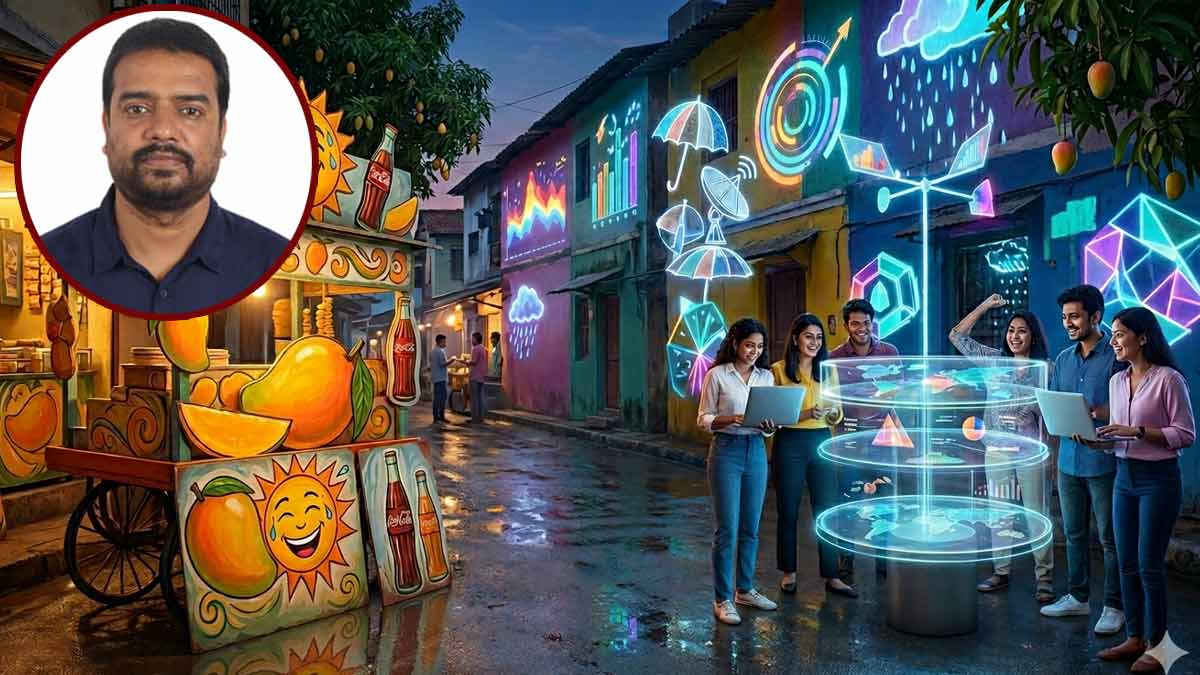
MUMBAI: Every February, a particular kind of brief begins its migration through Indian marketing teams. The mood boards fill up with mangoes and sweaty foreheads. The taglines arrive pre-assembled. “Beat the heat.” “Cool down with us.” Anindya Ghosh, co-founder of Mumbai-based agency Sam and Andy, has received this brief many times. And every time he does, he asks his client the same question.
“Is your product going to go off the shelf after the summer is over?” he says. “That is the first question. Are you immediately going to roll it back after the summer?” The client starts laughing. They say, “No, it is not possible.” He then responds, “So then why are you pushing it just for this window? It has a far bigger utility. It has a far bigger role in the life of the consumer. Do not restrict the role of the brand or the product to a particular, very short window.”
That tension between the tactical and the enduring is at the heart of everything Sam and Andy does. Ghosh and his co-founder Sameer started the agency in 2018, after spending nearly a year deciding what they did not want to build. Not another creative boutique. Not a performance shop.
“We figured out that what we call the middle-India client, typically the client who is at 100 crore, 200 crore, 500 crore, or 1,000 crore, actually requires a lot of handholding when it comes to creating revenue out of a brand,” Ghosh explains. “Neither the top fifteen or twenty ad agencies will approach them, nor will the big four or big six consulting firms, because it is not glamorous, it is not fame. But these are the people who actually value clarity, who actually value strategic inputs that move the needle of the business.”
The agency today runs six divisions: strategy, creative, performance marketing, content, design, business analytics and a recently added BTL activation unit. The founding team between them brings forty-six-plus years of experience. Sameer came from J. Walter Thompson, McCann and Rediffusion. Ghosh himself has worked at Johnson & Johnson, Star TV, Madison, Aditya Birla Retail and he was one of the youngest chief strategy officers in the country, overseeing markets across Bangladesh and four South-East Asian nations.
That emphasis on experience is reflected across the organisation. They largely lean towards experienced talent, with even the most junior team members bringing five to seven years of experience. When asked whether this could be a handicap in an industry obsessed with reaching Gen Z, Ghosh is direct.
“Gen Z is a tag that has been put on a set of people. But today, business demands maturity. Business runs like a marathon. Business is not a sprint or a shortcut. We have skin in the game. We have accountability. We have to deliver numbers. We have to get into the depth of a problem to find a solution. That needs a lot of rigour, a lot of patience, and a lot of hard work.”
He adds, with a candour that suggests he has thought about this carefully, that he has a daughter in that age group. The people on his digital team are, demographically, Gen Z. They are just, as he puts it, “very fundamental people.”
It is this mix of experience and grounded thinking that also shapes how Ghosh looks at larger market trends. His central argument about summer marketing, for instance, begins with a fairly blunt observation: the old model is broken, and it has been upended by a combination of climate change and quick commerce.
“Today’s summer in India is no longer a season. It is a high-speed consumption event shaped by heat, hyperlocal demand, and instant gratification,” he says. “Summer demand is no longer predictable. It is a combination of what I call temperature, technology, and timing.”
He points to his family spread across Dehradun and Bardhaman. “The summer started towards the beginning of February this year. Holi happened on 3rd March and from the beginning of February, you were getting heat waves.” IMD had forecast a harsher, longer winter. It did not arrive. The weather, in other words, has stopped respecting the marketing calendar.
But climate unpredictability is only one part of the shift. The other is a wholesale category-level rebrand of what summer means. “We have moved from cola to coconut water to kombucha. Today, sunscreen is the new fairness cream. SPF is becoming a daily habit,” Ghosh says. “Dabur has converted Chyawanprash into immunity drinks. Electrolytes and protein shakes are trying to create a healthy conversation and not a heat conversation. So it is not about the thirst. It is about the health, the energy, the skin, and overall wellness.”
The old advertising vocabulary has shifted too. Dermicool’s “chubti jalti garmi,” the glucose ads about the sun stealing your energy, the Frooti and Maaza spots. Ghosh notes, with evident amusement, that there was a time when the National Egg Coordination Committee ran campaigns to counter the widespread belief that eggs should be avoided in summer.
That thinking, he says, has all but disappeared. Protein-based products are now gaining traction even in peak summer. “The whole direction is changing. From heat, it is moving more towards health.”
Even travel has been folded into this reframe. Tanning, once something Indians actively avoided (see: the entire fairness cream industry), is being repositioned as a lifestyle marker. “People are travelling not only to Shimla or the cooler parts, but even to hotter places. But they have a different way of treating that summer. So summer as a season is sacrosanct. But the way we are treating and approaching summer has changed a lot and continues to change a lot.”
It is this broader shift in how summer is perceived and experienced that has led Sam and Andy to formalise their thinking. The agency has developed an internal framework for navigating the season, which they call the HEAT model, and it begins with a reframe of the question itself.
“Am I attacking the summer, or am I attacking the climate unpredictability?” Ghosh asks. “When you attack the climate unpredictability, your window and your worldview perspective changes. Your brand’s delivery, your brand’s promise, and your brand’s moment of truth changes. That makes the brand far more agile beyond just those three months of April, May, and June.”
H is for Hyperlocal Demand. “Today, it rains in some places in summer in ways that are totally unpredictable. A place in Rajasthan might get rains in May and June. You have to understand hyperlocal demand. Google data gives you a weather report at a hyperlocal level. You have to have a city-by-city strategy, because your climate is also changing city by city.”
E is for elastic consumption, where demand can shift within hours. “If it is pleasant in the morning but turns very hot later, demand changes instantly,” says Ghosh. “So how do you tackle that?” He points to an ice cream company that claims it can supply a dark store within two hours, setting a new benchmark for supply chain speed. Elastic consumption, he adds, is driven by both temperature and mood. “Mood is part of culture. You create it through communication, and suddenly a family decides to have a Rooh Afza falooda.” The difference now is immediacy. “You do not need to step out. You can get it home in ten minutes.”
A is for Aspirational Bharat, which for Ghosh is less a marketing insight and more a lived observation. “Whatever product my sister’s family gets through Blinkit in Bardhaman, I get the same category of product through Blinkit in Mumbai. So we are at par in terms of aspiration and consumption. And this Bharat is moving faster than metros.” In the paint category, he says, smaller-town consumers are actively choosing premium paints that promise to reduce indoor temperatures by five to seven degrees, rationally weighing a 100 to 200 rupee extra per can as a quality-of-life investment. Metro consumers, he suggests, would not bother.
T is for time compression. “The purchase cycle has gone down from days to minutes.” He offers a simple example from his own home. His cook used to flag a vegetable shortage and wait for instructions. “Today, my cook says, ‘There is no onion.’ And then, ‘Order it on Blinkit, it will come in ten minutes. Till then, I will cut something else.’” Quick commerce, he says, is not just a distribution channel. It is a behavioural shift that has made hoarding obsolete.
This shift in behaviour naturally raises a larger question around how brands should respond to quick commerce. Should advertising be designed differently for a ten-minute purchase journey? Ghosh is characteristically blunt in his response. Distribution channels, he says, are not brand strategy.
“The most important thing is memory structure. How do you create memory structures where the distribution platform is just the last mile to reach, but will not influence your decision?” he says. He illustrates this with ID Fresh. When you order their dosa batter on Zepto, the app may suggest swapping to a cheaper alternative. Whether you resist that prompt depends entirely on whether ID Fresh has spent years showing you their factory, validating their product with grandmothers and building an emotional association with authentic home cooking. “How ID Fresh delivers that is not about the product alone. It is about the belief they have created over a period of time.”
He is equally sceptical of moment marketing as a substitute for strategy. “Moment marketing is very tactical. It is needed. But the most important thing is memory structure.” The Hajmola outdoor ad he cites during the cooking-gas shortage is his favourite example of this done right: the copy read, in effect, “Dekha ho gaya na gas khatam.” It required no big media buy. Just someone paying attention and understanding what the brand could legitimately say. “It does not need a big window. It needs something relevant for today.”
On IPL, which consumes a disproportionate share of summer marketing budgets, he is pragmatic. State-level cricket leagues offer brands a way to buy into cricket culture without bleeding the annual budget in a fortnight. Women’s cricket has opened a new frontier entirely. And beyond cricket, he argues, there are always other conversations to enter. “From the last two days, it has been all about Dhuranda 2. If I am a smart brand and I have integrated myself into Dhuranda 2, I know the mileage I am getting.”
He prefers the term “consumption clusters” over moment marketing for events like IPL, heat waves and school holidays. “Relevance and reach both have to work. Each consumption cluster has to be tackled differently at the tactical execution level, while the overarching strategy has to remain constant.”
It is this belief in balancing strategy with sharp execution that also shapes how Ghosh evaluates great summer advertising. His personal benchmark is not a recent campaign, but a Kelvinator refrigerator advertisement from twelve to fifteen years ago. The ad features a man attempting to sing classical music, with a Kelvinator fridge behind him. When the door opens, he sings in perfect sync, the vocal by Shankar Mahadevan. When the door closes, everything collapses into chaos.
“The product truth, delivering the coldest fridge, got intertwined into the nuances of culture: the culture of Indians being classical, the culture of singing at home. It is not preachy. It is not product literature or a product brochure. It is a balanced piece of work where the consumer will hardly miss this ad because it has a hook to it, and it delivers on what it promises.”
That, in essence, is the standard he holds all summer marketing to. The failure mode, he says, is myopia. “You are either too in love with the product or too in love with the culture. You sometimes forget to balance out the product and the culture.” The result is either a product brochure dressed as an ad, or a beautifully crafted cultural moment that has nothing to do with what the brand actually sells.
The smartest brands, he argues, are the ones already converting the summer’s cultural anxiety into something more sustainable. “Rather than calling it a heat season, this is a healthy season. They are converting the heat season into a healthy season. Heat waves are the new Black Friday for FMCG. And if I call it a Black Friday, that is a sense of new culture being layered into it.”
And for any brand still wedded to the three-month summer window, Ghosh has a simple reminder. “If you live in Mumbai, you know that in September, it is very hot. And there is something called the October heat. During Diwali, it is very hot. Look at your electricity bill. The October-November electricity bill is at par with the summer bills. So are you only meant for Q1? Or are you meant for Q1, some part of Q2, and definitely the beginning of Q3?”
On a subcontinent where summers now begin in February, where Holi is warm and October scorching, where the monsoon arrives on its own terms and heat waves show up uninvited, the old marketing calendar was always a fiction. The brands that thrived understood that India’s weather was never really the point. The people, their moods, their aspirations, their ten-minute Blinkit orders and their grandmother-approved dosa batter, that was always the point. Anindya Ghosh and Sam and Andy are simply saying what good strategists have long known: seasons change, but the consumer does not stop. Any brand worth its brief should be ready for that, in February, in June, in October, and every unpredictable day in between.