Brands
Cadbury Dairy Milk Silk launches its new variant ‘Cadbury Dairy Milk Silk Ganache’

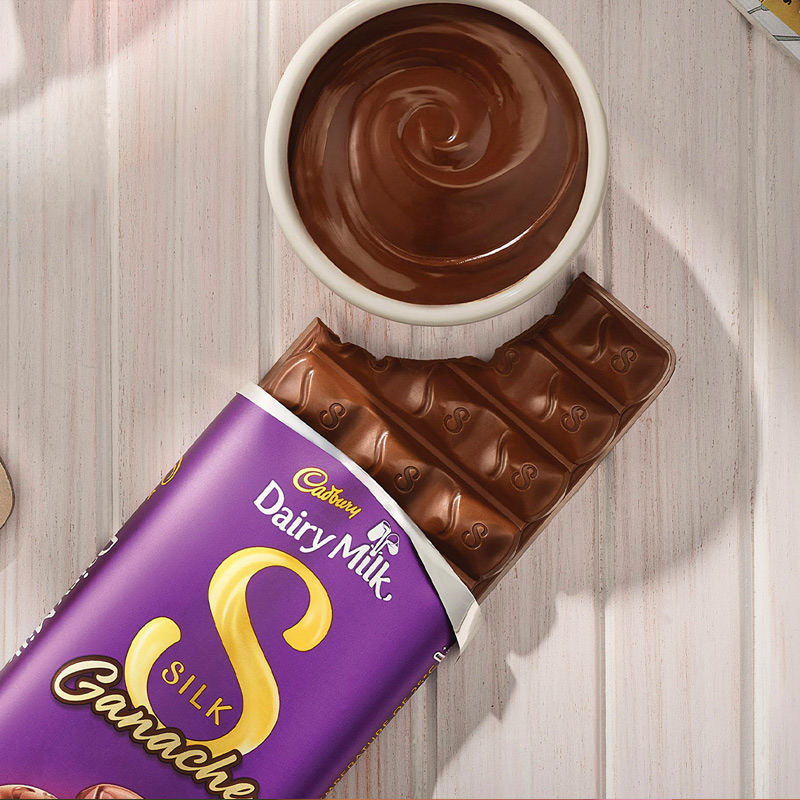
Mumbai: Cadbury Dairy Milk Silk, India’s favourite premium chocolate from Mondelez India, brings a ‘dessert-like’, decadently delicious, and perfectly balanced chocolate with the launch of its newest variant— Cadbury Dairy Milk Silk Ganache. The iconic creamy chocolate’s flirtation with cocoa brings the rich indulgence to life and is a real treat for all those looking for a more chocolatey feeling. To celebrate the launch, the brand also introduced a new digital film to highlight the experience of richer, deeper notes of the bar.
Perfectly embodying the rich yet playful experience of the Cadbury Dairy Milk Silk Ganache, the film opens with two students in the classroom engaging in a flirty exchange. Soon, they meet each other after class for a supposed “French kiss.” As the excitement builds, she pulls out a Cadbury Dairy Milk Silk Ganache, followed by shots of the couple enjoying the product, with the creamy indulgent chocolate spilling all over their faces- the iconic Silk eat experience. The film also shows the creaminess and smoothness of the chocolate, creating imagery of richness just like any luxurious dessert.
The digital film is available across all channels and will also be supported by other engaging activities across online and offline platforms.

Talking about the new campaign and launch, Mondelez India marketing & VP Nitin Saini said, “Cadbury Dairy Milk Silk has always pushed the envelope by innovating to provide consumers with a richer and unique experience while keeping up with the evolving palates. With Cadbury Dairy Milk Silk Ganache, we have married the richness of Cocoa and the sweetness of the beloved Dairy Milk Chocolate to provide a new eat experience of a luxurious French ganache. This is the 8th variant in our Silk portfolio which showcases the immense potential and demand within the category for newer and richer blends.”
Ogilvy India CCOs Kainaz Karmakar and Harshad Rajadhyaksha added, “The unique aspect of dessert-like Silk Ganache is the gooey, creamy blend of melted chocolate and cream. Moreover, Ganache originates from France. Making the French connection come alive in the creative campaign, Feels like a French Kiss, was exciting. It matches the decadent taste of Silk Ganache with the innocent romance of Silk. Adding fresh charm to the campaign is the rendition of the iconic Silk song in French to compliment the launch film as it unfolds sweetly, much as rich flavours unfold with every bite of Silk Ganache.”
The origins of Ganache, the dessert that’s the inspiration for this latest launch, is believed to have roots in France around the 1850s, when a French chef accidentally poured hot cream in a bowl of chocolate! But what really makes it special is its ability to transform any simple dessert into an unforgettable, irresistible masterpiece, making it a standout highlight. An experience we wanted to bring to our consumers and what could be better than blending it with our most premium offering, Silk, to offer yet another velvety smooth eat experience.

Brands
Microsoft faces worst quarter since 2008 financial crisis
Cloud giant battles soaring AI costs and fierce competition from nimble startups.

MUMBAI: When the tech titan starts looking a little wobbly, even the Magnificent Seven can feel the tremors because Microsoft is currently starring in its own sequel, “Clouds and Doubts.” Microsoft is on track for its worst quarterly performance since the 2008 global financial crisis, according to Bloomberg, as investors grow increasingly uneasy about rising capital expenditure and intensifying competition from nimble AI firms. The company has been pouring money into AI infrastructure, yet markets are questioning when these hefty investments will finally deliver stronger revenue growth.
At the same time, investors are shifting away from traditional software stocks amid fears that AI startups such as Anthropic and OpenAI are developing autonomous agents capable of replacing established products, including those from Microsoft. Jonathan Cofsky, portfolio manager at Janus Henderson Investors, noted growing concern that customers may bypass Microsoft and deal directly with AI vendors, potentially disrupting its core business and putting pressure on pricing and margins.
Microsoft’s stock has tumbled 25 per cent in the first quarter, putting it on course for its largest drop since a 27 per cent fall in the fourth quarter of 2008. It has also emerged as the weakest performer among the so-called Magnificent Seven technology stocks, while a broader index tracking the group has fallen 14 per cent over the same period. The shares slipped a further 1.7 per cent after markets opened on Friday, marking a potential fourth consecutive session of declines.
Cofsky pointed out that Microsoft has become more capital intensive and that improved investor confidence will hinge on assurances that software growth will not slow materially. Despite the sell-off, the stock is now trading at less than 20 times projected earnings over the next 12 months, its lowest valuation level since June 2016. Its valuation remains slightly above that of the S&P 500 Index, although it has recently traded at a discount to the broader benchmark for the first time since 2015.
Bloomberg data shows Microsoft’s capital expenditure, including leases, is expected to surge to $146 billion in fiscal 2026, up around 66 per cent from $88 billion in fiscal 2025. Spending is projected to climb further to $170 billion in fiscal 2027 and $191 billion in fiscal 2028, based on average estimates. Investors are growing cautious about such levels of spending without clearer signs of stronger growth.
Microsoft’s Azure cloud division has reported a slight slowdown in growth compared with the previous quarter, while its Copilot AI product has seen limited user traction, prompting internal changes aimed at improving performance. Ben Reitzes, an analyst at Melius Research, warned in a March note that Microsoft’s upside in Azure could be constrained as the company works to address challenges related to its AI models and Copilot offering, adding that these issues are unlikely to be resolved in the short term.
Of the 67 analysts covering Microsoft, 63 maintain buy ratings, three hold ratings and one a sell rating. The average 12-month price target of $592 implies a potential upside of more than 64 per cent, the highest on record based on data going back to 2009. The stock is also trading below its 200-day moving average by the widest margin since 2009.
Reitzes suggested the dominance of buy ratings may indicate complacency among analysts, while highlighting risks in Microsoft’s productivity and business processes segment as well as its More Personal Computing division. In contrast, Tal Liani of Bank of America reinstated coverage with a buy rating, citing durable multi-year growth prospects across cloud and AI. Jake Seltz, portfolio manager at Allspring Global Investments, maintained that Microsoft retains strong long-term value and that its AI strategy is likely to be validated over time, viewing near-term concerns as a potential opportunity for longer-term investors.
The report highlights a growing divergence in market sentiment, with optimism around long-term AI potential weighed against immediate execution risks and investor uncertainty. In the world of big tech, even the mightiest clouds can have silver linings but right now, Microsoft’s investors are scanning the horizon for clearer skies.








