MAM
BTL activities yet to gather steam, retailers admit ignorance

MUMBAI: The Rs 350 billion Indian tobacco industry has a new mantra on its lips: Below-the-Line (BTL) activities.
But there seems to be a drag in applying the strategies and reaching out to retailers. Tobacco companies, who refused to divulge the finer details of their BTL strategies, are taking time to adapt themselves to the changed scenario.

As things stand, tobacco ads that once dominated the outdoor advertising segment with all those towering hoardings and glittering signboards have been reduced to three-by-two foot display boards in retail outlet premises now.
“As per the new rule, we can display only two boards three-by-two foot size in every retail outlet,” informs Godfrey Philips India (GPI) senior vice-president (corporate affairs) Sundeep Kumar.
Apart from brand extension programmes and direct-to-consumer initiatives, Kumar says GPI has been planning various strategies these days to exercise the limited opportunities that come under BTL activities to the maximum. He rules out any kind of reduction in GPI brands’ prices.
According to Kumar, GPI is planning to come up with various retailer relationship programmes and new product launches. He refused to reveal if there would be an increased margin for retailers to get the brands an upper hand in the market.
“Time will tell how things are going. We want to observe what out competitors are doing. Chances are that retailers themselves might increase the rentals for the display boards in their premises,” says Kumar.
Major tobacco companies are also planning to provide retailers with signboards, which say, “cigarettes will not be sold to people under18,” as a goodwill gesture. The bill insists that retailers should carry these statutory signs in their premises. So tobacco companies have decided to save retailers the trouble by contributing to the signboards.
As tobacco majors have decided to concentrate on BTL activities, their brands will be presented in visually more attractive packets. Some top brands have undergone changes in package design recently. They include GPI’s Red & White and ITC’s Insignia.
“Earlier, it was more visual-oriented promotions. Now the whole equation of product-presentation has changed. Now the design should come in such a way that it directly targets the buyer and the purpose should be to project a distinct identity of the brand in the mind of the consumer,” offers Whisper Design Studio retail design manager Sharad Kumar. Whisper is currently handling the account of a tobacco major.
“Now the design should be more in terms of physical interaction than graphic interaction. We should identify the target group in that particular market area and should design the boards and packets accordingly,” he says.
According to Kumar, the whole equation of tobacco promotion is changing as design studios have started replacing ad agencies for promoting tobacco brands within the BTL frame.
The ad ban on tobacco has complicated the promotional strategies of small-sized tobacco manufacturers and new entrants in the field. Now they have to operate within the BTL borderlines. A Mumbai-based tobacco manufacturer, who refused to be named, says that they will be concentrating more on canvassing retail sellers. “We will try to treat retailers better to get a hold on the market,” he says.
The whole scenario seems to have lifted the tobacco retail seller to a sky-high pedestal. But a couple of tobacco retail sellers from suburban Mumbai, with whom indiantelevision.com had an interaction, beg to differ:
“We are not excited with the common notion that the ban on tobacco ads has put tobacco retail sellers in a position of advantage. There hasn’t been any change in approach from any of the tobacco companies whose brands we stock. No one has approached us till date with offers like an extension in credit period or increased incentives,” says a retailer.
“But on the other hand, the ban and the new rule has put us under tremendous pressure. Nowadays we are cautious while supplying to our customers because we are afraid about the official raids. The government should bring an over-all ban on tobacco instead of coming up with complicated rules,” the retailer says.
“Though the public demand for cigarettes is consistent, the industry hasn’t been doing anything to boost our morale in the changed scenario. We are even thinking of diverting to different products,” reveals the retailer.

MAM
Crocs and Lego launch new collaborative collection in India
Iconic brands bring playful creativity to footwear with first drop on 13 April 2026.
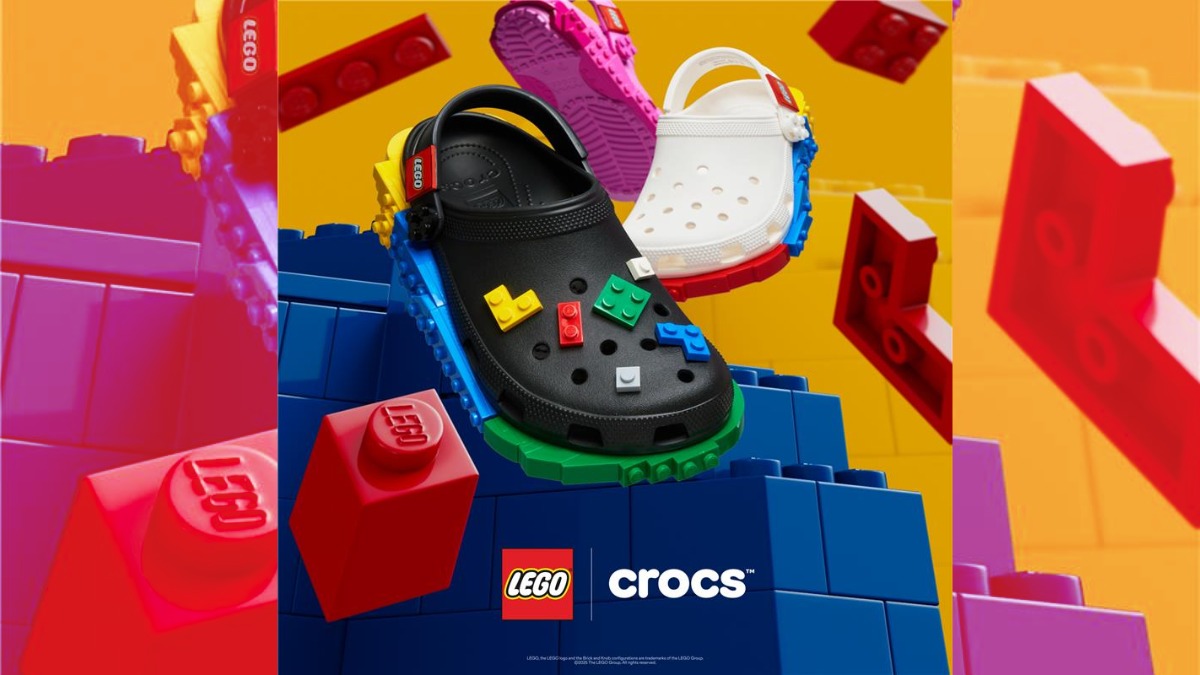
MUMBAI: Crocs and Lego have clicked together once again and this time, the bricks are heading straight for Indian feet. The global footwear brand Crocs has announced the India launch of its latest Crocs x Lego Group collection, following the excitement of their multi-year global partnership unveiled earlier this year. The collaboration celebrates creativity, play, and individuality, merging Crocs’ signature comfort with Lego’s iconic building-block spirit.
The collection will roll out in two phases. A digital-exclusive pre-launch begins on 13 April 2026 on crocs.in, featuring four styles: the Lego Masterbrand Creativity Clog, Lego Midnight Garden Creativity Clog, Lego Creativity Clog, and Kids’ Lego Creativity Clog. Each pair purchased during this phase will include an exclusive Lego minifigure as a collectible bonus.
From May 2026, the full collection will be available across select Crocs stores, VegNonVeg, and Foot Locker outlets nationwide.
The designs playfully blend Crocs’ classic clog silhouette with Lego brick-inspired details, complete with custom Jibbitz charms on the upper and sole. The collection encourages wearers to treat their footwear as a canvas for personal expression, without any set instructions just an open invitation to build, explore, and have fun.
Crocs chief marketing officer Carly Gomez said, “The Lego Group’s boundless imagination makes them the perfect match to Crocs’ wonderfully unordinary spirit. We are both brands that pride ourselves on being built different, celebrating self-expression and fuelling creativity.”
LEGO Group, head of licensing & extended line design & partnerships Satwik Saraswati added, “Our common mission to enable self-expression and wear it with pride only marks the beginning of a journey with endless possibilities.”
The campaign will extend beyond the product launch through creator-led seeding, elevated visual merchandising, and exclusive on-ground previews, supported by a deeper partnership with the Lego India team.
In a market that loves both comfort and fun, Crocs and Lego have built something special, a collection that lets every step feel like playtime. Get ready to click your heels (or rather, your clogs) because this collaboration is set to be a blockbuster hit with Indian fans.







