MAM
Broadcasters, cable cos, distributors form new Video Advertising Bureau


MUMBAI: The Cable television Advertising Bureau (CAB) has paved the way for the Video Advertising Bureau (VAB).
CAB, which was founded in 1980, has dissolved and been replaced by VAB comprising 110 broadcast and cable networks and the 11 multichannel video programming distributors (MVPDs) to form a single voice to promote the power of video advertising.

The VAB’s goal in uniting nearly all broadcast and cable networks with MVPDs is to raise the bar on research, data and analytics, and expand the market for advertising in professionally produced video content.
“Our industry is changing rapidly, however one constant is the unquestionable power of television to reach consumers with advertiser messaging. By broadcasters, cable networks and distributors coming together in this unprecedented way, VAB members will share expertise and insights, put forward original research and push toward a common goal of elevating television’s leadership in driving product sales and brand affinity for clients,” said Discovery Communications ad sales president and inaugural VAB co-chair Joe Abruzzese.
VAB members produce and sell the overwhelming majority of video content, and likewise command the vast majority share of viewer attention. This attention advantage manifests across all screens – TV, desktop, laptop, tablet and smartphone – totaling 80 per cent (140 hours) of the 175 hours/month Americans devote to the universe of ad-supported TV, Google/YouTube, AOL, MSN, Yahoo and Facebook.
“The time has come for the TV industry to be represented holistically with the power of the content superseding the differences in distribution. This will clearly advance the share of voice for the industry and support the initiatives that will provide incremental value to advertisers as technology, data and consumer choice change the dynamics of the medium,” said Group M chief investment officer Rino Scanzoni.
The VAB’s top priority is commissioning research on two levels – quantifying the primary role that ad-supported TV plays in generating consumer sales traffic, and clarifying attribution in the modern media mix.
“We are proud to work alongside our expanded membership of broadcasters and cable networks at the Video Advertising Bureau to expand the thought leadership on best practices and insights for marketers. Our collective goal is to help our clients make stronger connections with consumers where they watch, when they watch, and on any device,” added Time Warner Cable Media EVP and COO and inaugural VAB co-chair Joan Gillman.
Content over distribution
VAB members are creating the next ways for advertisers to capitalize on the attention advantage, from data platforms to addressable TV advertising. In unison, the innovations can refine the state of the art of video advertising.
“There is no substitute for quality content in the presence of valuable data and insights. It only makes sense to expand this organization’s focus to reflect the rapidly changing premium video environment and strengthen the research it can provide to content creators and advertisers regardless of platform — it doesn’t matter where the content is consumed, it only matters that it’s great,” said NBCUniversal chairman, advertising sales and client partnerships Linda Yaccarino.
The more ways viewers can get video, the more they continue to choose premium TV content. According to researcher GfK’s 2014 UK-US SVOD study, TV content accounts for 88 per cent of all streaming activity in the US.
“The media landscape is changing rapidly but one thing remains a constant: premium TV content is still the most powerful environment for advertisers. We are committed to helping our clients leverage this content effectively across multiple screens, and are pleased to be joining other broadcast and cable networks in this important initiative” said CBS Television Network president, network sales Jo Ann Ross.
Cross-screen commitment
Leading the VAB will be the executive team that has run CAB for the past 12 years, during which time cable ad revenues have grown by 80 per cent. Sean Cunningham will be president & CEO; Chuck Thompson will be EVP, whereas Danielle DeLauro will be SVP strategic sales insights. Together they will give advertisers one source for the best research, insight and perspective on video advertising. Importantly, this will include new primary research on the impact of TV advertising.
Cunningham said, “More than ever, consumers are tuning in to premium, multiscreen TV content – at a moment’s notice, at arm’s-length, on the best available screen. Advertisers instinctively know this world-class video initiates the sales cycle. The VAB will lead the charge to prove it.”
“We congratulate the CAB and the broadcast community as they converge to become the VAB. Multi-screen TV content is among marketers’ most important assets. The creation and evolution of the VAB will further marketers’ sophistication, insights and understanding of these assets as they seek to improve their marketing and media management and more successfully build their brands and business results,” said Association of National Advertisers president Bob Liodice.







Brands
Kingfisher signs three-year IPL partnership
Packaged water brand signs on as ‘good times partner’ for 2026–28 cycle
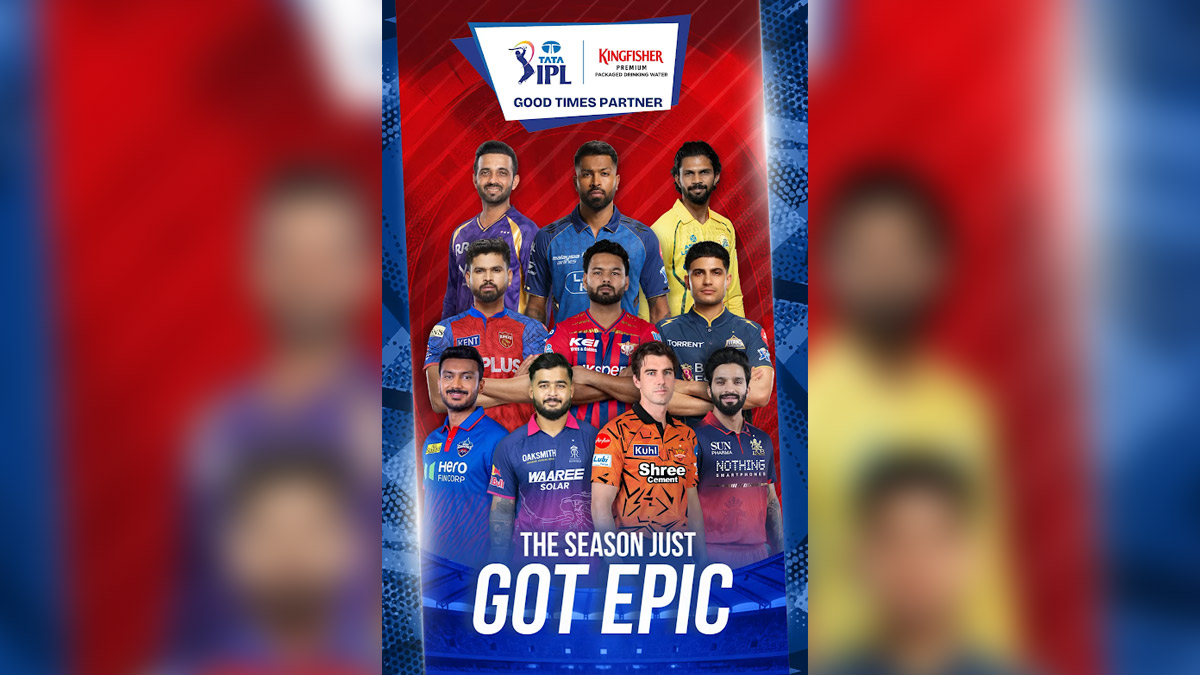
MUMBAI: Kingfisher Premium Packaged Drinking Water is betting big on cricket’s biggest stage, sealing a three-year partnership with the Board of Control for Cricket in India to sharpen fan engagement at the TATA Indian Premier League.
The brand, owned by United Breweries, will serve as the official “good times partner” for the men’s IPL from 2026 to 2028, extending a relationship that began with the Women’s Premier League. The move signals a broader push to embed itself deeper into live sport, with a focus on immersive, consumer-led experiences rather than conventional sponsorship visibility.
At the heart of the tie-up is a suite of fan-first activations spanning broadcast, stadiums and digital channels. These include the “Kingfisher Bird Cam”, offering a branded spider-cam perspective during live matches, and the “Good Times Zone”, an in-stadium entertainment hub during play-offs aimed at amplifying match-day buzz. The brand will also back IPL fan parks, elevate public screening experiences and run digital contests tied to key moments through the season.
Vikram Bahl, chief marketing officer, United Breweries, said cricket in India “is more than a sport, it is a shared cultural moment”, adding that the IPL brings that energy alive at scale. “For Kingfisher Premium Packaged Drinking Water, being present at the heart of these moments, in partnership with the BCCI, is a natural extension of what we stand for. Through this association, we aim to enrich how fans experience the game… making every match more immersive, social and memorable,” Bahl said.
Devajit Saikia, honorary secretary, BCCI, said the IPL “has always been at the forefront of redefining sports entertainment and fan engagement”. He added that the collaboration would fuse cricket fandom with “innovative fan experiences that extend beyond the stadium”, helping create memorable moments for audiences nationwide.
For United Breweries, part of the HEINEKEN group, the play is clear: move from passive branding to active participation in the fan journey—on screens, in stands and across social spaces. With millions tuning in and turning up each season, the IPL remains the country’s most potent marketing theatre. The question now is whether “good times” can translate into lasting brand recall in a market where visibility is easy, but engagement is hard-won.








