MAM
Brands need to keep the customers at the centre: Ray Velez

VARCA: At Goafest 2013, Razorfish chief technology officer Ray Velez explained how a company should organise a brand around the consumer by busting silos and applying the principles of agile development across one‘s business.
“A brand should always keep his customer at the center. One‘s organisation must be structured around the customer that will in a way help in building relationship with him. A marketer should plan his strategy based on the data from the actual customer activity and also understand that customer will give a feedback whether you like it or not,” he said, while talking about the five principles one should embrace in order to evolve their business to deliver new customer experience.
He also said a marketer should measure the data and see how to maintain the interactivity with the costumer. “Think of your brand as a service,” he emphasised.

He added that a customer should be serviced well so that he comes back. One needs to fulfill consumer needs which will henceforth enhance customer relationship and deliver happiness. Loyal customers buy 75 per cent more than the others, Velez mentioned.
Velez also added about how to thrive in our age of disruption. He highlighted on how the lines have blurred with technology, media, and creativity coming together, and how this shift is revolutionising marketing and business strategy.
“Convergence of technology, media and creativity allow you to imagine, create, and enable customer experience like never before. Media allows a two way communication through a hash tag which is a way for a customer to talk back. Creativity can come from anywhere and everywhere. And these are the provisions that technology provides,” he said.
Vezel believes that it‘s all about telling a brand story and providing an experience in a whole new way.
“Simple plug in buttons such as Facebook‘s “Like” and “Share,” Google‘s “+1,” and Twitter‘s “Tweet” and “Follow” dramatically lower the barrier to users sharing content from one‘s site out to their entire social graph,” he added.
Social cloud services provide digital experiences or web properties with the ability to connect up with Facebook, Twitter, LinkedIn, Google, Microsoft and other social services.
These services come in the form of Application Programming Interfaces (APIs) that a technologist can integrate. Whether a digital experience is a mobile application or a traditional desktop site, these APIs are available.
According to Velez, one should create a 360 degree view of the consumer with analysing his media exposure, offline consumer data and the website behavior. ‘Data is something which tells you what your customer wants. Also, employ agile methodology and rapid prototype,” Velez said.
Velez said that one needs to embrace the diversity of culture and other diversities in order to deliver new customer experience. He picked a statement from Frans Johansson‘s book The Medici Effect saying, “When you step into an intersection of field, disciplines of culture, you can combine existing concepts into a large no. of extraordinary new ideas”.






MAM
Promotedge marks 11 years with expansion into D2C and performance marketing
Kolkata-based agency strengthens global footprint and launches new platforms.
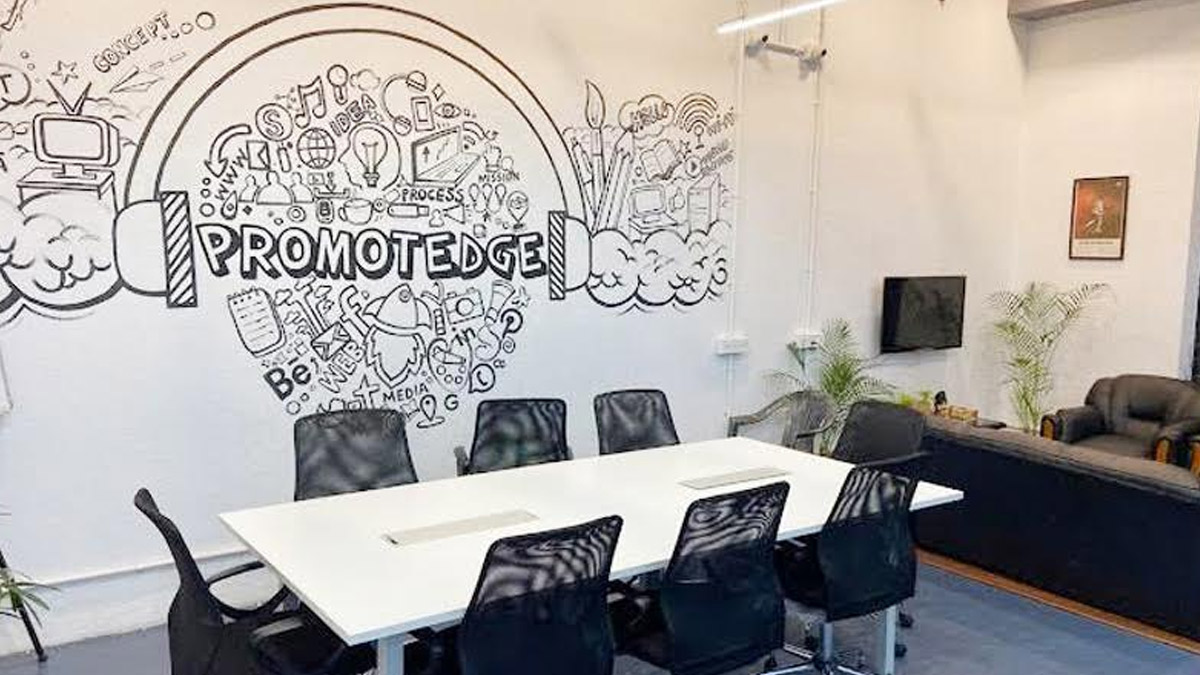
MUMBAI: Promotedge has spent 11 years quietly building momentum and now it’s ready to take a much bigger leap. The Kolkata-based integrated marketing and branding agency, founded in 2015, has completed 11 years of steady growth, evolving from a local creative firm into a full-service marketing partner with a growing international presence. With operational hubs in the US and Canada through its platform PromotEdgeDigital, the agency now serves clients across India, the US, Canada, Australia, and the Middle East.
Over the past 11 years, Promotedge has partnered with more than 200 businesses across diverse industries. Guided by its “Digitally Desi” philosophy which blends cultural insight with data-driven execution, the agency offers end-to-end services including web solutions, digital marketing, creative design, brand planning, and audio-visual production.
In its eleventh year, the agency made significant strides by developing branded IPs and content series for the automotive and industrial sectors, creating audio-visual content for international sporting bodies like the Fédération Internationale de Volleyball, and strengthening its performance marketing capabilities, particularly on quick-commerce platforms such as Zepto, Blinkit, Flipkart, and Swiggy Instamart.
To further boost its D2C focus, Promotedge has integrated the operations of Fizzle Digital into its performance marketing division, now led by founders Avi Saraf and Jhalak Agarwal. The agency continues to serve B2B clients in sectors like steel, energy, engineering, and infrastructure.
Beyond traditional services, Promotedge has introduced new platforms. DesiMachines is an online marketplace for heavy engineering and construction equipment, supported by two financial institutions and six top OEMs. The agency also launched Pexora, a joint venture with Prodigy focused on workspace design, branding, experiential marketing, and Digital Out-of-Home (DOOH) solutions in Eastern and North Eastern India.
Additionally, Promotedge nurtures The Trip Space, a boutique travel brand that curates personalised, luxury journeys for high-net-worth travellers.
Promotedge CEO Saurav Agarwal said, “PromotEdge has always been built with a long-term vision. Our goal is to develop capabilities that provide long-term value to our clients.”
As it approaches its 12th year, the agency plans to expand its global clientele, deepen D2C and performance marketing capabilities, invest in AI-enabled solutions, and strengthen its platform-led initiatives.
From a modest start in Kolkata to building platforms and partnerships across borders, PromotEdge is proving that smart, culturally rooted marketing can travel far and deliver real impact. The agency is clearly gearing up for an even bigger chapter ahead.






