MAM
Branding Overboard

Here are ten clues that your entire branding campaign has gone overboard.
Get the lifeboats ready!
One: There is a specially built underground tunnel between your HQ and your branding agency.

Most downtown complexes have these situations where services are set up for very quick and easy next-door access. There is nothing wrong with the access, but for a corporation to get pinned by proximity is surely a signal. Corporations should be more strategically driven than geographically motivated.
Two: Management will find any reason to add and invent new products, whether they are needed in the market or not.
As long as they fit a creative theme, executives without a good grip will support any promotional idea that alphabetically fits the catalog.The dilution of brands and constant change is the number one problem hindering long-term marketing. Most new innovations have a 90 percent failure rate, as most are rushed on fads, trends and quick blitzes for copycat ideas. Originality and long-term thinking is so rare it’s becoming extinct. It’s very wise to invent for real needs and not to fill the gaps in a branding theme.
Three: The creative innovation has become so complex that not even experts can figure out the launch campaigns and promotional themes.
Most advertising and branding is very often either apologizing for its blatantly raw message or explaining very hard to customers about the hidden messages behind its campaigns. Customers are fed up; they want clear, honest and simple messages. The overly creative twists and turns are just burdens. Most agencies are often scared, so they just copy ideas left and right and twist them for avoiding the obvious. This explains why almost all logos, names, identities and commercials are so similar. Remember, simplicity and originality will always win.
Four: Half of the entire HQ has become a multimedia center, and the staff frequently dress in Disney characters and skateboard the halls.
Most corporations seriously think that free-flow creativity is the way for modernized hip-hop success. They fail to see that real creativity is a very serious and a somber thing. Oversized creativity can cause fires.
Five: The boardroom is too small for big creative meetings, so local theaters are rented for the pitch and presentations.
It is good to get the larger teams of management involved with the branding issues. The bigger the space, the bigger the budgets; this is the Hollywood training of the glitzy noisy campaigns. Often, however, they really fall flat on the deaf ears of the product’s end users. Know thy limits, cut to size.
Six: There is nothing outsourced; with so much in-house now, there are even talks to completely drop the original business model. Why not become a branding agency?
Far too many businesses lose focus so easily. They become trapped in a branding circus and forget the real and original cause. Often, the message gets so twisted that it can cause a corporate meltdown. This is also one of the reasons why most corporations change agencies so frequently.
Seven: There are plans to change the zoning bylaws so as to accommodate the gigantic visuals, multi-story inflatable structures and the Ferris wheel.
The three dimensional dinosaurs of the past — once called visual aids — are the things of the past. Miniaturization of screens and gadgets are more in the play now, and customers want quick and cute access. Old graphic formats are gone.
Eight: There is a talk to repaint the entire HQ in the corporate color, and also the entire buildings nearby, and all the surrounding blocks.
The concept of the corporate color that grabs attention is a lost cause. With a billion businesses and only seven colors, no one remembers what corporation a particular color belongs to. Though it is a good idea to have a decent corporate color, to impose it on people as a calling device or to claim its exclusivity in courts is just dreaming in Technicolor. Get 3-D spectacles.
Nine: Now there are conveyor belts from office to office that carry newly designed displays and point-of-purchase innovations.
When there are far too many activities pulling the campaign in different directions, then obviously there will be an explosion of confusing selling messages, slogans and taglines with irrelevant graphics flooding the marketplace. Stop the presses.
Ten: There is talk of clearing space at the HQ to make a runway for a 747 to land for a photo shoot … and also to enable the creative teams to take off to exotic resorts on short notices.
Wildly creative ideas are really good, provided they are harnessed and controlled under professional leadership. The burst of profane exuberance in branding with an “anything goes” syndrome has already reached its climax. Perhaps it’s not a bad idea for the overly zealous creative teams with their extreme advertising mantra to take off to a relaxing island … make it a one-way trip, perhaps.






Digital
Content India 2026 opens with a copro pitch, a spice evangelist and a £10,000 prize for Indian storytelling
Dish TV and C21Media’s three-day summit puts seven ambitious projects before an international jury, and two walk away with serious development money
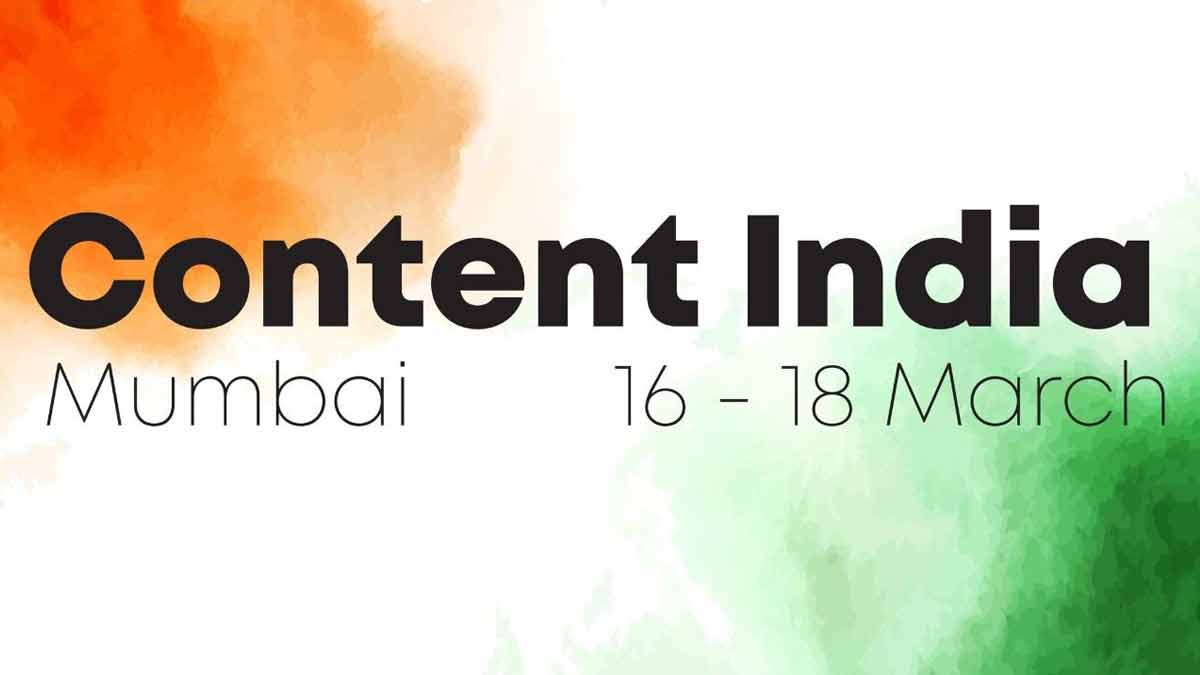
MUMBAI: India’s content industry gathered in Mumbai this March for Content India 2026, a three-day summit organised by Dish TV in partnership with C21Media, and it wasted no time making a statement. The event opened with a Copro Pitch that put seven scripted and unscripted television concepts before an international panel of judges, and by the end of it, two projects had walked away with £10,000 each in marketing prize money from C21Media to support development and international promotion.
The jury, comprising Frank Spotnitz, Fiona Campbell, Rashmi Bajpai, Bal Samra and Rachel Glaister, evaluated a shortlist that ranged from a dark Mumbai comedy-drama about mental health (Dirty Minds, created by Sundar Aaron) to a Delhi coming-of-age mystery (Djinn Patrol, by Neha Sharma and Kilian Irwin), a techno-thriller about a teenage gaming prodigy (Kanpur X Satori, by Suchita Bhatia), an investigative crime drama blending mythology and modern thriller (The Age of Kali, by Shivani Bhatija), a documentary on India’s spice heritage (The Masala Quest, hosted by Sarina Kamini), a documentary on competitive gaming (Respawn: India’s Esports Revolution, by George Mangala Thomas and Sangram Mawari), and a reality-horror competition merging gaming and immersive fear (Scary Goose, by Samar Iqbal).
The session was hosted by Mayank Shekhar.
The two winners were Djinn Patrol, backed by Miura Kite, formerly of Participant Media and known for Chinatown and Keep Sweet: Pray & Obey, with Jaya Entertainment, producers of Real Kashmir Football Club, also attached; and The Masala Quest, created and hosted by Sarina Kamini, an Indian-Australian cook, author and self-described “spice evangelist.”
The summit also unveiled the Content India Trends Report, whose findings made for bracing reading. Daoud Jackson, senior analyst at OMDIA, set the tone: “By 2030, online video in India will nearly double the revenue of traditional TV, becoming the main driver of growth.” He noted that in 2025, India produced a quarter of all YouTube videos globally, overtaking the United States, while Indians collectively spend 117 years daily on YouTube and 72 years on Instagram. Traditional subscription TV is declining as free TV and connected TV gain ground, forcing broadcasters to innovate. “AI-generated content is just 2 per cent of engagement,” Jackson added, “highlighting the dominance of high-quality human content. The key for Indian media companies is scaling while monetising effectively from day one.”
Hannah Walsh, principal analyst at Ampere Analysis, added hard numbers to the picture. India produced over 24,000 titles in January 2026 alone, with 19,000 available internationally. The country now accounts for 12 per cent of Asia-Pacific content spend, up from 8 per cent in 2021, outpacing both Japan and China. Key exporters include JioStar, Zee Entertainment, Sony India, Amazon and Netflix, delivering over 7,500 Indian-produced titles abroad each year. The top importing markets are Saudi Arabia, the UAE, Egypt, the United States and the Philippines. Scripted content dominates globally at 88 per cent, with crime dramas and children’s and family titles performing particularly strongly.
Manoj Dobhal, chief executive and executive director of Dish TV India, framed the summit’s ambition squarely. “Stories don’t need translation. They need a platform, discovery, and reach, local or global,” he said. “India produces more movies than any country, our streaming platforms compete globally, and our tech and creators win international awards. Yet fragmentation slows growth. Producers, platforms, and tech move in different lanes. We need shared spaces, collaboration, and an ecosystem where ideas, technology, and people meet. That is why we built Content India.”
The data, the pitches and the prize money all pointed to the same conclusion: India is not waiting for the world to discover its stories. It is building the infrastructure to sell them.







