Brands
‘Blogging’ on brand’s mind

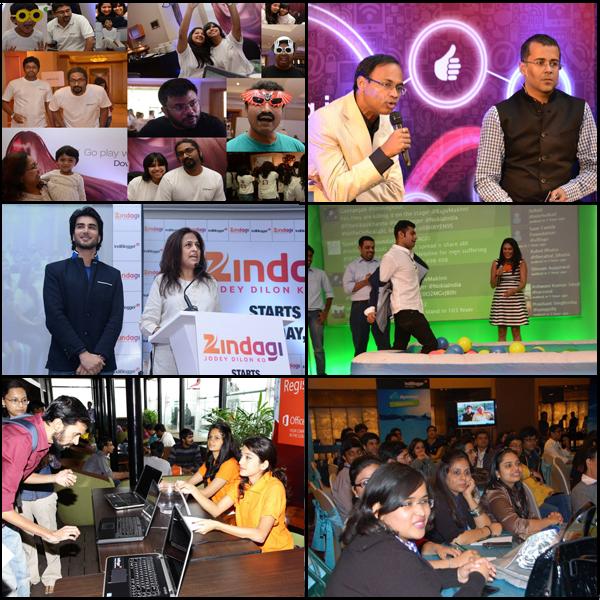
MUMBAI: If you are a blogger then you will definitely relate with Nora Ephron’s Julie and Julia. As portrayed in the film, blogging which was once upon a time considered as just a hobby is today the most sought-after platform.
The bloggers’ community has got its due recognition with social media becoming an integral part of our lives. What is interesting to note is that bloggers today are on priority list of many brand managers when it comes to drawing an online marketing strategy.

“Brands today are engaging with bloggers because they want to talk about experiences and the brand with their readers. Bloggers are respected for the various topics they write about and no one questions their credibility as well. Most importantly, blog posts are permanent advertisements. With search being an important function on the internet today, blogs become extremely useful for a consumer. Consumers are always searching for information, products, brands and services. And, if bloggers are not writing about you; you won’t figure in the consumer selection subsets,” elaborates IndiBlogger spokesperson.
Brands and blogging
According to the Business World-IndiBlogger report on the Indian blogosphere, 56 per cent bloggers claim that they influence buying decisions of their readers.
In the last few months, Indiablogger has hosted blogger events for brands across travel, consumer electronics, FMCG, education, finance, personal care and most recently entertainment sectors. SkyScanner, Nokia, Dove, Tata Capital, Asus, Kissan, Racold, Sunsilk, British Airways and British Council are a few popular brands that often associate with bloggers.
Recently, ahead of the new entertainment channel Zindagi’s launch, Zeel invited almost 500 bloggers from Mumbai and Delhi. The reason behind the exercise was simple: though it gave bloggers an opportunity to interact with scriptwriters, directors and actors of the show, it also helped the channel create enough buzz on the digital world.
Similarly, Imagica, the theme park from the house of Adlabs Entertainment, invited close to 30 blogging mothers to spend a day at the venue.
When asked how the activity helped the brand, Adlabs Entertainment CMO Harjeet Chhabra says, “If we have to measure the response through the excitement amongst bloggers and their experience at Imagica, then we can surely say that we had 30 happy women bloggers and their families at the end of the day. Such initiatives are not carried out for immediate results. They are done from a long term viewpoint as opposed to being tactical or promotional. These activities help drive conversations on the digital platform and builds social content with a long term standpoint. We believe that one of the key parameters for measuring success of activities such as these is the scale of engagement and involvement. Being an experiential destination, it is imperative that the influencers are provided the right experience and engagement platform which Imagica provides.”
The byproduct of these activities is the impact and reflection on social media. For example the number of tweets sent out by these influencers, the number of shares and eventually the number of people the message reaches out to. “We have also seen tremendous success in terms of the number of images being shared, including the trendy new fad of selfies. Such are the moments that actually define the success of any activity; however small or big. We are inspired to do more and more such events and are very soon going to be back with a food blogger’s event too,” adds Chhabra.
One of the biggest trends in the blogger’s space is the increased usage of video content on YouTube in the form of tutorials and reviews. When Maybelline New York India launched the Colossal Kohl Turquoise, popular blogger Rati Tehri Singh created videos that showcased different styling technique using the product. These video tutorials were then shared on the brand’s social platforms.
The shifting trend
While most brands have celebrities with a huge fan following as brand ambassadors, the rise of the influence of bloggers and their marketing strategies have helped brands in many ways.
“Blogs reach out to a wide range of audience and have a diverse group of fans. A blog entry related to your brand will be seen by a larger fan base whom you may have not targeted earlier thereby expanding the reach of your brand. Bloggers and influencer marketing strategies have truly transformed the decision-making process of consumers while purchasing products and services,” says FoxyMoron co-founder Harshil Karia.
Over time, brands are also realising that it is important to cherry-pick the bloggers so that relevant content is created for your brand. “A large fan base is not enough to amplify the brand’s message. Content that is relevant to the target audience and in sync with the brand’s philosophy increases engagement. In fact, bloggers are now entrenched in the larger community of fans and followers. Brands are not only reaching out to bloggers before a campaign begins but also establishing and maintaining long-term relationships with them irrespective of a campaign launch,” adds Karia.
With the blogger community getting popular in the online marketing business, it will be interesting to see how brands go ahead and engage them uniquely in the coming days.



Brands
Lotus Herbals unveils HydroActivated sunscreen with high-impact campaign
Harnaaz Sandhu fronts digital push spotlighting breakthrough sun care tech

MUMBAI: Lotus Herbals has rolled out a high-decibel marketing campaign to introduce what it calls India’s first hydro-activated sunscreen, aiming to reshape how consumers think about sun protection.
At the centre of the launch is the Safe Sun HydroActivated Sunscreen SPF 50+ PA+++, a formulation built on a patent-pending Hydrosome Technology that activates on contact with moisture. Unlike conventional sunscreens that can weaken with sweat, this product is designed to do the opposite, boosting protection when the skin is exposed to water or perspiration.
The campaign is led by Harnaaz Sandhu and is being amplified across OTT platforms, social media and outdoor locations in key metro cities. The brand film takes a light, relatable approach to everyday sunscreen struggles such as uneven application and fading protection, while positioning the new product as a reliable, high-performance alternative for active lifestyles.
Beyond its core technology, the sunscreen features next-generation UV filters and Edelweiss Flower Extract, offering hydration alongside protection. The formula claims up to 10 hours of water resistance and even, all-round defence against sun exposure and tanning, targeting consumers who want both skincare and performance in one product.
Speaking about the launch, Lotus Herbals chairman and managing director Nitin Passi said, “We are excited to launch India’s first sunscreen with hydroactivated technology which is our most innovative product launch. This isn’t just a sunscreen; it’s a technological breakthrough that utilises a novel manufacturing process. We’ve created a product that stays invisible on the skin yet becomes a performance powerhouse when the user is most active.”
Sharing her experience, Lotus Herbals brand ambassador Harnaaz Sandhu said, “I am thrilled to be associated with Lotus Herbals Safe Sun for their new sun protection campaign. In my world, there is no room for shortcuts, and I need functional and reliable products that work as hard as I do. The hydroactivated sunscreen is a game-changer because it blends with my skin and protects me better when I’m pushing my limits.”
The campaign is being distributed across platforms including JioStar connected TV integrations and ZEE5, along with television placements such as Sa Re Ga Ma Pa in West Bengal. A large influencer push involving over a thousand creators, along with in-store branding and retail activations, is also part of the rollout.
With a blend of science-led positioning and mass-market storytelling, Lotus Herbals is betting on innovation to stand out in the crowded sun care segment, hoping its moisture-powered promise strikes the right chord with today’s always-on consumers.






