Brands
Biocon raises Rs 4,500 crore via QIP, its first equity fundraise since 2004 IPO

MUMBAI: If the stock market had a hall of fame for patience, Biocon would deserve a shiny plaque. After two decades since its IPO debut in 2004, the Bengaluru-based biopharma giant returned to the equity markets, raising Rs 4,500 crore through a qualified institutions placement (QIP) that closed on 19 June 2025.
The fundraise saw 13,63,63,635 equity shares priced at Rs 330 each (face value Rs 5, including a premium of Rs 325), and attracted a swarm of top-tier investors. The final orderbook featured heavyweights like SBI Mutual Fund, ICICI Prudential Mutual Fund, HDFC Life Insurance, Nippon India Mutual Fund, Mirae Asset, Aditya Birla Mutual Fund, Franklin Templeton, SBI General Insurance, Norway’s Government Pension Fund Global, and Blackrock.
“The strong response to our QIP reflects deep investor conviction in Biocon’s differentiated strategy and consistent execution”, said MD & CEO Siddharth Mittal. “This capital raise further strengthens our balance sheet, enabling us to invest in innovation, expand global access to lifesaving biopharmaceuticals, and advance our purpose of delivering affordable healthcare solutions”.

Biocon plans to channel the proceeds towards multiple priorities: acquiring outstanding optionally convertible debentures issued by Biocon Biologics Ltd to Goldman Sachs’ India AIFs, repaying and prepaying select financial instruments and borrowings, and covering other corporate obligations.
This marks Biocon’s first equity fundraise in 21 years, and it didn’t disappoint. Backed by a diverse mix of domestic mutual funds, insurance firms and foreign institutional investors, the transaction not only widened the company’s investor base but also reinforced trust in its long-term business vision.
With shareholder approval secured via postal ballot on 4 June 2025, the QIP positions Biocon for its next growth sprint. Post-issue, the promoter and promoter group’s shareholding stands at 54.45 per cent.
Kotak Mahindra Capital, BofA Securities India and Goldman Sachs India served as book running lead managers. Legal counsel included JSA Advocates & Solicitors for Biocon, and Cyril Amarchand Mangaldas and Linklaters Singapore for the lead managers.






Brands
Google secures AP discom licence to power $15bn Vizag AI hub
First-of-its-kind move gives tech giant grid control for massive 1GW campus
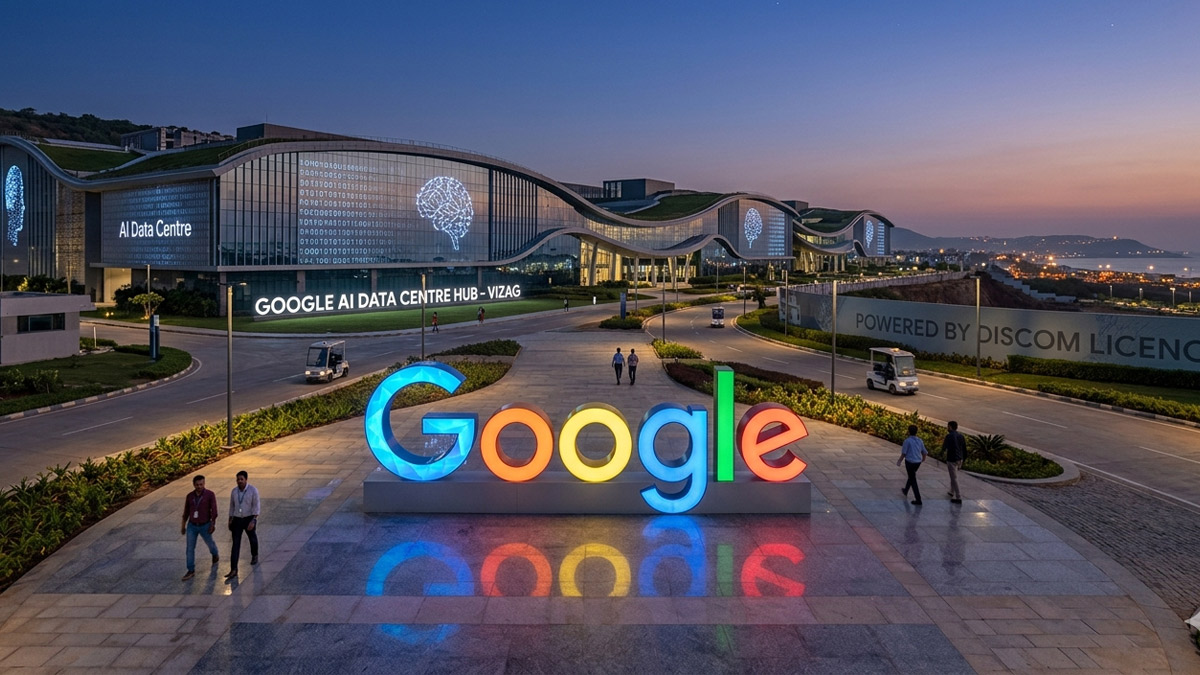
VISAKHAPATNAM: Google has secured a rare electricity distribution company licence in Andhra Pradesh, marking a decisive shift from being just a power consumer to becoming a power distributor for its upcoming mega data centre hub in Visakhapatnam.
The move effectively rewrites the rulebook for hyperscalers in India. Instead of relying on state utilities, Google will be able to procure electricity directly from generators, including its own renewable sources. This not only cuts out intermediaries but also gives the company tighter control over supply, reliability and long-term costs.
For a business where electricity can account for up to 60 per cent of operating expenses, the economics are hard to ignore. Even more critical is uptime. Data centres demand near-perfect reliability, and owning the distribution layer allows Google to manage outages and load balancing with far greater precision.
At the heart of the plan is a sprawling 1-gigawatt data centre ecosystem spread across more than 600 acres in three locations near Vizag. With an estimated investment of $15 billion over five years, the project is set to become India’s largest single foreign direct investment and Google’s biggest AI-focused facility outside the United States.
The campus is being designed with artificial intelligence workloads in mind, housing the company’s custom tensor processing units to power services such as Gemini, Search and Google Cloud. In scale, the planned capacity is comparable to powering a small city.
Google is not building alone. It has partnered with Adani Infrastructure to develop the physical campuses, while Bharti Airtel will set up an international subsea cable landing station. This connectivity backbone is expected to link the hub directly to a dozen countries, ensuring low latency for global data traffic.
Vizag’s coastal location plays a key role in that strategy. It enables direct access to subsea cables and provides the large volumes of water needed for cooling data centre operations. Equally important is policy backing from the Government of Andhra Pradesh, which fast-tracked approvals and granted the uncommon discom licence to anchor the investment.
Groundbreaking is scheduled for April 28, 2026, with phased commissioning expected to begin by July 2028.
The broader signal is clear. As AI workloads surge, hyperscalers are no longer content plugging into existing infrastructure. They are beginning to build and control it. In Vizag, Google is not just setting up a data centre, it is wiring up its own future.







