MAM
BIGO LIVE Stands in solidarity to support Corona Warriors with #WeAreThankful initiative


MUMBAI: With the entire nation coming together to fight off Corona and showing their gratitude to the heroes of our country who are selflessly serving the corona patients, BIGO LIVE, a leading global live streaming platform, on Janta curfew spread their love to corona warriors through their campaign #WeAreThankful. The entire country was moved when prime minister Narendra Modi gave his heartwarming speech, on how we as fellow countrymen can do our bit by social distancing and spreading our gratitude on the day of Janta curfew to those men and women fighting bravely with the COVID 19 that has taken a grasp of the whole world.
BIGO LIVE family, on Sunday, got together on their live streaming platform with a common cover pic and a gratitude message that said #WeAreThankful. This was an activity created by the app where they motivated its users to go Live and pay their thanks towards the services given by hundreds of thousands people helping India to fight with this dangerous disease. On this call many of the content creators of BIGO Live went live on app sharp at 5pm as the event began, and paid their gratitude and at the same time motivated their followers to do the same and urged them to come together as a society and support each other. All these broadcasters on their live streams, stood up and cheered for the medical, aviation & police forces & all those real life hero’s who have been working, round the clock so that the general audience can stay safe and healthy.
Over hundreds of Bigo Live broadcasters continued streaming for the duration of one hour, who are having fans over millions. It was an iconic event for the entire Singapore based BIGO family to see how such small effort on everyone’s part can make up such a huge difference and thereby reaching out to over millions of people through their gesture. This platform not only gave an opportunity to showcase they are thankful for what the government has decided, but also supports the lower income groups who are sacrificing their livelihoods for the safety of others and it’s because of ‘Bigo Live’ that people can make that choice and difference. BIGO LIVE wanted to share its online space by bringing people together for one common cause. People on this period of self-quarantine are coming up with all kinds of ways to keep up their spirits and BIGO LIVE is proud to be able to give them a medium to stay connected with other people.

“Our campaign #WeAreThankful is a gesture to thank all those men and women who are out there and contributing their bit in our fight against COVID 19. It is very important for all of us to keep a positive attitude and keep sharing our love to each other. It is a time, when the entire humanity must come together and take responsibility to do their part in controlling the spread of the disease. BIGO family is very thankful to our prime minister and the government, who are trying day and night to curb Corona virus and taking all the right measures to control it. Our heartfelt gratitude also goes out to the general public who directly or indirectly are out there and helping us by fighting corona.” BIGO LIVE deputy country head Nagesh Banga, commented on the occasion.
BIGO is a fast-growing Singapore Internet company established in 2014. BIGO operates products and services in more than 150 countries in the world. BIGO’s products include BIGO LIVE (global live-streaming platform), Likee (global short video creation platform) and imo (global video communication app). BIGO’s headquarters and regional centers are focused on building Artificial Intelligence capabilities and enhancements specifically for localization and country specific requirements.
BIGO LIVE allows you to live-stream your favorite moments, and make friends from all around the world. BIGO LIVE enables people to showcase their talent, discover, and stay connected in a positive, healthy, and creative way.




MAM
BLR Airport Launches ‘Connections’ Service to Ease Transit Travel
New initiative targets smoother transfers as Bengaluru hub traffic rises 30 per cent.
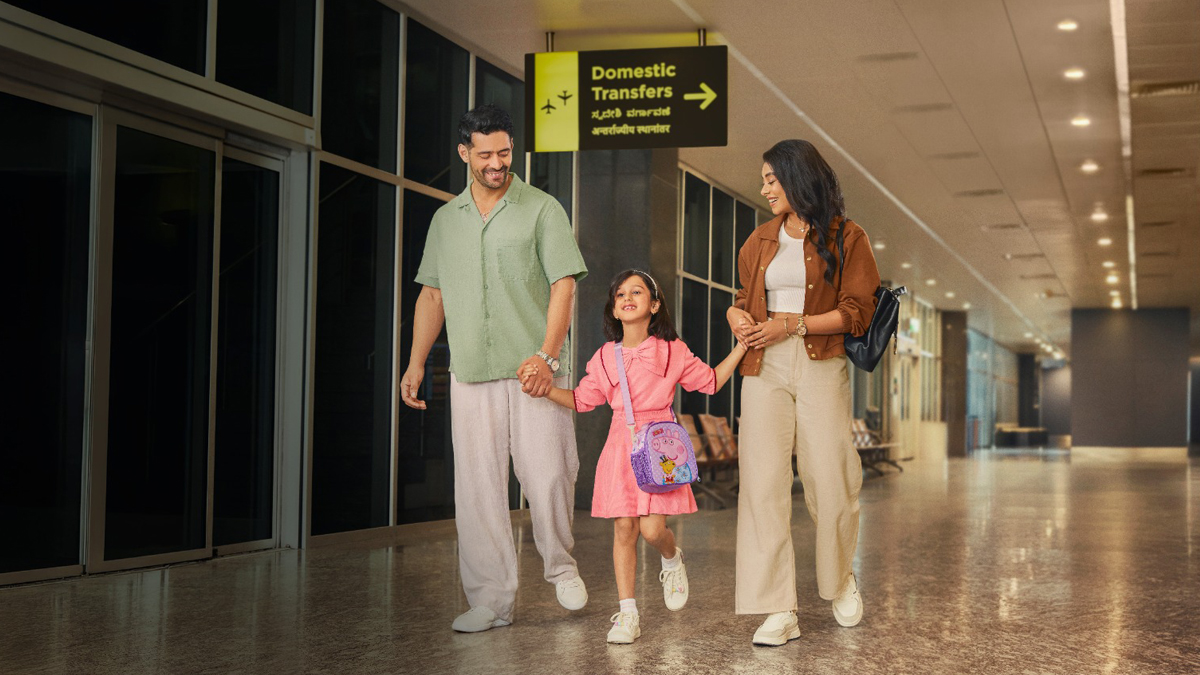
MUMBAI: Missed connections may be a traveller’s nightmare but Bengaluru is trying to make them a thing of the past. Kempegowda International Airport Bengaluru (BLR Airport) has rolled out ‘Connections by BLR’, a new transfer programme designed to take the friction out of connecting journeys. Built around three pillars ease, efficiency and experience,the initiative aims to simplify what is often the most stressful leg of air travel.
The move comes as transfer traffic at BLR Airport climbs sharply, up more than 30 per cent year-on-year. Transfers currently account for around 15 per cent of total passenger traffic and are projected to touch 20 per cent by 2026, signalling a clear shift in how the airport is positioning itself within airline networks.
At its core, the programme focuses on making navigation intuitive and downtime more comfortable. Dedicated transfer desks have been set up across terminals, supported by colour-coded wayfinding blue and yellow signage designed for quick recognition. Inter-terminal movement is being streamlined through complimentary shuttle services with predictable wait times, while designated transfer zones aim to reduce passenger confusion.
Beyond logistics, the airport is leaning into experience. Travellers in transit now have access to a wider choice of lounges, curated retail and food and beverage options, as well as sleeping pods for short stays. For longer layovers, transit hotels in both Terminal 1 and Terminal 2 offer boutique in-terminal accommodation, an increasingly sought-after feature as global travel patterns evolve.
The timing is strategic. BLR Airport now connects to 114 passenger destinations 80 domestic and 34 international with key routes spanning Delhi, Mumbai, Kolkata, Hyderabad and Pune domestically, and Singapore, London Heathrow, Dubai, Abu Dhabi and Kuala Lumpur internationally. Recent additions such as Hindon, Bidar and Silchar within India, alongside Dammam, Hanoi and Riyadh overseas, are further expanding its reach.
Infrastructure is also catching up with ambition. Developments including the West Cross Taxiway, Terminal 1 refurbishment and Terminal 2 expansion are laying the groundwork for higher capacity and smoother operations critical for any airport aiming to become a serious transfer hub.
Bangalore International Airport Limited chief operating officer Girish Nair framed the initiative as both a response to demand and a forward-looking play. He pointed to the growing depth of the airport’s network and the opportunity to build a more reliable transfer ecosystem that benefits both passengers and airline partners.
In an era where travel is as much about transitions as destinations, BLR Airport is betting that a seamless connection might just be the journey’s most important upgrade.







