MAM
Beyond the horizon: Crafting unforgettable brand experiences in cruise marketing


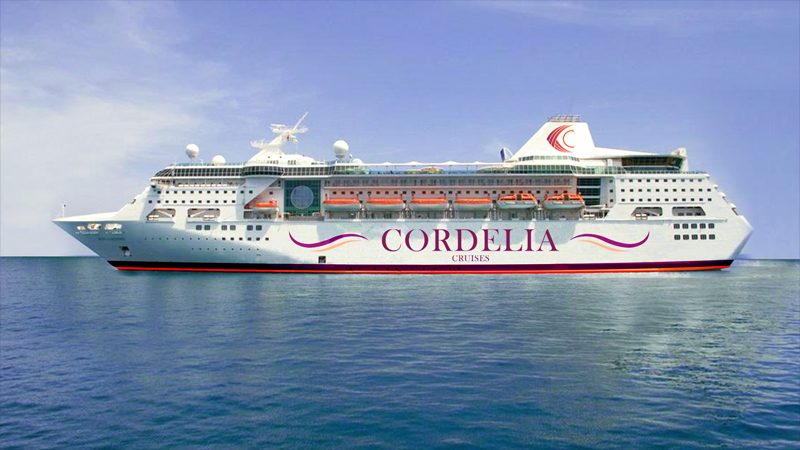
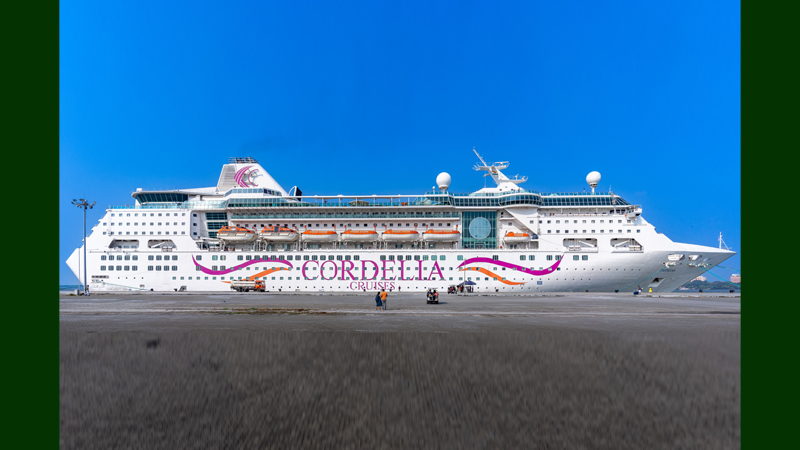
Mumbai: In an industry defined by the vastness of the open sea and the promise of exploration, our commitment at Cordelia Cruises goes beyond providing extraordinary voyages; we strive to create moments that linger in the hearts of our passengers long after they have disembarked.
In the field of cruise marketing, it’s crucial to recognize that the cruise is not merely a journey from one port to another—it’s an immersive experience that begins the moment a guest interacts with our brand. The first touchpoint could be a captivating website, an interactive social media post, an enticing email campaign, or a visually stunning brochure. Each element contributes to our narrative, setting the stage for the adventure that awaits onboard.
Our approach to crafting unforgettable brand experiences hinges on three key pillars: anticipation, immersion, and post-sailing engagement. Anticipation begins with a meticulous understanding of our target audience, enabling us to tailor our messaging and visuals to resonate with their desires. The goal is to create a sense of excitement and longing, encouraging individuals to not only sail with us but to embark on a transformative journey filled with luxury, adventure and scenic routes.

From the best dining experiences to curated activities that cater to diverse interests, cruise liners ensure that every passenger finds their personal comfort space at sea. The goal is to exceed expectations, leaving a persistent mark that extends beyond the physical perimeters of the ship.
Post-voyage engagement completes the circle. As the pioneers of the Indian cruise industry, we understand that the memories created on our cruises are treasures to be cherished. Through personalised post-cruise communications and user-generated content initiatives, cruise liners can foster a sense of community among the guests, ensuring that their connection with the Cruise endures long after they’ve returned to shore. To thrive in this market, cruise brands must consider the following:
Cultural Sensitivity: Indian culture places great importance on family values, and multi-generational travel is common. Cruise brands can tailor their offerings to cater to families, providing amenities and activities that appeal to different age groups. Incorporating elements of Indian culture, such as traditional cuisine, music, and entertainment, can enhance the cruise experience.
Regional Preferences: India’s diverse geography and cultural heritage offer a range of regional preferences. Cruise brands should consider developing itineraries that explore different regions of the country, highlighting local attractions and experiences. Customising on-board entertainment, activities, and cuisine to reflect regional diversity can foster a sense of connection and resonate with Indian travellers.
Price Sensitivity: Indians are price-sensitive consumers and meticulously assess the worth of products and services, especially when it comes to planning a vacation. Cruise brands should focus on crafting a compelling value proposition that goes beyond expectations. This could be in the form of all-inclusive packages, competitive pricing, and special promotions to make cruising more accessible for vacations.
To build a cruise culture in India, cruise brands should take the following steps:
Raising Awareness: Cruise brands should invest in extensive marketing campaigns to raise awareness about cruising as a vacation option. Collaborating with travel agents, influencers, and media outlets can help promote the benefits and unique experiences offered by cruises. It is crucial to dispel common misconceptions and showcase the convenience, variety of destinations, and all-inclusive nature of the cruise experience.
Enhancing Accessibility: To overcome the perception of cruises as an expensive luxury, cruise brands can introduce shorter-duration cruises and weekend getaway options that cater to the time constraints of Indian travellers. Additionally, offering affordable payment plans, like BNPL and flexible booking options can make cruising more accessible to a wider audience.
Building Partnerships: Collaborating with local travel agencies, tour operators, and hospitality providers can help cruise brands tap into existing distribution networks and leverage their expertise in serving the Indian market. Partnerships can facilitate bundled vacation packages, combining land-based travel and excursions with the cruise experience, making it more wholesome. .
Developing On-board Experiences: Creating tailored on-board experiences that cater to Indian tastes and preferences is vital for building a cruise culture. Cruise brands can incorporate Indian cuisine options, provide dedicated entertainment showcasing Indian music and dance forms, and organise cultural workshops and activities that allow passengers to immerse themselves in the local culture.
In conclusion, building a cruise brand is all about making the cruise experience way more than just a holiday. In the ever-evolving landscape of cruise marketing and building a cruise culture in India, we stand assured to navigate new horizons and continue providing unparalleled experiences that transcend the ordinary, ensuring that every journey with us is a voyage of a lifetime.
The author of this article is Cordelia Cruises head of marketing Nitinjit Singh Bawa.

Digital
Content India 2026 opens with a copro pitch, a spice evangelist and a £10,000 prize for Indian storytelling
Dish TV and C21Media’s three-day summit puts seven ambitious projects before an international jury, and two walk away with serious development money
MUMBAI: India’s content industry gathered in Mumbai this March for Content India 2026, a three-day summit organised by Dish TV in partnership with C21Media, and it wasted no time making a statement. The event opened with a Copro Pitch that put seven scripted and unscripted television concepts before an international panel of judges, and by the end of it, two projects had walked away with £10,000 each in marketing prize money from C21Media to support development and international promotion.
The jury, comprising Frank Spotnitz, Fiona Campbell, Rashmi Bajpai, Bal Samra and Rachel Glaister, evaluated a shortlist that ranged from a dark Mumbai comedy-drama about mental health (Dirty Minds, created by Sundar Aaron) to a Delhi coming-of-age mystery (Djinn Patrol, by Neha Sharma and Kilian Irwin), a techno-thriller about a teenage gaming prodigy (Kanpur X Satori, by Suchita Bhatia), an investigative crime drama blending mythology and modern thriller (The Age of Kali, by Shivani Bhatija), a documentary on India’s spice heritage (The Masala Quest, hosted by Sarina Kamini), a documentary on competitive gaming (Respawn: India’s Esports Revolution, by George Mangala Thomas and Sangram Mawari), and a reality-horror competition merging gaming and immersive fear (Scary Goose, by Samar Iqbal).
The session was hosted by Mayank Shekhar.
The two winners were Djinn Patrol, backed by Miura Kite, formerly of Participant Media and known for Chinatown and Keep Sweet: Pray & Obey, with Jaya Entertainment, producers of Real Kashmir Football Club, also attached; and The Masala Quest, created and hosted by Sarina Kamini, an Indian-Australian cook, author and self-described “spice evangelist.”
The summit also unveiled the Content India Trends Report, whose findings made for bracing reading. Daoud Jackson, senior analyst at OMDIA, set the tone: “By 2030, online video in India will nearly double the revenue of traditional TV, becoming the main driver of growth.” He noted that in 2025, India produced a quarter of all YouTube videos globally, overtaking the United States, while Indians collectively spend 117 years daily on YouTube and 72 years on Instagram. Traditional subscription TV is declining as free TV and connected TV gain ground, forcing broadcasters to innovate. “AI-generated content is just 2 per cent of engagement,” Jackson added, “highlighting the dominance of high-quality human content. The key for Indian media companies is scaling while monetising effectively from day one.”
Hannah Walsh, principal analyst at Ampere Analysis, added hard numbers to the picture. India produced over 24,000 titles in January 2026 alone, with 19,000 available internationally. The country now accounts for 12 per cent of Asia-Pacific content spend, up from 8 per cent in 2021, outpacing both Japan and China. Key exporters include JioStar, Zee Entertainment, Sony India, Amazon and Netflix, delivering over 7,500 Indian-produced titles abroad each year. The top importing markets are Saudi Arabia, the UAE, Egypt, the United States and the Philippines. Scripted content dominates globally at 88 per cent, with crime dramas and children’s and family titles performing particularly strongly.
Manoj Dobhal, chief executive and executive director of Dish TV India, framed the summit’s ambition squarely. “Stories don’t need translation. They need a platform, discovery, and reach, local or global,” he said. “India produces more movies than any country, our streaming platforms compete globally, and our tech and creators win international awards. Yet fragmentation slows growth. Producers, platforms, and tech move in different lanes. We need shared spaces, collaboration, and an ecosystem where ideas, technology, and people meet. That is why we built Content India.”
The data, the pitches and the prize money all pointed to the same conclusion: India is not waiting for the world to discover its stories. It is building the infrastructure to sell them.







