MAM
Bengal TV ad market to touch Rs 19 bn by 2016

MUMBAI: The total advertising spend on Bengali television is projected to reach Rs 19 billion by 2016 from an estimated Rs 7.8 billion in 2012, according to a Deloitte report on the media and entertainment industry in West Bengal.
Out of the Rs 7.8 billion in the current year, about Rs 6 billion was cornered by the Bengali general entertainment channels (GECs) while the rest is split between news, movies and other channels.
The report says GECs continue to dominate the canvas of West Bengal television market, with high production values, a robust content bank based on movies and local programming, helping them propel ahead.

The industry, the reports contends, could not realise its complete growth potential this year due to scaling back of operations by a few channels in a veiled reference to the shutting down of ABP Group‘s Bengali GEC Sananda TV.
However, phased digitisation and continued interest of audiences in Bengali TV is expected to revive the growth in coming years through investment from newer players like Network18 (post ETV investment) and newer ventures of national producers like Sphere Origin (Chirosathi) and Balaji Telefilms, it said.
According to Deloitte, West Bengal also generated an estimated Rs 9.5 billion in subscription revenues during 2012, which is expected to grow at a fast pace due to digitisation roll-out.
“Advent of Digital Addressable System (DAS) is expected to help the broadcasters increase their subscription revenues, reduce distribution expenses and add to the health of the industry,” the report states.
The other salient features of the report:
Trends in Content
The diversity of content in Bengali television is expected to increase going forward. Digitisation is expected to be an important lever enabling this over the next 5 years, especially if the timeline beyond Kolkata is maintained.
Increased investment from various players based on the reach and growth potential of the Bengali television market is also expected to act as an enabler.
Driven by strong investment in content, Bengali channels have managed to garner a bigger share of eyeballs in West Bengal, the report noted.
The production budgets of content for Bengali GECs are roughly 25 per cent of what is spent on national GECs.
However, creativity under budgetary constraints has allowed Bengali content to almost match the production values of any other national or regional content. As the national players in the Bengali TV space lay emphasis on the Bengali television, the production budgets of content are expected to increase
Emergence of niche channels
With digitisation expected to support more channels, players in West Bengal are getting ready to explore niche content and channels. The launch of Bengali movie channels by Zeel and Star India are portends of this trend.
The TV industry may also see launches of music channels with Bengali film and non-film music; lifestyle channels; youth entertainment channels and channels focusing on content around Rabindranath Tagore or Satyajit Ray, amongst others.
The existing channels are likely to begin testing such content through dedicated time slots before launching full-fledged channels based on the content‘s acceptability and popularity. A similar trend was sampled in the 90s‘when the national GECs started testing the waters with Bengali content in the evenings before launching full scale Bengali channels.
Rise of flagship, non-mass programming
Though the primary focus of GECs continues to be around mass market, they have also started exploring newer formats. This is due to changing consumer preferences driven by younger audiences and lack of distinctive content in the soaps/serials space.
With digitization working in their stride, broadcasters are likely to have more resources to plough back into content. As a result, short series and telefilms are expected to grow. Moreover, many in the industry sense a space for flagship programs (e.g. such as ‘Satyamev Jayate‘ on national airwaves) on Bengali GECs, which are aimed at creating buzz, starting conversations and attracting newer audiences.
National players in production will look to play a bigger role
While national players like Sphere Origins (e.g. Chirosathi on Star Jalsha) and Reliance are already looking at producing content for the Bengali GECs, this trend is likely to accelerate going forward. It will be driven by higher budgets of Bengali GECs as well as the rise of niche channels with their own need for content.
Cross-pollination of content and formats from other languages
Bengali GECs have been able to maintain a program mix based on adaptations of successful national content, along with original content inspired by rich Bengali literary heritage.
Fiction shows, which are preferred to closely resemble the local everyday life and culture by the Bengali audiences, are perceived as more challenging to adapt from successful stories in other languages than a commercial film. Bengali channels have been able to portray a very authentic but aspirational depiction of customs, rituals and traditions that are omniscient – in their homes, roads, markets, and in the hearts of Bengalis for their successes.
On the other hand, there have been adaptions of Bengali success stories for national television: e.g. “Ma” and “Sansaar Shukher Hoy Romonir Gune” were adapted for larger Hindi audience. This displays the best-in-class creative skills and high quality of technicians in Bengali television industry, which have been able to create national quality content even at the fraction of costs as compared to the national television.
Increase in online engagement
Like in other traditional mediums, online presence will play an increasingly important role for promotion and engagement with viewers for television as well. Existing engagement like Facebook pages are largely aimed at urban audiences. Going forward, the Bengali television industry is looking at closer integration (e.g. Zee Bangla exploring online auditions for Sa Re Ga Ma Pa), which will encompass the population from larger districts audiences as well.
Star and Zee, amongst others, currently distribute their bouquet of channels globally and Bengali television has seen acceptance from the larger Bengali diaspora. This is expected to increase as the television content becomes available and easier to monetize through multiple screens.
In parallel, channels are also looking at newer ways to increase their adoption in Bangladesh. Zee Bangla8 has been engaging audiences in Bangladesh through holding auditions for its shows like ‘Mirakkel‘ in Dhaka. This trend will accelerate in sync with use of online medium, which can take such participation to more places around the globe.




MAM
Schneider Electric launches One Unit Mission for Women’s Day
Green Yodha 2.0 urges every Indian household to save one unit of electricity daily.
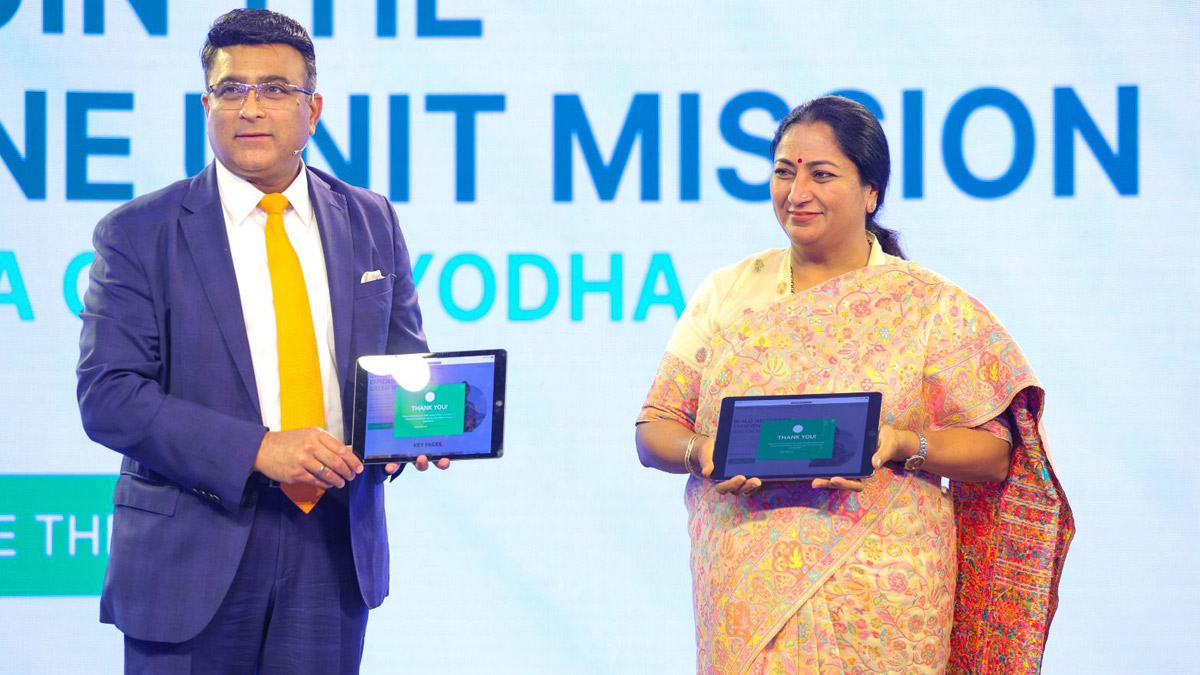
MUMBAI: Schneider Electric just flipped the switch on savings because this Women’s Day the brightest idea isn’t a new bulb, it’s turning one unit off. Schneider Electric launched the second phase of its Green Yodha initiative, ‘One Unit Mission’, on International Women’s Day 2026, calling on every Indian household to save at least one unit of electricity daily. The campaign was flagged off in Delhi by chief minister Rekha Gupta, actor and sustainability advocate Bhumi Pednekar, and other dignitaries.
Rekha Gupta said, “Delhi’s journey towards clean, resilient growth begins with how efficiently we use the energy we already have. Green Yodha 2.0 reminds us that every citizen is a stakeholder in India’s energy future, and saving one unit of power today is an act of nation-building for tomorrow.”
Schneider Electric India zone president, MD & CEO Deepak Sharma added, “India is entering a decade of unprecedented growth, and that growth will require enormous amounts of energy. The real challenge is not just how much power we produce, but how intelligently we use it. If every Indian household saves just one unit of electricity a day, the impact would be equivalent to planting billions of trees or taking millions of cars off the road.”
Schneider Electric India, vice president of marketing Rajat Abbi noted, “Sustainability becomes real when it is simple and measurable. The One Unit Mission is about turning awareness into everyday action.”
In FY 2023–24, India’s energy-efficiency programmes (PAT, UJALA, S&L, SLNP, CAFÉ) collectively saved 53.6 million tonnes of oil equivalent, avoided 321 million tonnes of CO₂ emissions, and reduced energy expenditure by Rs 2 lakh crore equivalent to nearly 6 per cent of national primary energy supply.
The initiative aligns with government efforts on efficient cooling, appliance standards and the Bureau of Energy Efficiency’s state-level SEEI FY 2024 framework, emphasising demand-side efficiency as a cost-effective complement to new generation capacity.
In a nation sprinting toward brighter, bigger tomorrows, Schneider isn’t selling more power, it’s quietly handing every household a daily superpower: the ability to save one unit and help light up a cleaner, more efficient future, one thoughtful switch at a time.