MAM
BBC World ends 2004 by scanning news and events


MUMBAI: BBC World will feature a special programme named World Review 2004 that will review and analyse the main events of 2004. The show will also focus on the issues that will shape the international news agenda in the coming year.
BBC World will showcase the show over next fortnight in 10 parts. According to a company release, World Review 2004 covers politics, democracy, religion and global conflict, as reported through the BBC’s network of 250 correspondents.
The show will broadcast stories that were prepared by the 250 correspondents which includes an undercover investigation by Alistair Leithead on the true state of life in Zimbabwe; an assessment of President George W. Bush’s election victory and the effect it will have on the United States in the next four years; and a study of the state of democratic freedom in Russia since the tragic siege at a school in Beslan, informs the official communiqué.

In addition, the BBC’s business unit has produced four programmes that look at the international pension’s crisis like Paying For Old Age, the battle between Europe’s low-cost airlines; Battle For The Skies, corporate crime in the United States; How The Mighty Fall, and the struggling economies of France and Germany;The Poor Men Of Europe.
A year-end edition of the talk show Hardtalk sees the host Tim Sebastian revisiting his interviews with the master of Cold War spy thrillers John le Carre, who explained his grave concerns about the conflict in Iraq, and the man who planned and carried out the invasion, General Tommy Franks. There is Hugh Thompson, the helicopter pilot who rescued Vietnamese women and children before they were murdered by American soldiers in the Mai Lai massacre of 1968 hero from the My Lai massacre, and Khalid Mishaal, one of the leaders of the Palestinian organisation Hamas, who seeks to justify suicide bombers, informs the media release.
The Sport Today will have five programmes reviewing the major sporting events of the year in chronological order, with presenters Rob Bonnet, Adnan Nawaz, Mike Bushell, Mary Rhodes and Chris Hollins. It was the year of the Olympic Games in Athens, a surprise Greek victory in the European football championships in Portugal, Roger Federer’s domination of men’s tennis and the Boston Red Sox winning baseball’s World Series after 86 years of trying. There’s also a sixth edition with David Brenner that predicts some of the stories that will make the headlines in 2005.
Akhtar Khan and the Fast Track travel team revisit reports they’ve filed from countries as diverse as Bosnia, Finland, Syria and Vietnam. They went bungee jumping in Queenstown, New Zealand, the world’s extreme sports capital, where tourists outnumber residents by 100 to one, and gauged the effect that fluctuating oil prices were having on fares for air passengers. They’re taken on a tour of New York by a talking car, and mark the gradual demise of one of London’s best-known visitor attractions, the Routemaster bus.
BBC World’s technology show Click Online, presented by Stephen Cole, has a two-part retrospective including interviews with the scientists who created a coat that makes its wearer invisible, and asks whether watching television on mobile phones will soon be a widespread practice. On the 150th anniversary of the Met Office in Britain, there’s a look at how computers are making the weather easier to forecast, and an explanation of the ways in which governments around the world are working to make the Internet safer for its users.
And in the film based Talking Movies, presenter Tom Brook lists his top 10 releases from a year that saw success for Chinese films such as Hero and House Of Flying Daggers, and for sequels including Spider-Man 2 and The Bourne Supremacy. However many big budget films didn’t do as well as expected. Examples are Alexander ,Sky Captain and The Polar Express,. However animated movies such as Shrek 2 and The Incredibles were big box office hits. Music, historical epics and religion were also popular themes, as Talking Movies explains in its review of the year.






Brands
Axis Bank named Official Banking Partner of DP World PGTI
Partnership supports all tournaments this season to grow professional golf in India.
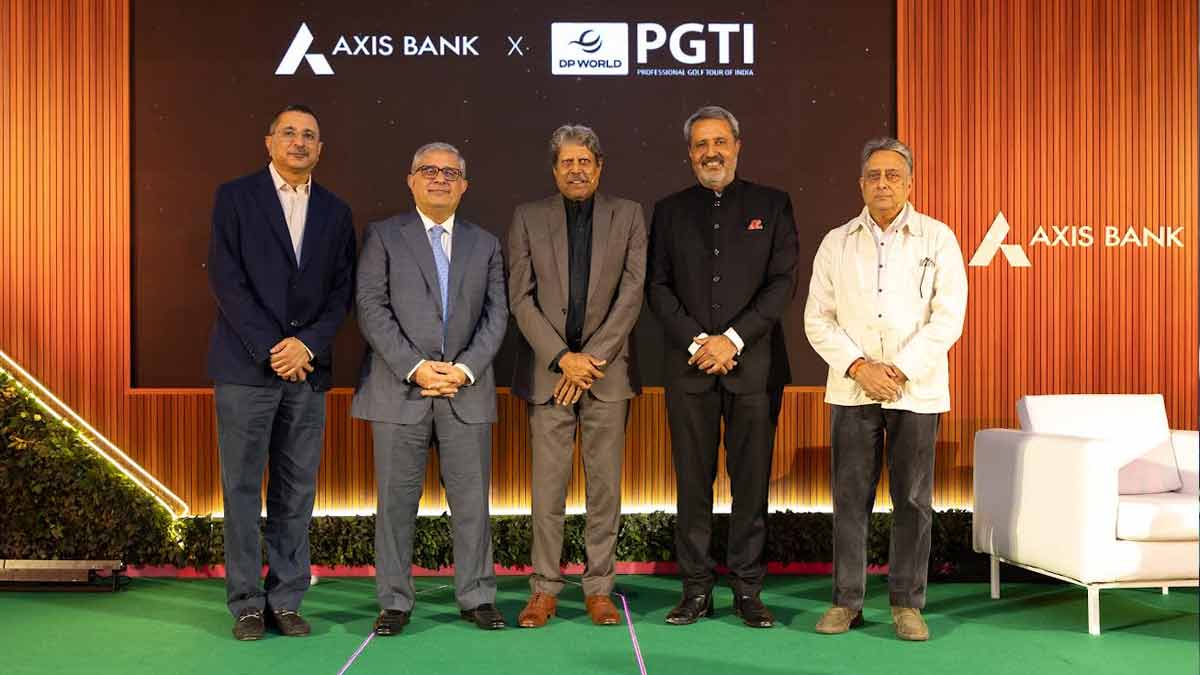
MUMBAI: Axis Bank just teed up a hole-in-one partnership because when a bank sponsors golf’s biggest swing in India, even the fairways feel more financially secure. Axis Bank has been appointed Official Banking Partner of the DP World Professional Golf Tour of India (DP World PGTI), strengthening its commitment to sporting excellence and community engagement while backing the growth of professional golf across the country.
Under the partnership, Axis Bank will support all DP World PGTI tournaments this season, contributing to talent development, enhanced tournament experiences and wider fan engagement. The collaboration aligns the bank’s values of precision, discipline and trust with the Tour’s focus on performance and opportunity.
Axis Bank executive director Munish Sharda said, “We are pleased to partner with DP World PGTI as its Official Banking Partner. Golf embodies precision, discipline, and a pursuit of excellence qualities that strongly reflect who we are at Axis Bank. This association also strengthens our engagement with India’s growing premium customer segments, where the sport has a deep and enduring connect.”
Professional Golf Tour of India president Kapil Dev said, “We are extremely pleased to welcome Axis Bank as a Tour Partner of the DP World Professional Golf Tour of India. Partnerships of this stature play a vital role in strengthening the foundation of the Tour, enhancing opportunities for our players, and expanding the sport’s reach across the country.”
Professional Golf Tour of India CEO Amandeep Johl added, “Axis Bank’s strong legacy of excellence, innovation, and nationwide reach aligns perfectly with DP World PGTI’s goal to elevate professional golf in India and provide greater opportunities for our players.”
In a sport where every stroke counts and every partnership drives distance, Axis Bank isn’t just backing golfers, it’s investing in the fairway to future, turning India’s greens into a stage where precision meets passion and every drive has the power to inspire.