MAM
Audio helps Indian content creators elevate mood, boost well-being and creativity: Spotify study


Mumbai: Spotify, released a first-of-its-kind research, ‘Audio: Where Creators Come To Pause’ that puts the spotlight on the daily lives and challenges of India’s content creator community, and how they deal with emotions.
The study, conducted with musicians, podcasters, and social media content creators in New Delhi, Mumbai, and Bengaluru, presents a comprehensive understanding of creators’ mental well-being. Nearly 80 per cent of the respondents experience excessive stress or pressure in their work at least once every week. They also shared coping mechanisms and practices, including the pivotal role of consuming audio, to navigate their content creation journey.
For actor and comedian Mallika Dua, “One of my greatest joys in life is music, it’s a big part of self-care and my way to gain inner peace. Music is like a person who is always with me in my room, making sure I never feel alone”.

A few of the key findings that the Spotify research are:
. There are five main types of challenges that content creators deal with:
- Intellectual: The constant need to keep up with changing algorithms and posting frequencies builds high pressure to post content regularly.
- Emotional: Negative feedback and comments significantly affect creators’ self-esteem, with nearly 40 per cent facing ‘fear of the future’.
- Physical: Almost 40 per cent of creators spend more than 3 hours a day to make content, leading to exhaustion and an adverse impact on health.
- Social: Creators face loneliness and isolation within their circles, with nearly 65 per cent of them feeling inadequately supported by the creator community.
- Financial: Content creation is not always financially rewarding, especially during the early stages.
. Audio plays a key role in coping with these challenges, and Spotify is the number one choice for content creators when it comes to audio platforms.
- 50 per cent of the respondents use music as a coping mechanism.
- 7 out of 10 creators agree that music, podcasts, audiobooks & guided meditations help them deal with stress.
- More than 40 per cent of creators listen to audio to lift their mood, feel inspired, or calm their nerves.
- 1 in 4 creators use audio to enhance creativity as well as boost productivity.
. Female content creators are more likely to feel stressed (33 per cent) than their male counterparts (20 per cent). A similar pattern is also seen in the creators from the age group of 30-45 years (35 per cent) compared to 18-29-year-olds (24 per cent).
“Nowadays, it’s important for creators to realise that we need time to kind of distance ourselves from the screens, from social media and think about how much toll it’s taking on our mental health”, said content creator and actor, Dolly Singh.
Nearly 45 per cent of the respondents feel that their current coping mechanisms are ineffective, and are facing a range of need gaps, including inclusive and accessible support tools like therapy and counselling, and a safe space where creators can have open conversations while being vulnerable and protecting their privacy.
Spotify India head of communications Vasundhara Mudgil said, “Content creators are part of an industry where the entry barriers are low, burnout is always just around the corner, and constant comparison with other creators is common. The Spotify study highlights some of the most relevant issues that the creator community in India faces, and the role that audio plays in supporting their overall well-being. Through this initiative, and on-ground sessions with mental health experts, we want to encourage the creator community to see audio, and Spotify, as a place where they can come to pause”.
Access the full report here.






Brands
KKR sixes to power EV charger rollout under VIDA campaign
Cricket meets clean mobility as big hits spark India’s charging growth
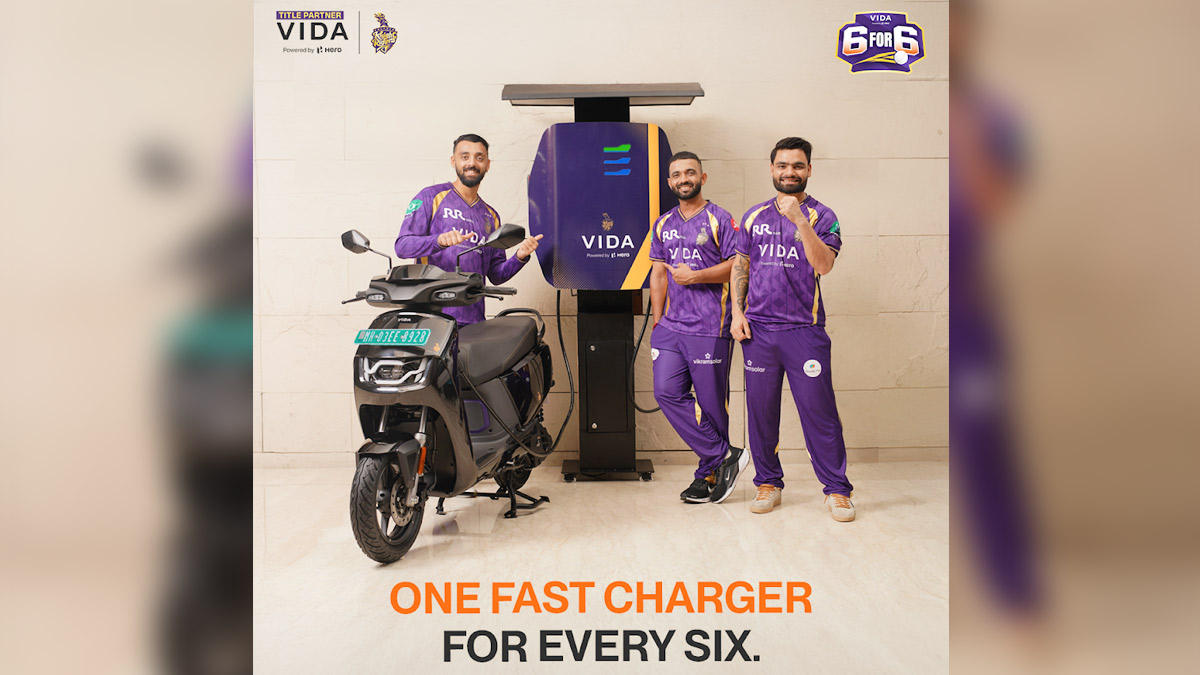
NEW DELHI: VIDA, the electric mobility arm of Hero MotoCorp, has teamed up with Kolkata Knight Riders to launch a campaign that turns cricketing flair into real-world impact.
Titled ‘6 for 6’, the initiative promises to install a 6kW fast EV charger for every six hit by KKR during the ongoing Indian Premier League season. The idea is simple but powerful, as each big hit on the field contributes directly to expanding India’s fast-charging infrastructure.
The campaign builds on VIDA’s growing network, which already spans over 5,300 fast-charging points across more than 430 cities. With EV adoption gaining pace, the brand is using cricket’s mass appeal to accelerate both awareness and infrastructure growth.
Explaining the thinking behind the move, Hero MotoCorp emerging mobility business unit chief business officer Kausalya Nandakumar said, “Cricket has an incredible ability to unite and inspire millions across the country. With the ‘6 for 6’ campaign, we are turning every big hit on the field into a step towards a cleaner and a more accessible mobility future.”
She added that VIDA’s expanding fast-charging network and removable battery technology are designed to make EV ownership more convenient and practical for everyday users.
From the franchise’s side, the campaign is also about giving on-field moments a larger purpose. Kolkata Knight Riders chief executive officer Venky Mysore said, “The ‘6 for 6’ campaign exemplifies the potential of sport as a platform for meaningful, real-world impact. By linking every six to the expansion of EV charging infrastructure, this partnership transforms fan excitement into tangible progress.”
As part of the rollout, VIDA has introduced co-branded charging stations in KKR’s signature colours, with a flagship installation unveiled alongside team players. The chargers are designed for quick top-ups, powering VIDA scooters from zero to 80 percent in about an hour, while also being positioned along key highways to support longer journeys.
The initiative also taps into VIDA’s removable battery system, which allows users to charge using standard household plug points, adding flexibility to the charging ecosystem.
By blending the thrill of cricket with the urgency of clean mobility, VIDA and KKR have found a neat way to make every six count twice, once on the scoreboard and again on India’s road to an electric future.








