MAM
Arthalpha adds market heavyweights to its boardroom to crunch smarter numbers

MUMBAI: When alpha meets intellect, the boardroom gets bullish
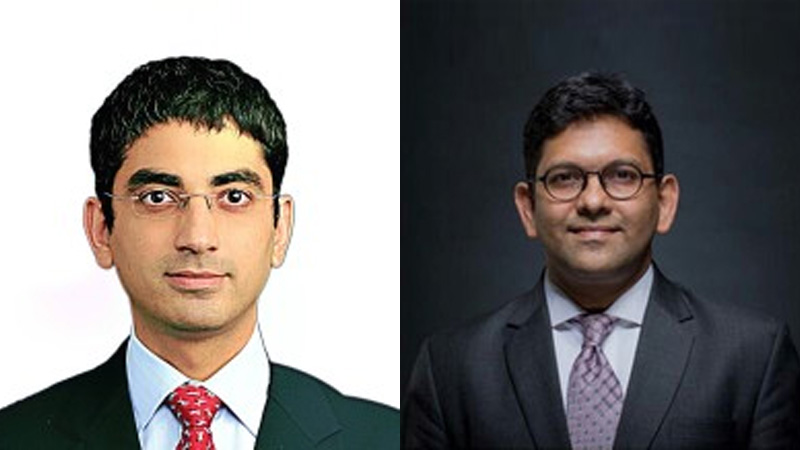
In a move that screams serious intent and sharp thinking, Arthalpha, the brainy kid on India’s quant-finance block, has just flexed its ambition with two big-ticket appointments. DSP Mutual Fund MD & CEO Kalpen Parekh has joined as board observer, and fintech founder & ex-banker Kunal Bajaj has come aboard as board advisor. Cue the calculators and champagne.
The appointments bring over 40 years of collective market muscle into Arthalpha’s strategic cockpit, reinforcing its focus on blending artificial intelligence with real-world experience. Call it machine learning with street smarts.

“We are delighted to welcome Kalpen Parekh and Kunal Bajaj to Arthalpha… Their strategic insights will be invaluable as we push the boundaries of quantitative finance,” said Arthalpha CEO & CIO Rohit Beri.
Parekh has been around the market block more than once. With a resume that reads like the Nifty’s who’s who—ICICI, Birla Sun Life, IDFC, and now DSP—he’s spent over 20 years shaping long-term investment playbooks and decoding market moods.
“Arthalpha’s approach to integrating human intelligence with advanced quantitative methods is truly groundbreaking… I look forward to supporting their mission,” Parekh said, dusting off any doubt about his hands-on involvement.
Meanwhile, Bajaj brings his own set of war stories. From power seats at Goldman Sachs Japan, Credit Suisse, CLSA and Jefferies, to founding Clearfunds, which later merged with MobiKwik, Bajaj has done it all—capital markets, M&A, and building fintechs from scratch.
“Arthalpha is at the forefront of quantitative finance innovation… I am excited to contribute to their strategic growth and product innovation,” Bajaj said, presumably while scanning charts for his next big bet.
With AI-powered investing sweeping the globe, Arthalpha wants to lead the pack—not trail it. And with its turbocharged board now stacked with two of the sharpest minds in finance, expect more disruption, smarter products, and a very interesting FY25.

AD Agencies
JioStar study with BARC and Nielsen finds TV and digital ads reach different audiences during T20 World Cup
JioStar’s T20 World Cup data shows cross-screen duplication below 10 per cent, setting the stage for a blockbuster IPL
MUMBAI: The numbers are in, and they are striking. During the ICC Men’s T20 World Cup 2026, television and digital advertising campaigns barely stepped on each other’s toes. Cross-screen audience duplication stayed below 10 per cent across every participating campaign, a finding that upends the assumption that brands paying for both screens are largely paying twice to reach the same eyeballs.
JioStar, the media giant that broadcast the tournament across television and digital platforms, on Tuesday unveiled the findings from BARC | Nielsen One Ads, a cross-screen measurement solution deployed for the first time at scale during the World Cup. The verdict: TV and digital are not cannibalising each other. They are reaching fundamentally different people.
The study found that digital platforms are delivering genuinely incremental audiences, viewers who would not have been reached on television alone, while enabling more precise targeting across devices. The combined effect gives advertisers what the industry has long craved: a unified, deduplicated four-screen audience that marries the blunt-instrument scale of television with the surgical precision of digital.
“The ICC Men’s T20 World Cup 2026 has once again demonstrated the power of scale in live sports, and these findings take it a step further by quantifying how that scale translates across screens,” said Anup Govindan, head of sales, sports, JioStar. “With less than 10 per cent duplication, we now have clear, measurable evidence of how integrated planning delivers both efficiency and impact for advertisers. As we look ahead to IPL 2026, this sets a strong foundation for brands to plan with greater confidence, leveraging cross-screen strategies to maximise reach and effectiveness at scale.”
The methodology behind the findings stitches together two measurement giants. BARC India supplies linear television data; Nielsen brings its digital measurement capabilities across connected TV, mobile and desktop. The result is a single, deduplicated view of campaign reach and frequency, the kind of unified currency that advertisers have been demanding as audiences scatter across screens.
The timing is deliberate. As consumption habits splinter, viewers flicking between the living-room set, the smartphone on the sofa and the laptop at the kitchen table, the case for unified measurement has grown urgent. A brand buying a 30-second slot on Star Sports and a pre-roll on JioCinema can now know, with some rigour, whether those two buys are actually compounding their reach or merely doubling their spend.
JioStar, BARC India and Nielsen say the learnings will directly inform cross-screen strategies for upcoming tentpole events. IPL 2026 is next. If the World Cup data holds, and there is little reason to think it will not, brands that treat television and digital as a single, coordinated buy rather than two separate line items will arrive at the auction with a sharper pencil and a cleaner brief. In India’s ferociously competitive advertising market, that edge is everything.