MAM
Are the boundaries of PR & Advertising blurring in the industry?

Mumbai: Modern consumers occupy a domain of information saturation. Every new-age technological exchange brings them closer to a manifold of messages, all contending for their finite attention. Traditional marketing strategies like advertisements are handed tricky challenges by this, as they often face difficulties in reaching the consumers beyond the white noise of information and initiating sincere dialogues. This is why brands are reassessing the established differences between advertisements and public relations (PR) – warranting a tactical integration of communication strategies to influence their target audiences. Several factors are orchestrating this transformation and its impacts are establishing the benchmark for the future of global industries. This is setting the stage for brands to adjust to a rapidly changing environment and compose genuine interactions with their target audience.
Why is the industry shifting towards earned media?
Historically, advertisements dictated terms concerning marketing strategies for brands that had a major focus on paid media components such as billboards, television commercials and sponsored content. The advent of social media and other online platforms facilitated rapid change among global consumers by empowering them with choices. This resulted in an increasingly shifting preference towards earned media, like PR efforts. Positive media coverages, organic brand mentions and influencer marketing redefined marketing strategies, thus positioning PR under the limelight, which is proficient in producing positive media relations and brand storytelling.

This notion is accepted by the Public Relations Society of America (PRSA), whose 2023 survey has revealed that a significant 63% of marketing professionals believe that earned media generates more integrity when compared to paid media. The study also unearthed that a remarkable 84% of marketers concur that positive media coverage is pivotal for establishing a brand reputation. The heightened significance of authenticity and trust are evidence of evolving consumer expectations, where customer-generated content and suggestions exert greater authority than conventional advertisements.
Adapting to the convergent digital media
The emergence of digital platforms has not only revolutionised the media industry but has reinvented the innermost nature of public relations. PR professionals are now capitalising on digital tools and social media platforms to interact with consumers directly, crafting persuasive narratives and establishing productive relationships with thought leaders. This repositioning consists of creating viral content, managing digital communities and a proactive approach towards digital interactions, policies once regarded as the unique domain of advertisements.
A compelling demonstration of this approach is the inception of influencer marketing. Conventional PR efforts were aimed at fostering productive relationships with media professionals and outlets. Presently, apart from media personnel and agencies, harbouring association with social media influencers who hold sway over a significant number of digital audiences has become a pivotal part of PR, while still at a nascent stage in the advertising domain.
Various think tanks and researchers also support this claim. Globally renowned publication Forbes, in its 2023 article titled “Why PR Budgets Are Growing Faster Than Marketing Budgets” argued the increasing importance of earned media and its validity in the information age. The PRSA, in its 2023 PR Metrics Report, revealed that a significant 65% of PR professionals disclosed budgets increased in 2022 in comparison with the previous year. Cision, a public relations and earned media software agency, in its 2023 State of the Media report, suggested that earned media value has experienced stable growth in recent years. These put the future of the PR domain under the limelight but also highlight the additional scope of development in collaborations with the advertisement industry.
Presently, advertisement budgets for brands continue to hold a significant lead over PR, the trend is evolving. Brands have increasingly begun to seek the inclusive communications approach that combines both advertisement and PR efforts. This is amplifying the process of blurring the boundaries of PR and advertisement in the industry while demanding increased collaborative efforts between the two domains to establish streamlined and productive work.
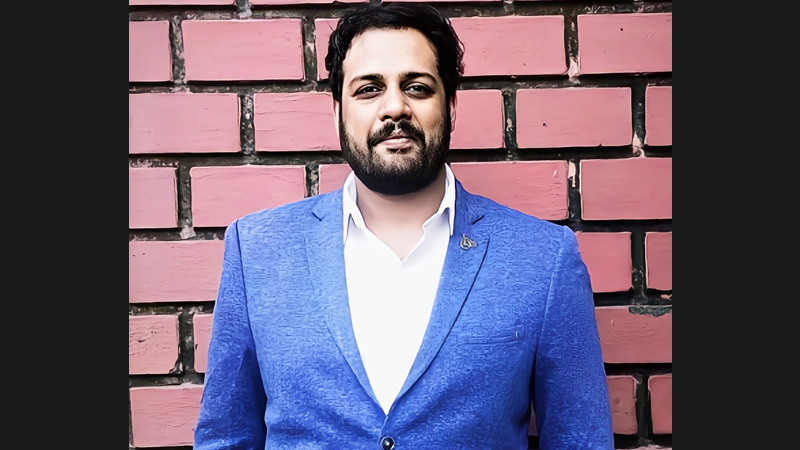
The article is attributed to Bridgers founder Anubhav Singh.


Brands
Vodafone Idea elevates Vineeth Jayendranath as VP, marketing head Mumbai
Telecom marketer takes charge of Mumbai circle with growth and brand focus
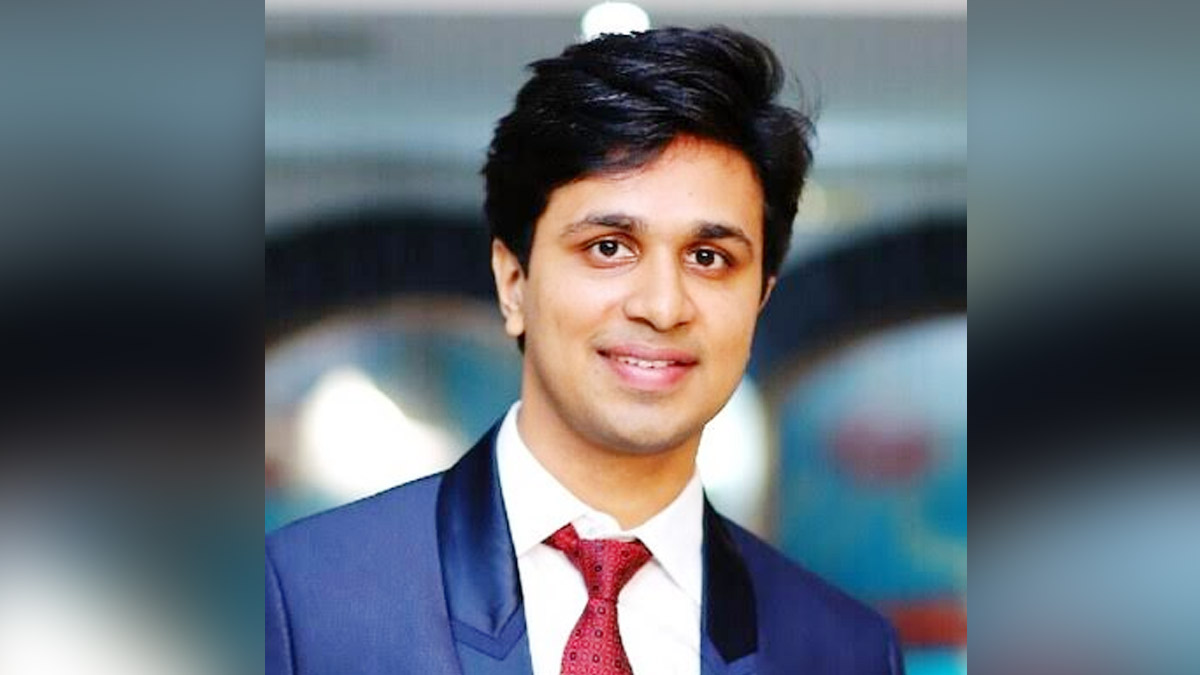
MUMBAI: Vodafone Idea Limited has promoted Vineeth Jayendranath to vice president, marketing head for the Mumbai circle, marking a key milestone in his career as the telecom operator sharpens its regional strategy.
In his new role, Jayendranath will lead marketing efforts across prepaid and postpaid segments in one of the country’s most competitive telecom markets. His mandate includes driving revenue growth, strengthening brand positioning, and deepening customer engagement, while also managing profit and loss responsibilities for the circle.
Sharing the update, Vineeth Jayendranath said, “Excited to share, I am starting my new stint as Vice President, Marketing Head for Mumbai circle at Vodafone Idea Ltd. Would like to thank everyone who has supported me in this journey.”
Jayendranath brings over 12 years of experience spanning telecom and IT, with a strong focus on customer value management and data-led marketing. Since joining Vodafone Idea, he has held multiple leadership roles, most recently serving as general manager leading customer value management and prepaid business across Gujarat, Maharashtra and Goa.
During this period, he handled large subscriber bases and multi-billion rupee revenue portfolios, while rolling out hyper-personalised campaigns and a “segment of one” strategy to improve customer retention and upgrades. He also championed a digital-first approach, pushing adoption of data services and unlimited plans through targeted, insight-driven initiatives.
Earlier, he worked with Idea Cellular Ltd in strategy and business intelligence roles, and began his career at Infosys as a systems engineer. A brief stint at Hyundai Motor India Ltd during his internship added early exposure to marketing strategy.
An alumnus of SVKM’s Narsee Monjee Institute of Management Studies, Jayendranath has steadily built a reputation for combining analytics with marketing execution.
His elevation comes as telecom players double down on circle-level strategies to stay competitive, and Vodafone Idea appears to be betting on data-backed marketing to keep Mumbai firmly in its corner.







