MAM
Appliances – The future

Mumbai: Home appliances are revolutionising domestic life. They are now offering seamless connectivity and advanced automation for enhanced convenience and efficiency. With advancements in smart technology, expect more and more appliances that seamlessly integrate into interconnected homes, offering unprecedented automation and customization.
More and more manufacturers and consumers are beginning to focus on appliances that can reduce energy and water waste. The newer generation of consumers is extremely eco-friendly and much more mindful of the problems of the planet.
From my over three decades of experience handling electronics, mobiles and appliances and studying current trends, I believe two key technologies are likely to shape the future of home appliances more and more – a) Combination of AI and IOT, and b) Brushless Direct Current Motors (BLDC)

Most smart devices are based on a combination of AI and IOT technologies. Such technologies make it easy for consumers to communicate with the devices remotely. One’s home lighting or AC can turn ‘ON’ automatically before one returns home, or our smart fan can adjust its speed per our customized settings during night-time. All such features are the gift of these modern-day technologies.
Brushless direct current motors end up saving a lot more energy. Since these motors are brushless, they utilize maximum power without wasting energy in the form of heat. Therefore, they provide more output than traditional home appliances.
Gesture control and voice activation is also the way forward.
Right from big to small home appliances, consumers are looking for smart devices for a smooth and easy user experience. From smart fans to mixer grinders and coffee machines to body care appliances, AI is integrated into many devices to give scalable and personalized experiences to consumers.
With increased awareness regarding environmental issues, it is imperative that technology start focusing on energy-efficient and sustainable appliances. The power consumption of energy-star-rated appliances is less, and so are the green-house gas emissions. One gets to see a lot of advancement in the material and design of appliances. However, much more care needs to be taken to reduce the environmental impact of disposal and manufacturing.
As technology advances and startups continue to disrupt the space with innovative products, the trend of smart appliances will only gain momentum. Larger companies will follow suit, and smart appliances will eventually become a staple in homes worldwide. For tech-savvy individuals, working couples with busy schedules and small families, smart appliances will provide valuable assistance without the need for hiring expensive help.
The ultimate vision is a fully automated home, where smart appliances collaborate seamlessly to manage chores and daily tasks independently and revolutionize our lives. From managing our energy consumption to optimizing cooking processes, these innovative devices enhance convenience and efficiency. Embracing the era of smart appliances promises a future where household chores are effortlessly managed, leaving us with more opportunities to enjoy life to the fullest.
Premiumization is a trend which is gaining global momentum, be it in housing, cars, appliances, mobiles, electronics or any product category. There is a certain percentage of users who are not shying away from paying extra for better experience, convenience, connectivity and energy efficiency. As newer and more energy-efficient products emerge, not only is there a growing new market, there is also a strong replacement market for older appliances.
Over the long term, caution needs to be exercised as premiumization may turn out to be a difficult strategy to keep up forever.
Industry stakeholders will need to debate between sustainability and technology leadership strategies in the appliances market. Sustainability is not only a buzzword; it is everyone’s responsibility to save our planet for future generations. Hence, many manufacturing industries keep this in mind while designing their products, and consumers prefer to buy sustainable products because of the increase in awareness.
Sustainability is no longer optional for companies if they want continued access to markets. Many countries are mandating that manufacturers comply with carbon mandates. This is done to prevent companies from outsourcing their carbon footprint.
The EU’s Carbon Border Adjustment Mechanism (CBAM), coming into force in 2026, will require importers to the EU to purchase certificates to cover the cost of their emissions at the same level as EU manufacturers.
However, strangely the appliance industry is still largely focused on selling hardware. Service, as understood in this industry, typically means the maintenance, repair or replacement of appliances.
I believe this relationship needs to be re-looked at seriously. It should be focused on specific services that consumers want, such as personalized health and enhanced experiences. Investing in services requires a different mindset and business model. An entire ecosystem of partners and delivery systems, payment systems could be built. Instead of one-off sales, for premium products, services could typically come through a subscription-based plan, with recurring payments and services via mobile apps. The new generation is already used to such models via their mobiles.
Services also have the specific benefit of being highly profitable and are recurring. Nobody looks forward to their next appliance repair.
There are many brands which operate and sell under one global brand name, while some organizations opt for multiple brands under their umbrella. There is no right or wrong answer. It depends on the context and the strategic direction and the tactics which are used on the ground to enable companies to maximize the benefits of whatever direction they choose.
For now, the low-to-mid category brands and new entrants have to re-work their strategies while giving initial push through online channels and also targeting smaller towns.
Competition from unorganised players will always pose a significant challenge for consumer durables brands. In this particular category, after the growth of online, gray players often offer low-cost alternatives imported from other countries with untested quality standards. These players undercut companies that adhere to quality standards. Such products pose a major hazard and risk.
All in all, the next few years look good though margins will remain under pressure and inflationary pressures may slow-down the growth of premiumisation.
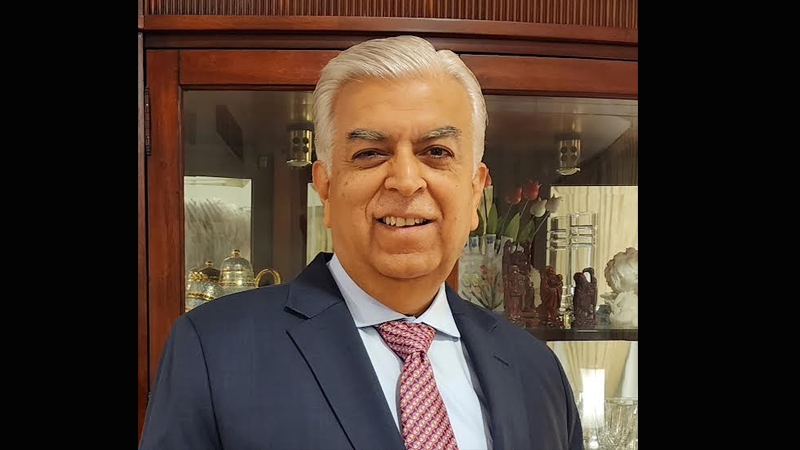
The article has been authored by consultant director, SSGM UAE board member, UAE superbrands council member, HBR advisory council, TiE Dubai charter member – Niranjan Gidwani.


Digital
Content India 2026 opens with a copro pitch, a spice evangelist and a £10,000 prize for Indian storytelling
Dish TV and C21Media’s three-day summit puts seven ambitious projects before an international jury, and two walk away with serious development money
MUMBAI: India’s content industry gathered in Mumbai this March for Content India 2026, a three-day summit organised by Dish TV in partnership with C21Media, and it wasted no time making a statement. The event opened with a Copro Pitch that put seven scripted and unscripted television concepts before an international panel of judges, and by the end of it, two projects had walked away with £10,000 each in marketing prize money from C21Media to support development and international promotion.
The jury, comprising Frank Spotnitz, Fiona Campbell, Rashmi Bajpai, Bal Samra and Rachel Glaister, evaluated a shortlist that ranged from a dark Mumbai comedy-drama about mental health (Dirty Minds, created by Sundar Aaron) to a Delhi coming-of-age mystery (Djinn Patrol, by Neha Sharma and Kilian Irwin), a techno-thriller about a teenage gaming prodigy (Kanpur X Satori, by Suchita Bhatia), an investigative crime drama blending mythology and modern thriller (The Age of Kali, by Shivani Bhatija), a documentary on India’s spice heritage (The Masala Quest, hosted by Sarina Kamini), a documentary on competitive gaming (Respawn: India’s Esports Revolution, by George Mangala Thomas and Sangram Mawari), and a reality-horror competition merging gaming and immersive fear (Scary Goose, by Samar Iqbal).
The session was hosted by Mayank Shekhar.
The two winners were Djinn Patrol, backed by Miura Kite, formerly of Participant Media and known for Chinatown and Keep Sweet: Pray & Obey, with Jaya Entertainment, producers of Real Kashmir Football Club, also attached; and The Masala Quest, created and hosted by Sarina Kamini, an Indian-Australian cook, author and self-described “spice evangelist.”
The summit also unveiled the Content India Trends Report, whose findings made for bracing reading. Daoud Jackson, senior analyst at OMDIA, set the tone: “By 2030, online video in India will nearly double the revenue of traditional TV, becoming the main driver of growth.” He noted that in 2025, India produced a quarter of all YouTube videos globally, overtaking the United States, while Indians collectively spend 117 years daily on YouTube and 72 years on Instagram. Traditional subscription TV is declining as free TV and connected TV gain ground, forcing broadcasters to innovate. “AI-generated content is just 2 per cent of engagement,” Jackson added, “highlighting the dominance of high-quality human content. The key for Indian media companies is scaling while monetising effectively from day one.”
Hannah Walsh, principal analyst at Ampere Analysis, added hard numbers to the picture. India produced over 24,000 titles in January 2026 alone, with 19,000 available internationally. The country now accounts for 12 per cent of Asia-Pacific content spend, up from 8 per cent in 2021, outpacing both Japan and China. Key exporters include JioStar, Zee Entertainment, Sony India, Amazon and Netflix, delivering over 7,500 Indian-produced titles abroad each year. The top importing markets are Saudi Arabia, the UAE, Egypt, the United States and the Philippines. Scripted content dominates globally at 88 per cent, with crime dramas and children’s and family titles performing particularly strongly.
Manoj Dobhal, chief executive and executive director of Dish TV India, framed the summit’s ambition squarely. “Stories don’t need translation. They need a platform, discovery, and reach, local or global,” he said. “India produces more movies than any country, our streaming platforms compete globally, and our tech and creators win international awards. Yet fragmentation slows growth. Producers, platforms, and tech move in different lanes. We need shared spaces, collaboration, and an ecosystem where ideas, technology, and people meet. That is why we built Content India.”
The data, the pitches and the prize money all pointed to the same conclusion: India is not waiting for the world to discover its stories. It is building the infrastructure to sell them.







