MAM
Alibaba – Building a new model for marketing


MUMBAI: As we approach a new decade, what were once predictions are today a reality. Some of these are – India enjoys a demographic dividend, smartphone and internet penetration is constantly growing, consumer appetite is expanding beyond established markets and coming from emerging India as well. Additionally, India is now the fastest growing economy in the world. This bodes well when you weigh the potential of the market. What comes next is attracting audiences and making it easier for brands to reach consumers.
This was the subject of a talk at the 44th International Advertising Association’s World Congress in Kochi by Chris Tung, Chief Marketing Officer, Alibaba Group. For any brand to enter a consumer’s discovery cycle that straddles Awareness, Interest, Purchase, and then Loyalty; brands need to do much more in the digital age. The need is for a cohesive, evolving, data-led ecosystem that involves content marketing, understanding consumption patterns, lifestyle preferences, and more. Through this data-led engagement, brands have the opportunity to become far more relevant to their target audiences. The data-led model allows for brands to experiment with campaigns readily and sometimes even optimise entire marketing strategies for customer acquisition.
Alibaba has been instrumental in achieving a data-led model that it terms as uni-marketing that allows brands access to insights based on data that are anonymised and aggregated down segments that number one million in size. This allows for a test-bed that at the very least has a million users. And the results have been promising for Alibaba and the brands that leverage its platforms. Alibaba reports 50% year on year revenue growth. For brands that leverage a data-led approach championed through uni-marketing at Alibaba – in some cases, time to launch has come down to nine months from 18 months. There are more top-sellers per brand today across categories. The real power of uni-marketing shone through with an insight provided to Mars Inc., wherein Alibaba suggested a chilli-infused chocolate treat to the global confectioner. The result? Between August of 2017 and March of 2018, sales of Snickers Spicy surpassed USD 1.43 million dollars with a 92% satisfaction rating among consumers.

That’s just the success of one product and one brand. When you scale this data-led engine out to engage with millions of users – what you arrive at is an e-commerce platform that brings brands and consumers closer to each other and a record sitting USD 30.8 billion Singles’ Day in 2018. To break that down further – that’s the ability to drive 300,000 transactions per second.



Brands
KKR sixes to power EV charger rollout under VIDA campaign
Cricket meets clean mobility as big hits spark India’s charging growth
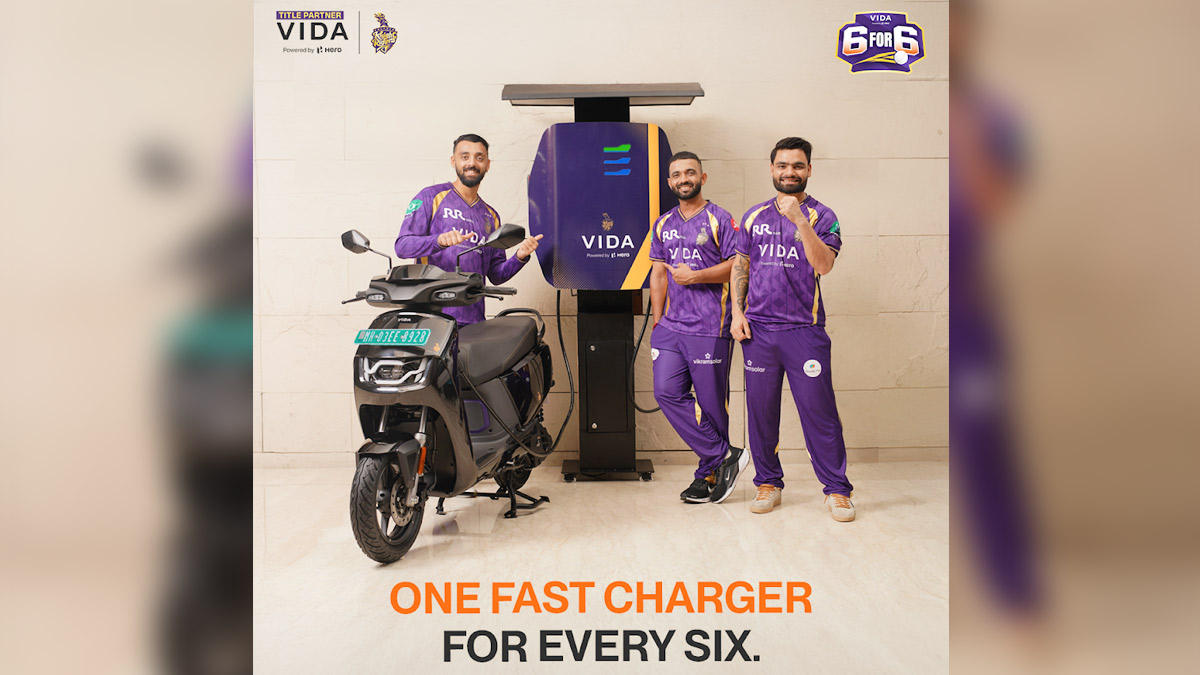
NEW DELHI: VIDA, the electric mobility arm of Hero MotoCorp, has teamed up with Kolkata Knight Riders to launch a campaign that turns cricketing flair into real-world impact.
Titled ‘6 for 6’, the initiative promises to install a 6kW fast EV charger for every six hit by KKR during the ongoing Indian Premier League season. The idea is simple but powerful, as each big hit on the field contributes directly to expanding India’s fast-charging infrastructure.
The campaign builds on VIDA’s growing network, which already spans over 5,300 fast-charging points across more than 430 cities. With EV adoption gaining pace, the brand is using cricket’s mass appeal to accelerate both awareness and infrastructure growth.
Explaining the thinking behind the move, Hero MotoCorp emerging mobility business unit chief business officer Kausalya Nandakumar said, “Cricket has an incredible ability to unite and inspire millions across the country. With the ‘6 for 6’ campaign, we are turning every big hit on the field into a step towards a cleaner and a more accessible mobility future.”
She added that VIDA’s expanding fast-charging network and removable battery technology are designed to make EV ownership more convenient and practical for everyday users.
From the franchise’s side, the campaign is also about giving on-field moments a larger purpose. Kolkata Knight Riders chief executive officer Venky Mysore said, “The ‘6 for 6’ campaign exemplifies the potential of sport as a platform for meaningful, real-world impact. By linking every six to the expansion of EV charging infrastructure, this partnership transforms fan excitement into tangible progress.”
As part of the rollout, VIDA has introduced co-branded charging stations in KKR’s signature colours, with a flagship installation unveiled alongside team players. The chargers are designed for quick top-ups, powering VIDA scooters from zero to 80 percent in about an hour, while also being positioned along key highways to support longer journeys.
The initiative also taps into VIDA’s removable battery system, which allows users to charge using standard household plug points, adding flexibility to the charging ecosystem.
By blending the thrill of cricket with the urgency of clean mobility, VIDA and KKR have found a neat way to make every six count twice, once on the scoreboard and again on India’s road to an electric future.








