Brands
AI-native film studio TakeTwo hits Rs 100 crore valuation in pre-seed round

BENGALURU: TakeTwo is betting that the future of Indian cinema will be written by algorithms as much as auteurs. The AI-native film studio has raised pre-seed funding at a valuation of Rs 100 crore, drawing backing from US-based Afore Capital and Canada’s Inovia VC, as investors warm to artificial intelligence transforming visual storytelling.
Founded in 2025, TakeTwo is building a full-stack, AI-powered film studio that embeds artificial intelligence directly into professional production workflows. The aim is audacious but simple: enable directors and production houses to create complex, VFX-heavy cinematic worlds at a fraction of today’s cost and time.
The capital will be used to strengthen technical infrastructure and scale TakeTwo’s team of “creative technologists”, as the company positions itself as a core technology partner for India’s film industry at a time when AI adoption across production is accelerating.

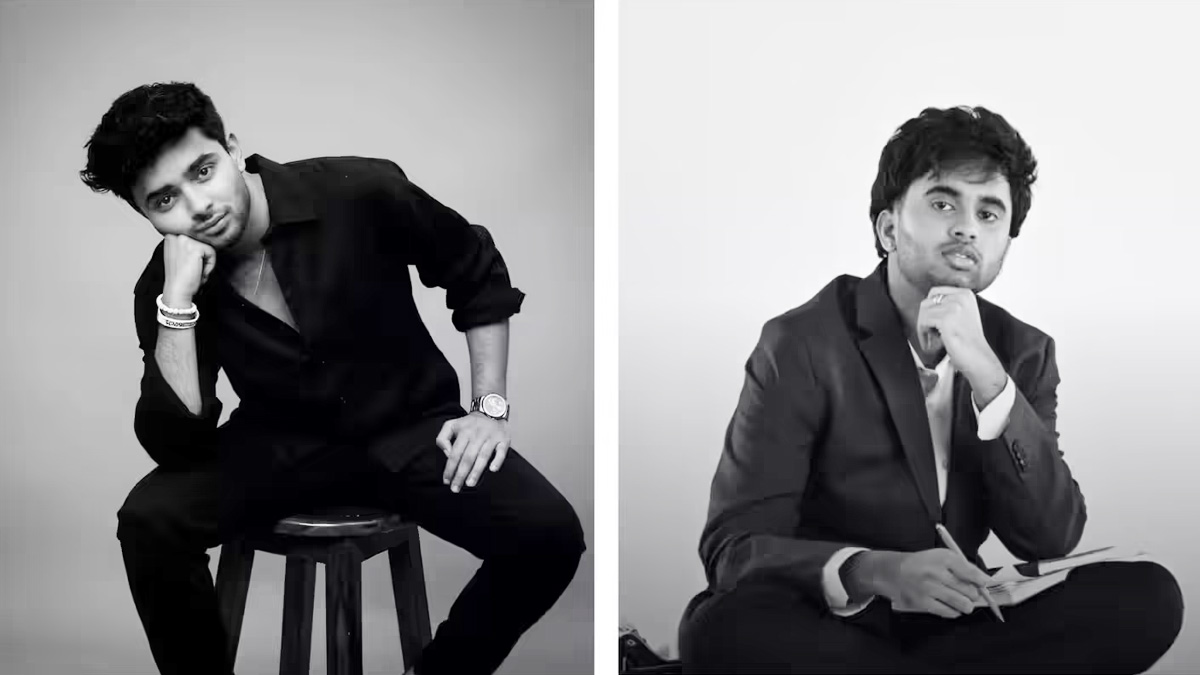
Founded by Rudresh Upadhyaya and Raghav Katta, TakeTwo was conceived in a shared room during Y Combinator’s AI Startup School. The founders, blending startup experience with a passion for cinema, set out to solve what they describe as the industry’s biggest choke point: spiralling VFX costs and punishing timelines that constrain creative ambition.
Unlike conventional AI software vendors, TakeTwo operates as a full-stack studio. It executes VFX-heavy sequences, stylised inserts and surreal environments while ensuring outputs integrate seamlessly into standard colour grading and editing pipelines. The company serves both large production houses and independent filmmakers, widening access to high-end visual capabilities.
“Our objective is to bridge the gap between cutting-edge AI research and the rigorous demands of professional cinema,” said Upadhyaya. “This valuation is a testament to the immediate value we are providing to filmmakers who need to scale their visual ambitions without the constraints of traditional timelines.”
The founders are keen to draw a distinction between TakeTwo and typical SaaS platforms. The studio positions itself as a creative partner rather than a peripheral tool, combining AI expertise with deep understanding of cinematic craft. The scale and complexity of India’s film industry also provide what the company describes as a rich data advantage, enabling the training of custom AI agents tailored to local production needs.
The timing is favourable. India’s media and entertainment market, valued at about $30 billion in 2024, is projected to reach $48 billion by 2030, growing at a compound annual rate of roughly 9.8 per cent. Within that, animation and VFX alone are expected to touch $2.2 billion by 2026.
Globally, momentum is even sharper. The AI video market, estimated at $3.86 billion in 2024, is forecast to swell to $42 billion by 2033, expanding at a CAGR of 32 per cent, according to Grand View Research.
TakeTwo says it is already collaborating with several leading Indian directors, embedding its AI-native pipelines into mainstream productions to create high-fidelity visual IP with reduced overhead. While the studio currently relies on advanced APIs, it plans to deploy proprietary AI agents customised for the nuances of Indian cinematography.
With backing from Afore Capital, the world’s largest pre-seed venture firm, and Inovia VC, the company plans to expand its technical and creative footprint across India and overseas markets.
As production budgets climb and audience expectations rise, Indian cinema is under pressure to deliver spectacle without excess. TakeTwo is wagering that AI can square that equation. If it succeeds, the next era of filmmaking may be less about stretching budgets, and more about stretching imagination.

Brands
Jubilant FoodWorks faces Rs 47.5 crore GST demand, plans appeal
Tax authorities flag alleged misclassification of restaurant services
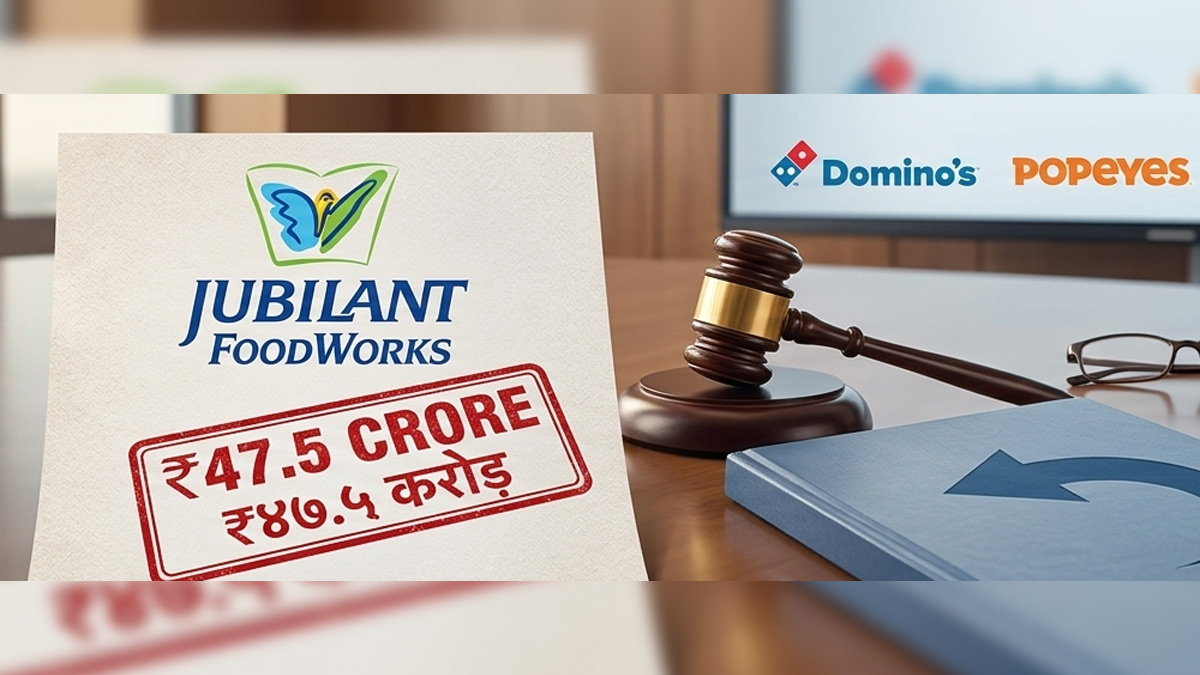
MUMBAI: Jubilant FoodWorks Limited has landed in a tax tussle after receiving a GST demand of Rs 47.5 crore from the office of the additional commissioner of CGST and central excise in Thane, Maharashtra.
The order, issued under the provisions of the Central Goods and Services Tax Act, 2017, relates to an alleged incorrect classification of certain services under the category of restaurant services. According to the tax authorities, this classification resulted in a short payment of goods and services tax for the period between the financial years 2019-20 and 2021-22.
The demand includes Rs 47.5 crore in GST along with an equal amount as penalty, in addition to applicable interest. The order was received by the company on March 13, 2026.
In a regulatory filing to the BSE Limited and the National Stock Exchange of India Limited, the company said it disagrees with the order and believes its arguments were not adequately considered.
The company is preparing to challenge the decision and plans to file an appeal. It added that once the redressal process is complete, the demand is likely to be dropped.
Despite the sizeable figure attached to the notice, the company said it does not expect any material impact on its financials, operations or other activities.
The disclosure was signed by Suman Hegde, EVP and chief financial officer, who confirmed that the company received the order at 19:06 IST on March 13 and has already initiated steps to contest it.
The development places the quick service restaurant major in the middle of a tax debate that could hinge on how certain restaurant-linked services are classified under GST rules. For now, the company appears ready to take the matter from the tax office to the appeals desk.