Digital
AI, aye captain – Rishad Tobaccowala fires up GoaFest with his human touch about artificial intelligence

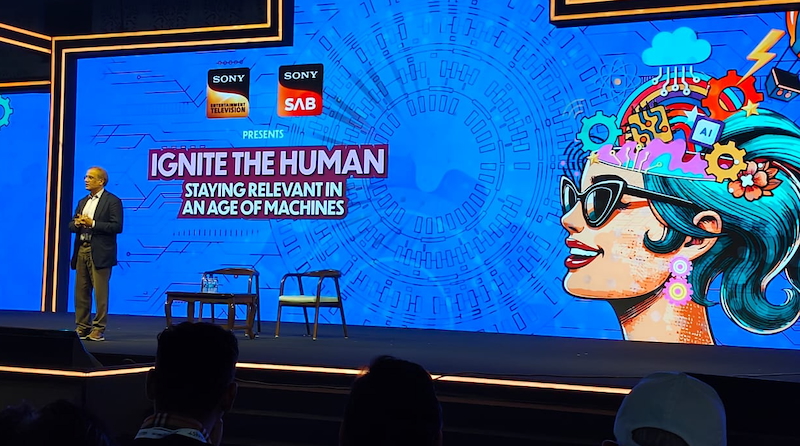
GOA: Who knew a masterclass in artificial intelligence could feel this human?
At the 2025 edition of GoaFest, held at Taj Cidade de Goa Horizon, marketing sage and Publicis Groupe senior advisor Rishad Tobaccowala kicked off the event with a keynote that was equal parts wake-up call and soul-stirring sermon. In a session titled Ignite, Tobaccowala didn’t just warn the ad world about AI, he challenged it to rekindle its human spark.
The thesis?

AI isn’t just the next big thing, it’s already bigger than we think. “AI in 2025 is still underhyped,” he declared, noting that many businesses still haven’t grasped how deeply it’s reshaping the fundamentals. And he came bearing receipts.
Forty years ago, a desktop computer cost 5,000 dollars and ran on 1.5 million transistors. Today, your smartphone is 10 times cheaper and runs on 1.5 billion transistors. “The cost of computing has dropped by a factor of 10 million,” he said, with the drop in information distribution costs also approaching zero. “And now, the cost of knowledge and experience is heading the same way.”
But here’s the kicker: that doesn’t make AI a differentiator, it makes it infrastructure.
“Saying you have AI is like saying you use electricity,” Tobaccowala quipped. “You won’t survive without it. But it’s not what will set you apart.”
What will? HI — Human Ingenuity, Intuition, Interaction, and Inspiration.

In a world where machines are smarter, faster, and cheaper, he argued, what remains irreplaceable is human originality. “When AI gives everyone the same data and tools, storytelling, creativity and trust become your only real edge,” he said, reaffirming marketers’ role as custodians of emotion and meaning.
Peppered with zingers, analogies, and a 220-second cheese brand startup powered by GPT-4, the session also made serious points about leadership in a rapidly shifting world. “If you’re planning to retire after 2026, think again,” he warned. “Most people won’t be replaced by AI, they’ll be replaced by other people using AI better.”
He also tore into the cult of corporate scale. “You’ll see billion-dollar companies with less than 100 employees,” said Tobaccowala, who himself pays $225 every month month to access top AI models from eight platforms, outperforming Fortune 500 firms stuck in bureaucratic inertia.
His call to action?
Rethink everything. “If you were starting your company today, would it look like it does now? No. Then why are you still running it that way?” From burning outdated mental models to embracing immigrant thinking (outsider mindset, underdog innovation), his message was clear: adapt or become obsolete.

He concluded with his signature “six Cs” for survival in the AI age: Cognition, Creativity, Curiosity, Communication, Collaboration, and Convincing, a new operating system for human relevance.
As for jobs? “Work will change more between 2019 and 2029 than it has in the past 50 years,” he said, forecasting a rise in gig-style, goal-focused work over traditional employment. “The future of work is about getting things done, not filling jobs.”
In a festival famous for its flair, Rishad Tobaccowala delivered a rare thing, a lecture that didn’t just ignite the mind, but lit a fire in the heart.






Digital
Truecaller opens Business Chat platform to global partners and enterprises
Expansion aims to replace SMS with trusted, rich and conversational messaging
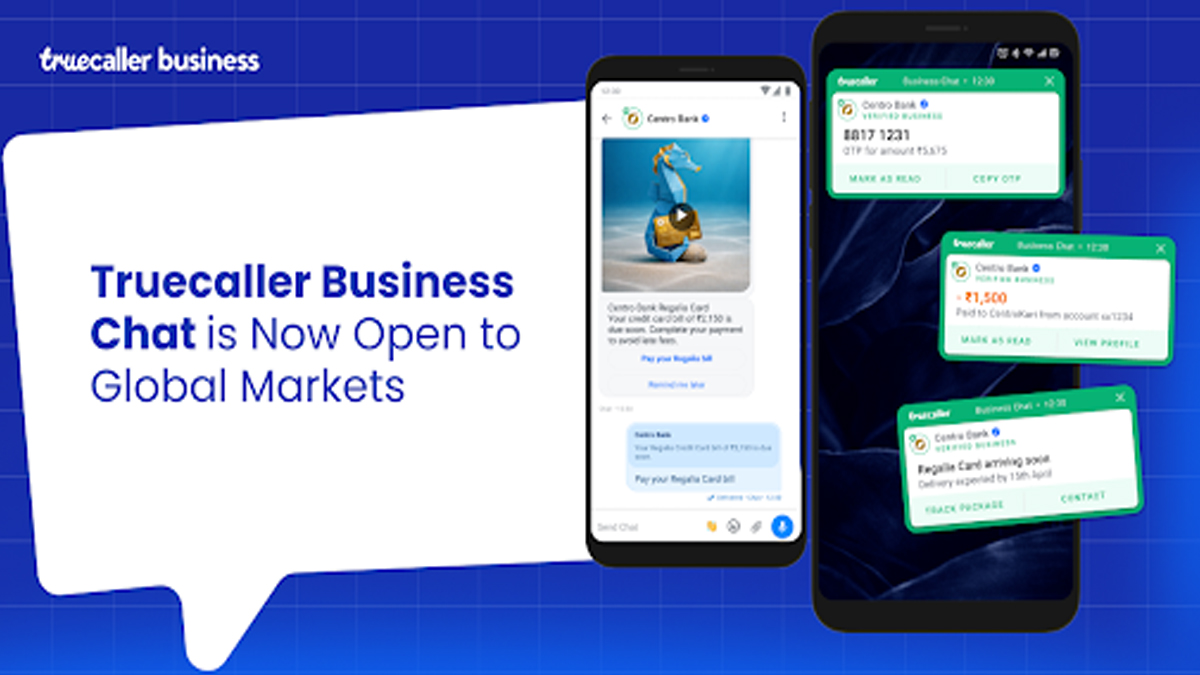
MUMBAI: Truecaller has expanded access to its Business Chat platform, opening it up to global channel partners and enterprise solution providers as it looks to reshape how businesses connect with customers.
The move allows partners worldwide to offer the platform to enterprise clients, enabling a shift away from traditional SMS towards a more interactive, verified and media-rich communication experience. The company is positioning this as a higher-trust alternative in an increasingly cluttered digital landscape.
With over 500 million active users globally, Truecaller is betting on its scale and daily engagement to give brands a more direct and credible way to reach consumers. The platform supports contextual conversations, real-time insights and engagement metrics, allowing businesses to fine-tune communication across the customer journey.
“The definition of success for modern enterprises has evolved. It’s no longer just about delivery but about earning attention and driving meaningful engagement,” said Truecaller global head, GTM Priyam Bose. He added that opening the platform to partners creates a gateway for brands to connect with users in a more trusted and action-oriented environment.
The expansion is already underway, with partners such as Gupshup and OneXtel live in India, while Globe Teleservices, Cloudcom and Sling Africa are driving adoption in international markets.
By equipping partners with data-driven tools and a conversational interface, Truecaller aims to help businesses cut through noise and build stronger customer relationships. The platform also promises a cleaner, more secure interaction layer, addressing long-standing concerns around spam and trust in business messaging.
As enterprises rethink customer engagement in a post-SMS world, Truecaller’s latest push signals a clear ambition to become a central player in conversational commerce.






