Events
AdWise 2002 covers key issues on air time selling, buying

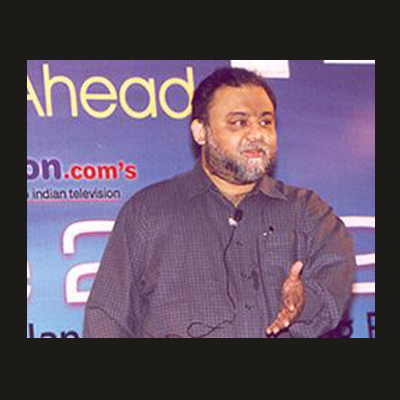
Ratings are important but there is a lot more to media planning and buying than just GRPs (gross rating points) and CPRPs (cost per rating points). That was one of the main strands of the discourse at Ad-Wise 2002, India’s first TV airtime forum organised by television services company indiantelevision.com, which was held in Mumbai last Friday.
Improve the quality of data available; innovate; gut feel is important; use technologies to help leverage brand positioning. These were just some of the suggestions thrown up during the day-long proceedings whose theme was ‘Future Shock: The Road Ahead’ was targeted at professionals from broadcasters who sell air time, media planners and buyers from ad agencies and media concessionaires, and at marketers.
A cross section of television, advertising, media, research and marketing professionals came and shared their views at Ad-Wise 2002. Among them: Raj Nayak, executive vice-president, Star India, Abraham Thomas, ad sales head Sony Entertainment, Sam Balsara, head of Madison India, TAM India CEO L V Krishnan, Initiative Media CEO Ashish Bhasin, Mindshare Fulcrum CEO Vikram Sakhuja, and Eureka Forbes COO S K Palekar, to name a few.

SET India CEO Kunal Dasgupta, who delivered the keynote address, gave an overview of how he saw the television business developing over the next five years.
Dasgupta said the television industry was poised for a great leap forward in the way the overall business was organised. Referring to the just released report put out by Andersen, Dasgupta said TV ad spend was going to go from the current Rs 36 billion to Rs 81 billion by 2005. Again quoting from the report, Dasgupta said TV could garner 60 per cent of all ad spend by then.
 Among the changes that were coming: 25 per cent of all TV revenues would be through subscriptions. Localisation of content but based more on language rather than just locality. Dasgupta gave the example of the Ramoji Rao promoted Eenadu Television network model, which was launching a string of regional channels.
According to Dasgupta, there would be no free to air channels as all would eventually have to go pay to survive. Dasgupta laid special emphasis on technology as a harbinger of change. The person who uses these technologies and leverages them well, will have the maximum by way of branding opportunities, Dasgupta said.
Looking at viewers, advertisers and broadcasters, Dasgupta had this to say: Viewers would access a small pool of channels that for which they would pay more.
As conditional access systems would be in place there would be no redundant channels (in the current dispensation, of the 100-odd channels that were available, only 10-15 are actually watched).
There would be a greater demand for quality as far as programming is concerned.
As with broadcasters, advertisers would also consolidate. With continuous improvement in database, research would become far more representative than is the norm today. This would mean a quantitative measurement of qualitative input becomes possible. Audience measurement systems for niche channels will become more refined. Advertisers would be willing to pay heavy premium for high image and high delivery properties. Niche channels with high loyalty will be able to charge more from advertisers.
As for the broadcasters, there will be a few national players, a few regional players and more of coalitions existing.
Channels will continuously provide cutting edge entertainment to drive viewers as both audiences and advertisers become more and more demanding.
In summation, Dasgupta said the cost of effective advertising is going up. Therefore this would perforce mean that advertisers would be making considered choices as to the media vehicles they want to associate with.
In this Dasgupta saw a scenario where broadcasters would be making strategic alliances with specific groups of advertisers.
Raj Nayak in his presentation – ‘What ails airtime sales?’ – stressed on the huge gap that existed between perception and reality among media buyers and planners and the channels  themselves. Nayak’s was a call for better researching methodologies. By way of example, he pointed out that when he approached six top agencies for data about the kind of ad spends that were currently available, all six threw up significantly different numbers. According to him, there was quite a bit of spin doctoring in the kind of numbers that were being thrown around.
Nayak said there had to be far more by way of investment into the data available. Nayak however, cautioned against relying too heavily on numbers. While asserting that he was all for ratings as a benchmark, what was needed was a more long term perspective. In the hunt for short term gains, media buying has been reduced to who can give the best deal rather than what might be effective as far as the brand fit is concerned, Nayak said. This “herd mentality” was leading to a scenario where executives were not at all bothered whether the brands they were promoting were benefiting from their campaigns or not as long as bottom lines were being shown.
“I believe in ratings. But media planning must go beyond GRPs and CPRPs,” Nayak said.
 Sam Balsara: The value proposition in TV advertising was showing diminishing returns and there was much more innovation required was Balsara’s point in his presentation – “Innovation in Media”.
Too much clutter in the television advertising space was one of the reasons for this state of airs, Balsara said while giving out these figures:
There were 3.2 million ad spots on TV in 2001, up 34 per cent from the previous year while ad secondage was 65.7 million, up 26 per cent.
Balsara’s recipe: Invest in programming, maximise salience, create opportunities, push brand values, and take risks. “Never be afraid to try something new,” he concluded.
Vikram Sakhuja: How will media independents change TV buying?
Independents brought a whole lot more accountability into the equation, was Sakhuja’s view. Sakhuja painted a bleak picture as to the future growth prospects of the industry saying there  was nothing to suggest that there was gong to be any great expansion in the ad pie.
Sakhuja pointed out that of the Rs 36 billion ad pie, 75 per cent was gobbled up by seven to eight players – essentially the mass language entertainment channels and one or two big regional players. And most of this spend was flowing into three hours of prime time, which left the rest of the channels really struggling.
While Sakhuja did say that TV should grow beyond the three prime time hours and the six-seven channels that are currently in the viewerscope of media planners and buyers he added the rider that there should be better rates negotiated as well as better benchmark data. This is bound to come as bad news to TV ad sales executives who are already being squeezed dry.
Sakhuja said the up side of this was that there will increasingly be seen a greater role of non prime time and non mainline channels in the media plans. “TV buying will not become more difficult, it will just become more accountable,” was Sakhuja’s comment.

Abraham Thomas: There is life beyond ratings. That was the main thrust of Abraham’s talk. While GRPs and CPRPs were certainly important and a good indicator of a show’s overall performance, there was a need of a major change in the mindset as far as how media buyers and planners dealt with broadcasters, Abraham said. He called for more transparency and clarity as far as the pitch that was being made was concerned as this would help broadcasters work better towards adding brand value to the whole exercise.
 Sandeep Singh, VP, marketing, Shri Adhikari Brothers Television Networks Ltd, echoed Abraham on the point of advertisers not giving enough information to the broadcasters which benefited no one.
And true to the subject of his presentation – “Let’s think anew”, Singh made a case for advertisers to look beyond the mainline channels when looking at effective brand positioning.
Singh gave the example of Aristocrat Premium Apple Juice which he said was a very successful campaign and one where spots were bought on the smaller channels like SABe TV, B4U and etc.







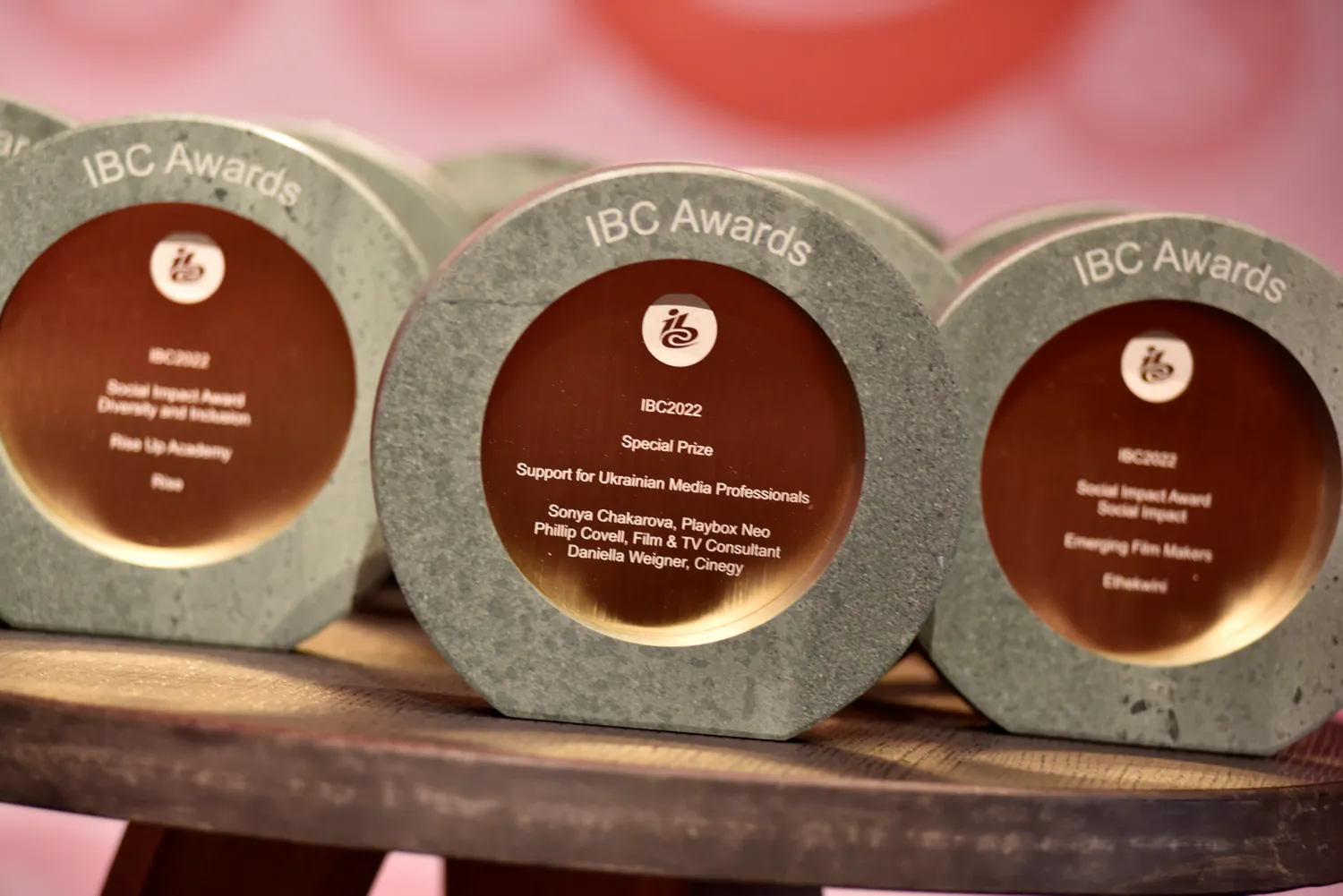
MUMBAI: Disney Star India is in the running for this year’s IBC2024 Innovation Awards which are to be held on 15 September at 18 hours. The category for which it has been shortlisted is the social impact award for its work with India Signing Hands through which it brought the IPL 2024 coverage to almost 67 million hard of hearing and 34 million visually impaired fans on Star Sports.
Late last month, the IBC announced the finalists for the IBC Innovation Awards which celebrate and honour collaborative initiatives leading to ground-breaking solutions that address real-world media, entertainment and technology industry challenges. This year’s awards bring together under one roof IBC’s innovation and social impact awards to create a unified celebration of industry advances, with five categories now being judged: content creation, content distribution, content everywhere, social Impact, and environment & sustainability.
“This year’s entries once again showcased the global reach and appeal of the IBC Innovation Awards with projects of the highest quality received from six continents,” said chair of the 2024 IBC Innovation Awards jury Fergal Ringrose. “Meanwhile, constantly evolving delivery methods and audience consumption patterns demand that content producers around the globe must innovate dynamically in order to stay relevant and competitive in the modern media and entertainment technology ecosystem. I would like to sincerely thank our panel of judges for their diligence and ability to adapt, as we brought our three content categories together with environment and sustainability and social impact this year for our new-look IBC Innovation Awards.”
Former news anchor Sasha Qadri is set to host the awards in the auditorium complex at the RAI on Sunday.
This year’s finalists in the Content Creation category include:
* The National Football League (US), ESPN, Disney/Pixar and Beyond Sports for creating the first fully animated, real-time NFL alternative broadcast set in the Toy Story universe.
* Olympic Broadcasting Services and partners for live broadcast production with more than 200 smartphones contributing video for the Paris 2024 Opening Ceremony and a sea-based 5G network for sailing competitions in Marseille.
* Aspire for working with Vislink and FocalPoint VR to develop a virtual reality over RF wireless solution for the inaugural season of Aspire’s Abu Dhabi Autonomous Racing League (A2RL).
The organisations named as finalists in Content Distribution are:
* Claro for creating a new approach to pay TV in Brazil, integrating streaming channels and applications, delivering entertainment to consumers with a complete pay TV offer.
* NBCUniversal Operations and Technology for its pioneering project to transform the way its TV channels are delivered to consumers worldwide.
* The National Hockey League (Canada and US) in partnership with Verizon, AWS, Zixi, Vizrt and Evertz, for producing a 5G and Edge compute framework for assembly, control and delivery of live broadcast.
The Content Everywhere finalists are:
* LaLiga for working with Play Anywhere and Ease Live to enable true fan interactivity for itself and its worldwide broadcast and streaming partners.
*Red Bull Media House for bringing together real-time GPS tracking, data management and advanced visualisation to transform viewing experience across live broadcast, web widgets and AR mobile app.
* Franceinfo (France Télévisions) for working with PimpMyCompany to aggregate text/audio/video/photo messages from various platforms and broadcasting them live on air.
Apart from Disney Star, the Social Impact finalists are:
* CultureQ for a new technology platform developed by indigenous-owned tech company Kiwa Digital that enables indigenous peoples globally to revitalise their language and culture at scale, while retaining sovereignty
* Sesame Workshop for its Watch Play Learn Distribution Hub which allows government agencies and aid organisations to preview and request videos for children in crisis settings.
The Environment & Sustainability finalists are:
* France Télévisions for reducing CO2 emissions by 300 tons via a pioneering 100% glass-to-glass cloud production and private 5G network.
* GreeningofStreaming for addressing growing industry concerns about the energy impact of the streaming sector, with international reach and over 30 member organisations.
* Anton/Bauer for Salt-E Dog which harnesses the power of sodium chemistry to enable sustainable television production practices.
The Innovation Awards ceremony will also feature the presentation of the IBC International Honour for Excellence, which goes to an individual or organisation that has made an outstanding impact in the industry, and the best technical paper, with all papers being presented at the 2024 IBC Conference that runs 13-15 September in the auditorium complex of the RAI.








