MAM
Advertising on US TV sites grows by 60 per cent

MUMBAI: The ad revenues that web sites of television, radio and print companies in the US garnered grew significantly last year.
Newspapers, TV and radio station web sites they held onto half of all locally spent online advertising. Newspapers remained the leader, generating nearly $1.2 billion from their sites.
TV sites saw nearly 60 per cent revenue growth at $119 million and radio stations suddenly awakened to the opportunity in 2004, nearly doubling their Internet ad revenues at $34 million. This data is contained in a report put out by Research And Markets.

The survey included 2,177 sites operated by newspapers, TV stations, radio stations and local
pure-play companies. Another study by Research and Markets states that American recruiters are all vying for a piece of the Newspaper industry’s $4.6 billion recruitment pie through online advertising.
The study notes that recruitment advertising began its cyclical recovery with 2004’s improved
employment picture. Both newspapers and online media saw gains. But Internet job boards improved three times faster. Sales positions — particularly in retail and healthcare — are a key battleground as newspapers attempt to shore up their position against Monster’s initiative to reach smaller local
businesses.
The American economy has begun to turn, and with it comes new sunlight for recruitment advertising. The unemployment rate in the US has dropped for the first time in three years, and newspaper help-wanted advertising showed a corresponding
increase. If history offers any pattern, what will follow are seven years of increases in recruitment spending. The big question, of course, is where that
spending will occur.
While all boats are rising once again on the flowing
tide, some boats are indeed rising faster. Online job boards grew nearly three times as fast as newspaper classifieds in 2004. The battleground remains with non-managerial positions in the Small and
Medium Enterprises (SMEs). Two million of the estimated 13 million SMEs advertise in newspapers, and they have remained loyal to the helpwanted section. In 18 months, Monster has been able to convert almost 10 per cent of the SME category to online. The battle wages on. Pricing has begun to drop, making the job boards more alluring to price-conscious newspaper advertisers
in smaller markets.
Migration has already occurred in the sales-recruitment category, where recruiters devoting more dollars to the job boards. Other non-
managerial categories remain squarely in the newspaper domain. The road ahead is tough for the job boards and newspapers alike. Recruiters are spending $1.5 billion on their own sites in 2004, more than they’re spending with the job boards. Corporate sites have become more sophisticated in the past two years as they add features that mimic those of the major job boards. Job seekers can now go directly to an employer’s Web site and search available jobs, apply, or file a resume for future job
openings.
Newspapers still dominate this category in overall revenue. Online job boards generated about $1.3 billion in 2004, about one-fourth of the $4.6
billion that traditional newspaper advertising generated. Even if online recruitment revenues continued to grow and newspaper revenues remained flat, it would take a 30 per cent annual increase in online recruitment spending
(nearly twice the current rate of growth) over the next six years for it to reach the same level as newspapers.







Brands
KKR sixes to power EV charger rollout under VIDA campaign
Cricket meets clean mobility as big hits spark India’s charging growth
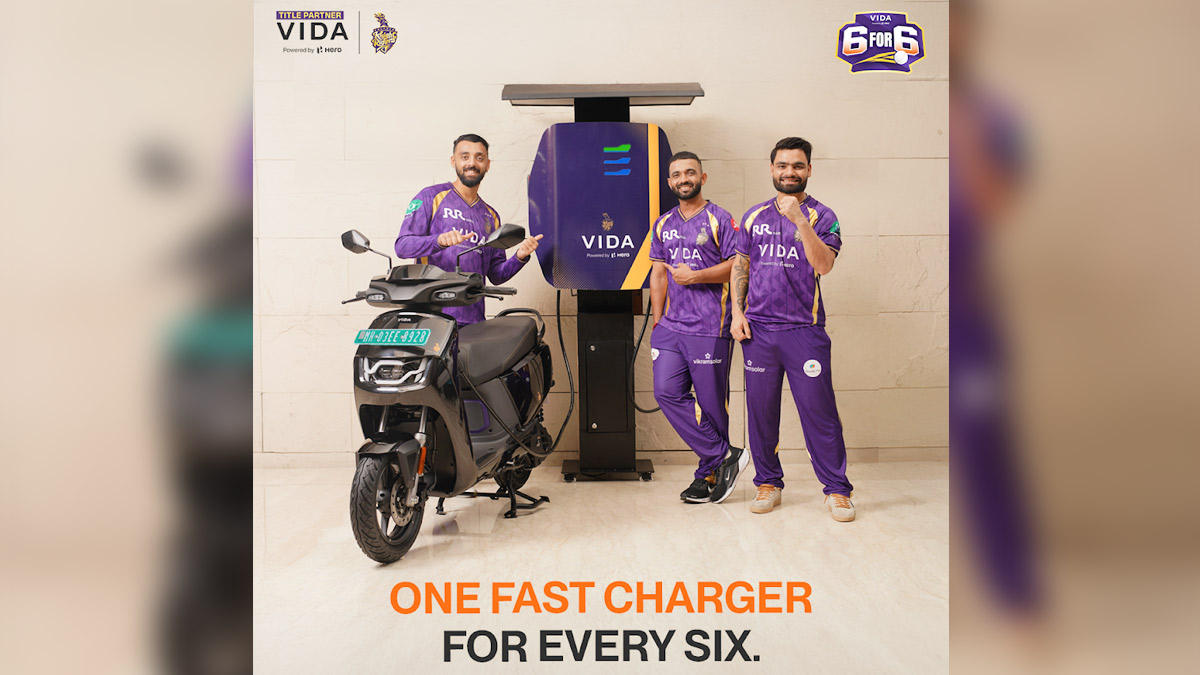
NEW DELHI: VIDA, the electric mobility arm of Hero MotoCorp, has teamed up with Kolkata Knight Riders to launch a campaign that turns cricketing flair into real-world impact.
Titled ‘6 for 6’, the initiative promises to install a 6kW fast EV charger for every six hit by KKR during the ongoing Indian Premier League season. The idea is simple but powerful, as each big hit on the field contributes directly to expanding India’s fast-charging infrastructure.
The campaign builds on VIDA’s growing network, which already spans over 5,300 fast-charging points across more than 430 cities. With EV adoption gaining pace, the brand is using cricket’s mass appeal to accelerate both awareness and infrastructure growth.
Explaining the thinking behind the move, Hero MotoCorp emerging mobility business unit chief business officer Kausalya Nandakumar said, “Cricket has an incredible ability to unite and inspire millions across the country. With the ‘6 for 6’ campaign, we are turning every big hit on the field into a step towards a cleaner and a more accessible mobility future.”
She added that VIDA’s expanding fast-charging network and removable battery technology are designed to make EV ownership more convenient and practical for everyday users.
From the franchise’s side, the campaign is also about giving on-field moments a larger purpose. Kolkata Knight Riders chief executive officer Venky Mysore said, “The ‘6 for 6’ campaign exemplifies the potential of sport as a platform for meaningful, real-world impact. By linking every six to the expansion of EV charging infrastructure, this partnership transforms fan excitement into tangible progress.”
As part of the rollout, VIDA has introduced co-branded charging stations in KKR’s signature colours, with a flagship installation unveiled alongside team players. The chargers are designed for quick top-ups, powering VIDA scooters from zero to 80 percent in about an hour, while also being positioned along key highways to support longer journeys.
The initiative also taps into VIDA’s removable battery system, which allows users to charge using standard household plug points, adding flexibility to the charging ecosystem.
By blending the thrill of cricket with the urgency of clean mobility, VIDA and KKR have found a neat way to make every six count twice, once on the scoreboard and again on India’s road to an electric future.








