MAM
Ad industry calls for regulatory body to monitor plagiarism

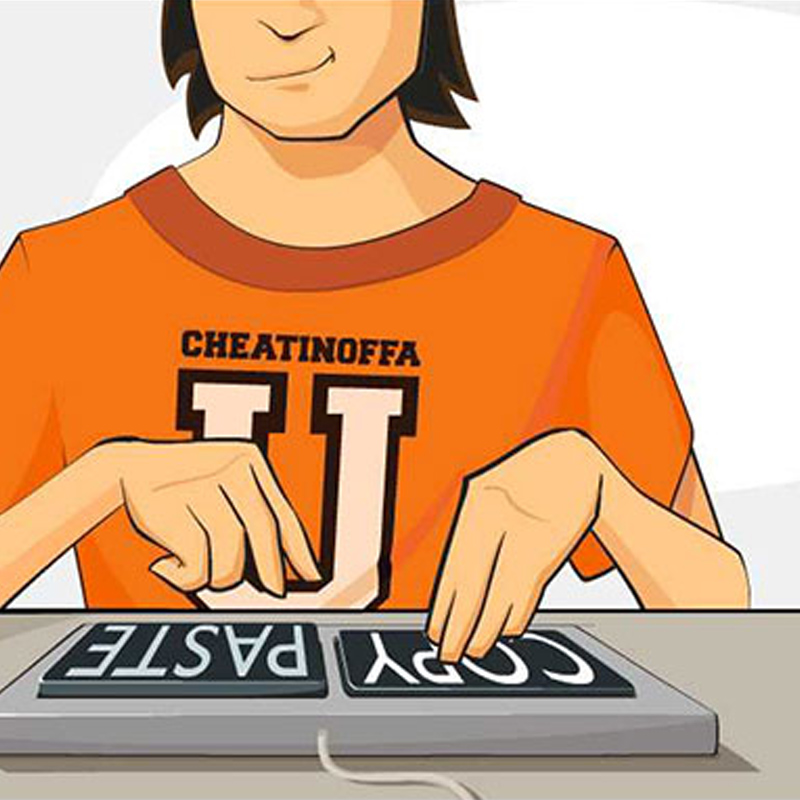
MUMBAI: Creativity sometimes takes inspiration from past creatives but what if it is an entirely copied one? Plagiarism (or inspiration), is a never-ending burning issue in the advertising world. A little similarity can be overlooked but complete knockoffs are just astonishing.

Information sharing on the internet has led to rampant plagiarism. In the garb of creativity, sometimes, knowingly or unknowingly, ideas tend to be entirely copied.
Plagiarism with ads is much more difficult to pinpoint compared to a music piece or a film narrative, purely owing to the shorter format of the medium. Accepting that this does happen, The Glitch senior creative director Sunetro Lahiri admits that he has personally been part of campaigns where the main thought had to be tweaked in the event of another brand (that too, from a totally different category!) having launched a campaign with the exact thought. He affirms, “It does happen and that’s why it’s more about ethics than rules. We see elements of different auteurs in the work of a lot of current film-makers. Just the way you can’t label it plagiarism, there’s a larger grey area in advertising too.”
Without naming any brands Grapes Digital COO Shradha Agarwal brings up that there are times that a client shares references to create a new piece of communication. After multiple rounds of changes and iterations, it becomes less of an inspiration and more of a ‘copy’. This is another reason why sometimes a creative agency, without the intention of copying, might actually end up copying a current campaign from an ‘inspirational’ campaign.
Lesser known local brands tend to ape their famous counterparts. It was only last year when a 2015 ad for Wagh Bakri Tea conceptualised by Scarecrow Communications was plagiarised by a local Gujarati tea brand, Jay Jawan Tea. The local brand not only copied the entire ad but smartly replaced Wagh Bakri shots with its own product placement.
Wagh Bakri ad:
Jay Jawan ad:
Recalling an old incident, Happy mcgarrybowen senior creative director Naren Kaushik read about a bike, named Gulsar, which was a rip off of Pulsar. He says that maybe years ago when internet didn’t make everything news, it was just easier to use existing ideas for which people would have spent time and money, and just rip them off as is. In today’s context, Jai Jawan gets their share of eyeballs very quickly. Now we all know such a brand exists.
While there is no way to stop it and brands often just send a legal notice to the other party, maybe there is a need to have more stringent rules to keep a tab on plagiarism.
Our experts view on this:
BBH chief creative officer and managing partner Russell Barrett:
The people who do that should be ignored. It’s the best punishment. It’s a vile habit that untalented poseurs have resorted to through the centuries. The best thing is for them to be forgotten and ignored. By their peers and their audience. The argument should not be about copied versus unique. Show me what you think is a unique idea and I will show you another one that is somewhat similar. The drive should be for freshness. Why is this idea different? Why should it exist in a new form? What’s fresh about it?
Happy mcgarrybowen senior creative director Naren Kaushik:
Needless to say, yes. A regulatory system for any big industry is important. There will always be me-toos bordering on illegal. If we walk around our own neighbourhood, how many salons do we see with actors’ and actresses’ pictures all over them? Surely they haven’t paid for endorsement. Even smaller and local fashion outlets use celebrities of all sorts. There’s no real way to keep track of who is copying who and where. We have also seen billboards when we drive out to smaller towns where some or other ad has been ripped off. It is very difficult to keep a track of this. But when it does come to someone’s notice, there should be some action that we can take. The trouble, though, is that this is a sketchy process right now. We don’t have a system to ensure quick results and more often than not, the petitioners end up losing time and money. That is a huge deterrent. If there’s a ‘regulatory body’ that can help fast-track this, more agencies will be encouraged to take their case up.
The Glitch senior creative director Sunetro Lahiri:
Ideally, it should. If various forms of media are protected, why should this field be left out? The lack of legal action stems from the lack of belief that there will be a possible resolution. Also, as a rule, as mentioned in the question, agencies and brands aren’t even aware of the said creative.
Grapes Digital COO Shradha Agarwal:
There are a lot of copyright laws that exist which are meant to safeguard the interests of advertisers from ones that are out to steal. But sometimes they are not enough as has been proven time after time. Things, like muting the audio or taking the entire video down, are currently practised on multiple social platforms as a good way to minimise copyright infringement. So yes, perhaps a regulatory body can help minimise the damage that this sort of plagiarism can cause. If the entire advertising community comes together as one and penalise the one that is stealing work from one of their own, it can definitely serve as a step in the right direction.
White Rivers Media co-founder and CEO Shrenik Gandhi:
Honestly, it is too small a problem for a regulatory body to be formed for. These are marketing techniques used by smaller brands to influence a smaller audience. So this has to be solved at a smaller level itself. And I don’t think at this moment there’s a need for a regulatory body to guide on this particular issue. There are much bigger issues the industry is facing and if a regulatory body exists, they should focus on those.
While copying someone’s creative is a pertinent issue that needs to be looked at, maybe AAAI, ASCI (The Advertising Standards Council of India) and other regulatory bodies should come together to fight against this. If not, let us just leave ideas to breed other ideas just like this ad where oil brand, Sunny Lite filed a complaint with ASCI against the Aashirvaad Atta brand over a TVC where Sunny Lite claimed that the ad bears a striking similarity to its advertisement.



MAM
India’s financial sector spent less on TV ads in 2025 but flooded the internet
Banks, insurers and lenders cut tv ads as digital jumps, LIC and Muthoot lead tv and Axis Bank tops online
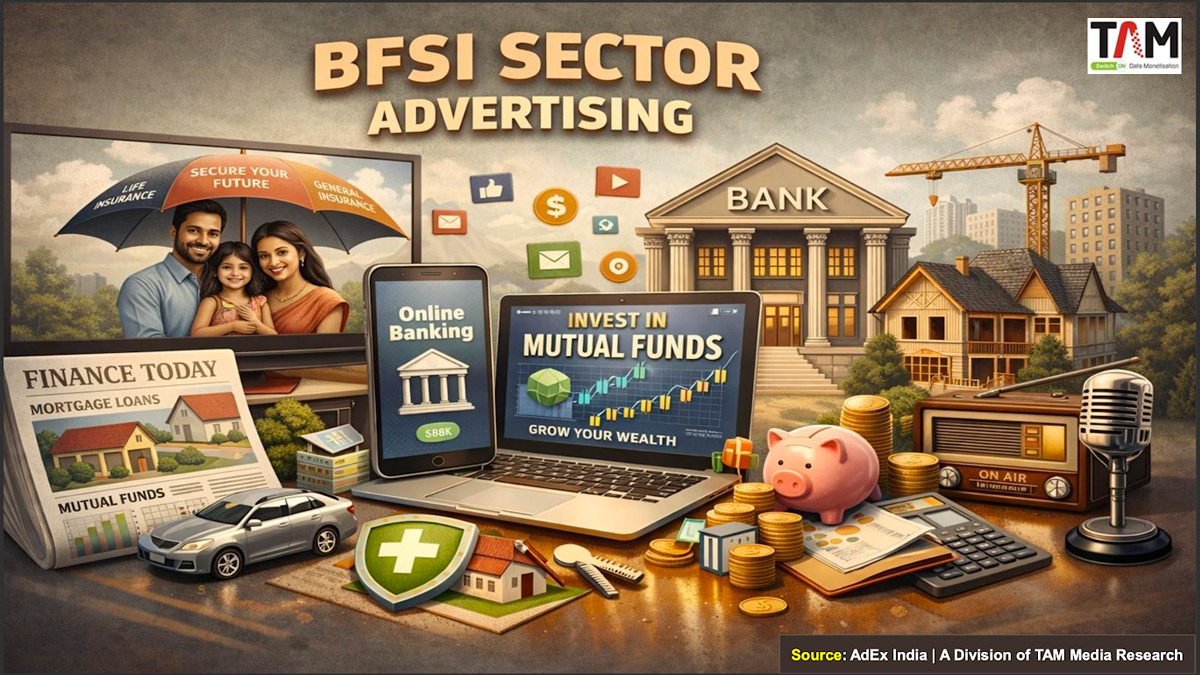
MUMBAI: India’s banking, financial services and insurance sector, one of the most prolific advertisers in the country, delivered a split verdict on media in 2025. It spent less on television, held its nerve in print, turned up the volume on radio and deluged the internet with a ferocity that left every other medium looking pedestrian. The picture that emerges from TAM AdEx’s cross-media report for the BFSI sector is of an industry in transition, still wedded to the news bulletin but increasingly seduced by the algorithm.
Television: a retreat with caveats
TV ad volumes for the BFSI sector fell 16 per cent in 2025 compared with 2024, a sharp reversal after two years of consistent growth that had pushed volumes 16 per cent above 2021 levels by 2023 and a further 7 per cent higher by 2024. Within 2025 itself, the drop was concentrated in the middle of the year: the second and third quarters saw ad volumes slide 35 per cent each against the first quarter, with a partial recovery of 13 per cent in the fourth.
The retreat did not reshuffle the deck. Life insurance retained first place among TV categories with 19 per cent of ad volumes, mortgage loans held second with 16 per cent, and the top ten categories together accounted for 82 per cent of all BFSI television advertising. The dominance of news channels was equally pronounced: news claimed 68 per cent of ad volumes, general entertainment channels a distant 14 per cent and movies 12 per cent. Together, news and GEC captured 82 per cent of the sector’s television spend. News bulletins alone took 48 per cent of programme-genre volumes, with feature films second at 12 per cent. Prime time, between 6pm and 11pm, drew 34 per cent of ad volumes, followed by afternoon at 22 per cent and morning at 20 per cent. A full 82 per cent of all ads ran between 20 and 40 seconds.
Life Insurance Corporation of India was the sector’s biggest TV spender with 11 per cent of ad volumes. Muthoot Financial Enterprises came second with 9 per cent, followed by National Payments Corporation of India at 6 per cent, Tata AIG General Insurance at 5 per cent and State Bank of India at 5 per cent. The top ten advertisers together accounted for 51 per cent of total TV volumes. Three names were new to the top ten in 2025: Tata AIG General Insurance, IIFL Finance and Tata Capital. At brand level, Muthoot Finance Loan Against Gold led with 9 per cent share, Tata AIG Health Insurance entered the top ten for the first time, and the top ten brands together contributed 35 per cent of ad volumes.
Print: the long climb continues
Print told a different story. Ad space for the BFSI sector has grown every year since 2021, rising 16 per cent in 2022, 30 per cent in 2023, 51 per cent in 2024 and 64 per cent in 2025, all measured against a 2021 baseline. Within 2025, ad space was flat in the second quarter but surged 46 per cent in the third and 33 per cent in the fourth compared with the first. Life insurance led print categories with 21 per cent of ad space, followed by mutual funds and banking services and products at 13 per cent each, and corporate financial institutes at 11 per cent. The top ten categories together took 82 per cent of print ad space. LIC led print advertisers with 6 per cent share, and the top ten together covered just 19 per cent of ad space, a reflection of how fragmented print spending remains. Three new entrants joined the top ten in 2025, with Billion Brains Garage Ventures the only exclusive presence not seen in 2024’s list. In the top ten brands, LIC dominated with a 2 per cent share, while Nippon India Mutual Fund rose to third position from fourth in 2024. English accounted for 62 per cent of print ad space, Hindi for 20 per cent. Business and finance publications took 59 per cent of the genre split. The south zone led regional spending with 33 per cent of print ad space, Bangalore topping that zone, while New Delhi and Mumbai were the leading cities nationally.
Radio: louder than ever
Radio ad volumes for the BFSI sector have climbed steadily, rising 12 per cent above 2021 levels in 2023, 36 per cent in 2024 and 45 per cent in 2025. The quarterly pattern within 2025 was volatile: a sharp drop of 43 per cent in the second quarter and 42 per cent in the third, followed by a near-full recovery in the fourth. Life insurance led radio categories with 22 per cent of volumes, banking services and products second at 14 per cent and corporate NBFCs third at 11 per cent. LIC of India held its position as the leading radio advertiser with 20 per cent of ad volumes; the top ten radio advertisers together covered 69 per cent. Muthoot Financial Enterprises led radio brands with 10 per cent share, five of the top ten brands belonged to LIC alone, and SBI Mutual Fund made a remarkable leap to fifth position from 272nd in 2024. Evening and morning time-bands together captured 84 per cent of radio ad volumes, with evenings at 44 per cent and mornings at 40 per cent. Maharashtra was the leading state for radio BFSI advertising with 18 per cent share; Maharashtra, Gujarat and Uttar Pradesh together accounted for 43 per cent.
Digital: the five-times surge
If one number defines the 2025 BFSI advertising story, it is five. Digital ad impressions for the sector multiplied fivefold between 2021 and 2025, having already doubled in 2023 and doubled again in 2024 before the 2025 leap. Within the year, impressions dipped 19 per cent in the second quarter and 12 per cent in the third before recovering 8 per cent above the first quarter by the fourth. Banking services and products led digital categories with 27 per cent of impressions, life insurance and credit cards tied at 19 per cent each, and securities and sharebroking organisations fell from first place in 2024 to fourth in 2025. Axis Bank was the runaway leader among digital advertisers with 12 per cent of impressions, followed by ICICI Bank at 9 per cent, IDFC First Bank at 7 per cent and Kotak Mahindra Bank at 6 per cent. The top ten digital advertisers covered 59 per cent of impressions, and seven of them were new entrants compared with 2024, signalling rapid churn in the digital spending hierarchy. At brand level, Axis Bank led with 9 per cent, ICICI HPCL Super Saver Credit Card vaulted to third place from 921st in 2024, and six of the top ten digital brands were new to the list. Programmatic buying accounted for 91 per cent of all digital BFSI transactions; combined with ad networks, it captured 96 per cent.
The data from TAM AdEx paints the portrait of a sector that still believes in the power of the television news bulletin to sell insurance to the masses, but increasingly knows that the next generation of borrowers, investors and cardholders is scrolling, not watching. The race is now on to reach them before the algorithm serves up someone else’s loan offer first.






