AD Agencies
AAAI & TAC to award ‘Best Clients’: Goafest 2017

MUMBAI: Conceived and curated by the Advertising Agencies Association of India (AAAI) and The Advertising Club, the awards will recognise and honor Six Champions of Excellence at the Goafest 2017.
“It is for the first time ever that the industry has an award dedicated to acknowledge and salute visionary advertisers who have taken the leap of faith and invested resources, ensuring that “Great ideas transform into Great advertising.”
Speaking about instituting the new awards, The Advertising Club president Raj Nayak said, “We believe that this initiative will plug a very important white space in the process of celebrating excellence in advertising. The advertiser’s product or service is the raison d’etre for advertising and their role in inspiring good advertising is imperative and must be celebrated.”

AAAI Nakul president Chopra added that “these awards celebrate clients who motivate and encourage their agencies to push the creative envelope and create winning campaigns. They also acknowledge clients who invest in meaningful relationships with their agencies.”
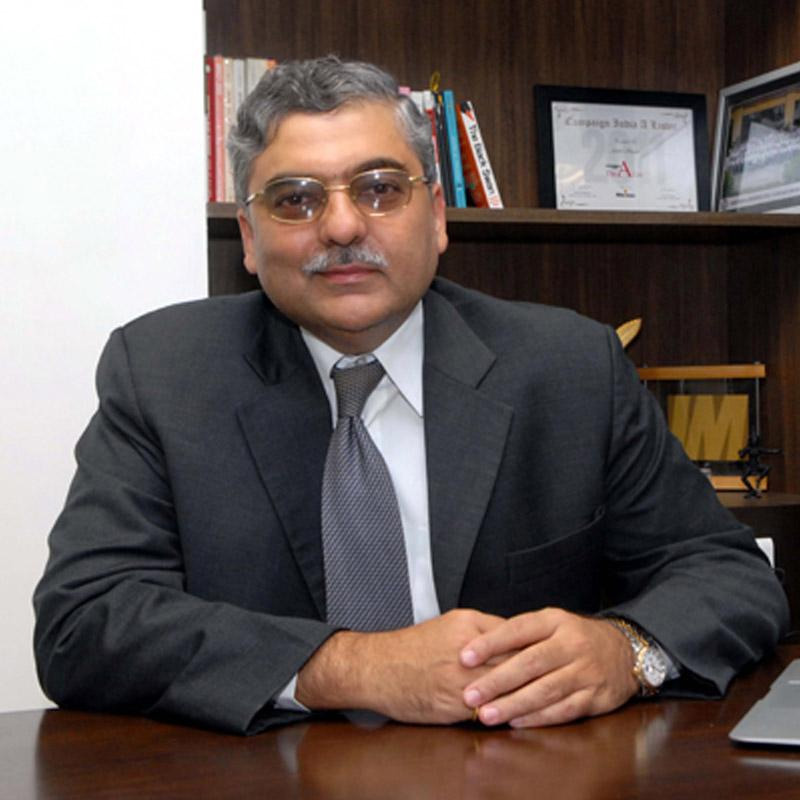
“The presentation of this award at GoaFest makes our festival more complete and comprehensive. Now we have all the people playing an instrumental role in bringing alive the magic we call advertising, assembled and recognized in one place,” said Goafest chairman Ashish Bhasin.
Nominations for the awards are invited from Agencies for Champions of Excellence, and will be judged by senior members of the Awards Governing Council of the Abby awards. The entry should mention the name of a senior member of the advertiser team who could be considered for this high honor. It should include a note of not more than 500 words explaining why the individual was deserving of this award. The entry should be signed by the NCD or CEO of the Agency and sent to the AAAI (Please mention email id) before 31 January 2017.
Multiple entries are permitted. There is no entry fee.




AD Agencies
Kevin Vaz opens FICCI-EY report with a declaration: India’s M&E industry set to breach Rs 3 trillion mark by 2027
In a keynote address at the FICCI-EY report launch, Kevin Vaz says sport, AI and the connected TV boom are driving a multi-screen revolution with no signs of slowing
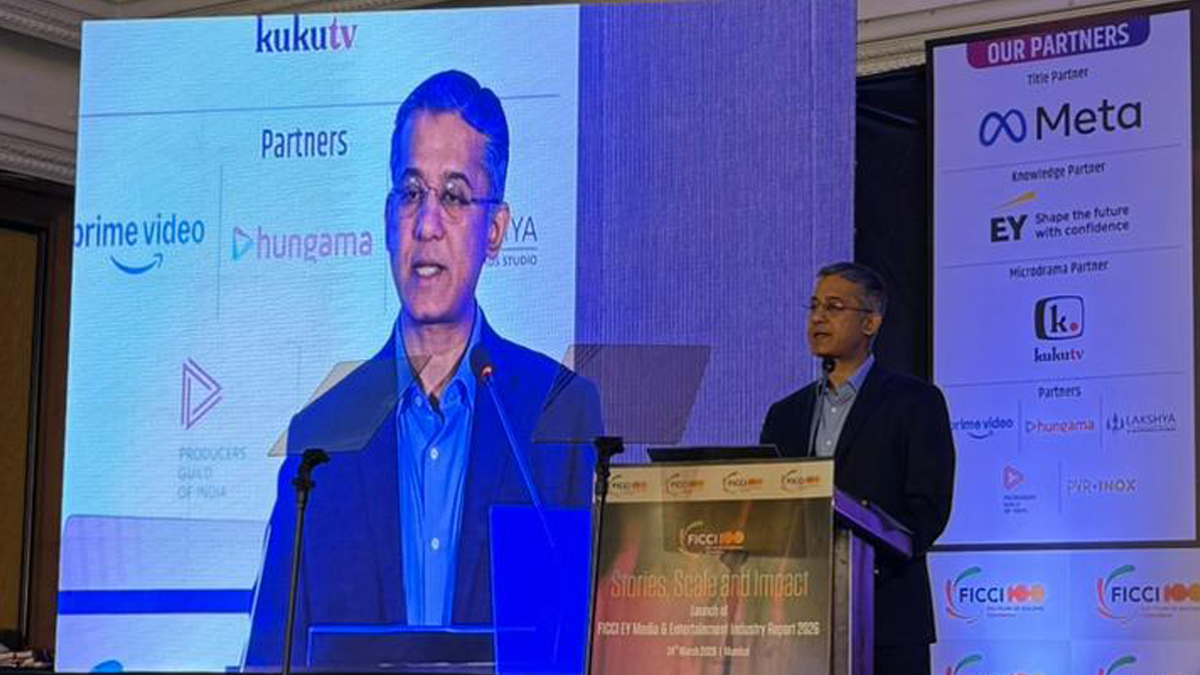
MUMBAI: India’s media and entertainment industry is growing faster than the economy, reshaping global benchmarks and is on course to blow past Rs 3 trillion by 2027. That was the headline message from Kevin Vaz, chairman of the FICCI Media and Entertainment Committee and chief executive of entertainment at JioStar, who delivered the opening keynote at the launch of the FICCI-EY Media and Entertainment Report 2026 in Mumbai on Monday. He did not waste much time on caveats.
The industry hit Rs 2.78 trillion in 2025, outpacing GDP per capita growth and surpassing even last year’s bullish forecasts. Vaz described the year in three words: scale, convergence, transformation. The numbers, he suggested, were only half the story. The other half was how that growth was happening.
Digital has become the industry’s largest segment, driven by advertising, subscriptions and commerce. But Vaz was quick to puncture the familiar narrative of digital killing everything else. India, he argued, is not an either-or market. It is an AND market. Connected TV is surging. Linear television, mobile, films and print are all still expanding. AVGC, the animation, visual effects, gaming and comics sector, is emerging as a serious growth engine, opening new storytelling formats and new global revenue streams. Nothing, he said, is replacing anything. Everything is reinforcing everything else.
Nowhere is that more vivid than in sport. In an on-demand world where audiences can watch anything, anytime, Indians still show up live. “Sports don’t fragment audiences,” Vaz said. “They unite them, just on different screens.” The ICC Men’s T20 World Cup 2026 made the point emphatically. During the final, JioHotstar delivered 72.5 million concurrent streams, a global record. Group chats exploded. Families renegotiated control of the television. Advertisers, Vaz noted with undisguised relish, stopped asking where audiences were and started asking how fast they could get in.
Cinema had its own landmark year. More than 1,900 films were released, with several crossing the Rs 1 billion mark. Dhurandhar was singled out as proof that Indian audiences will still turn up in large numbers for content that grips them. Live experiences, too, are getting bigger and more immersive, though Vaz suggested the surface has barely been scratched.
Then there is artificial intelligence, which he described as quietly, and sometimes not so quietly, reshaping everything. AI is enabling personalisation, efficiency and scale, but Vaz argued its deeper significance lies in what it is doing to creativity itself. He pointed to Mahabharat: Ek Dharmayudh, billed as the world’s first AI-produced show, as evidence that the technology can amplify creative ambition rather than hollow it out. He also used the platform to call on Indian policymakers to engage seriously with the creative industry on AI and copyright, ensuring that creators are fairly compensated as the technology spreads.
The picture that emerges from the report, and from Vaz’s keynote, is of an industry that has stopped thinking of itself as a fast-growing emerging market and started thinking of itself as a global template. Scale, diversity and innovation, he said, are no longer in tension in India. They are coexisting, and the rest of the world is taking notes.
The Rs 3 trillion milestone is two years away. As the man who chairs the committee that shapes the industry’s policy agenda and runs the country’s most powerful entertainment platform, Vaz set the tone for the day with characteristic directness: India’s media business is not just chasing growth. It is deciding what the country talks about at dinner. That is a different kind of power altogether.








