MAM
A step ahead

China may have overtaken other countries in the number of mobile phones and Star may be reaping the harvest of SMSs in the country, but in the West, media companies and cell operators are already a step ahead.
According to a Reuters report, at least six media companies in the US are toying with new ideas with which they can use wireless to boost their profits and extend their brand reach. Picture displays and replaying of video clips is now de rigeur, networks are now considering live newscasts and whole movies on wireless gadgets.
Going a step further, companies like Disney and Time Warner are thinking of providing full mobile services with help from existing network operators, apart from just providing media content to wireless phones. While the mobile phone market is not growing as fast in the US as in the East and Far East, media companies, experts say, would need to be creative to convince consumers to use their content on phones. Wireless, they say, could also emerge as a potential battleground between cable and phone companies.

Time Warner and cable rival Cox Communications are already looking at wireless services as a potential addition to their TV, wired telephone and high-speed Internet offerings in an effort to compete with bundled packages offered by phone companies. The deadlines are short. Both companies say they are geared for such launches in the coming fiscal. Walt Disney and Fox Entertainment Group are already pushing entertainment and news to phones through pacts with mobile companies. But the Walt Disney Company may even decide to sell its own branded wireless phone service in the United States, using an existing operator’s network. The Disney or ESPN brand name could work very well with specific target groups.
Fox currently allows phone users to participate in the American Idol talent hunt via SMS and plans to provide more features. Disney claims that its wireless business is already profitable in markets where it is well established, particularly in Japan where it first started in 2000.
Also read:
Wireless – the new Smart Money Spinner







Brands
KKR sixes to power EV charger rollout under VIDA campaign
Cricket meets clean mobility as big hits spark India’s charging growth
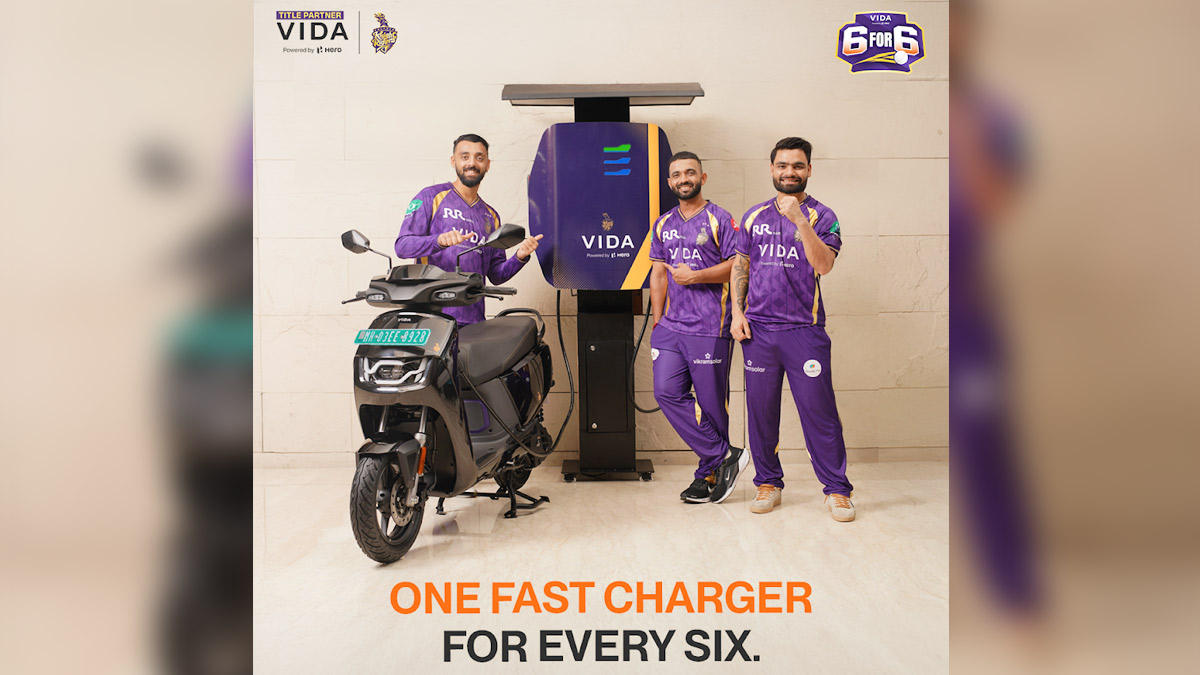
NEW DELHI: VIDA, the electric mobility arm of Hero MotoCorp, has teamed up with Kolkata Knight Riders to launch a campaign that turns cricketing flair into real-world impact.
Titled ‘6 for 6’, the initiative promises to install a 6kW fast EV charger for every six hit by KKR during the ongoing Indian Premier League season. The idea is simple but powerful, as each big hit on the field contributes directly to expanding India’s fast-charging infrastructure.
The campaign builds on VIDA’s growing network, which already spans over 5,300 fast-charging points across more than 430 cities. With EV adoption gaining pace, the brand is using cricket’s mass appeal to accelerate both awareness and infrastructure growth.
Explaining the thinking behind the move, Hero MotoCorp emerging mobility business unit chief business officer Kausalya Nandakumar said, “Cricket has an incredible ability to unite and inspire millions across the country. With the ‘6 for 6’ campaign, we are turning every big hit on the field into a step towards a cleaner and a more accessible mobility future.”
She added that VIDA’s expanding fast-charging network and removable battery technology are designed to make EV ownership more convenient and practical for everyday users.
From the franchise’s side, the campaign is also about giving on-field moments a larger purpose. Kolkata Knight Riders chief executive officer Venky Mysore said, “The ‘6 for 6’ campaign exemplifies the potential of sport as a platform for meaningful, real-world impact. By linking every six to the expansion of EV charging infrastructure, this partnership transforms fan excitement into tangible progress.”
As part of the rollout, VIDA has introduced co-branded charging stations in KKR’s signature colours, with a flagship installation unveiled alongside team players. The chargers are designed for quick top-ups, powering VIDA scooters from zero to 80 percent in about an hour, while also being positioned along key highways to support longer journeys.
The initiative also taps into VIDA’s removable battery system, which allows users to charge using standard household plug points, adding flexibility to the charging ecosystem.
By blending the thrill of cricket with the urgency of clean mobility, VIDA and KKR have found a neat way to make every six count twice, once on the scoreboard and again on India’s road to an electric future.








