MAM
A must-read ad & marketing book

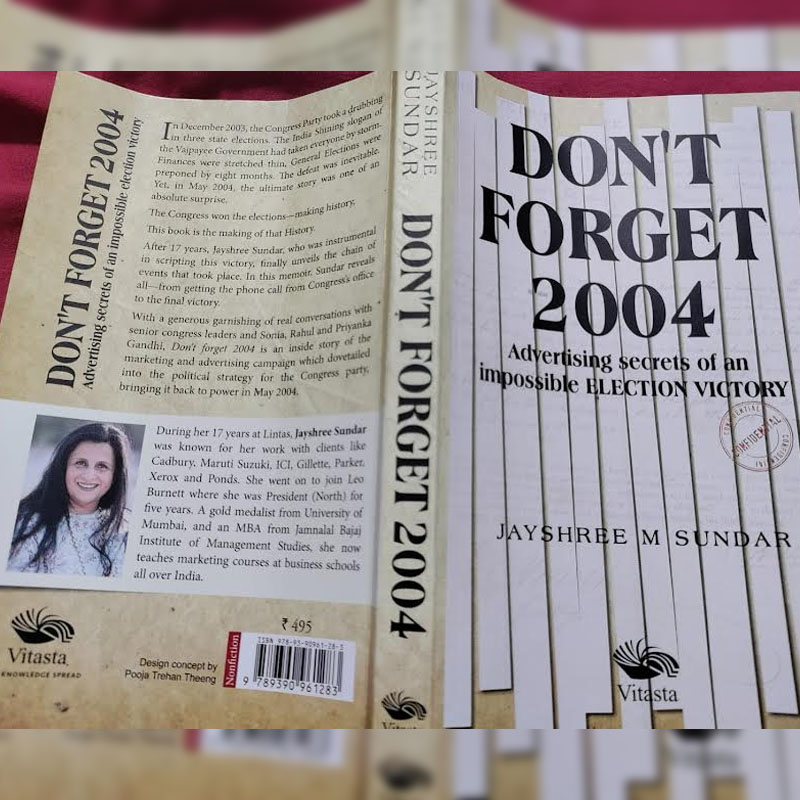
Mumbai: Political advertising and marketing case studies might be a bit of a bore for many. But once you pick up ‘Don’t Forget 2004 – Advertising secrets of an impossible ELECTION VICTORY’ by Jayshree M Sundar and start flipping through its pages, you can’t put it down. Written in the manner of a fast-paced diary and personal narrative, it keeps you thirsting for more, and it hardly feels like you are reading. The pages flip by so fast, and before you know it, you are at the end of the book, a lot richer in your understanding of what politicians think like, how ad agency executives can interact with them, and what it takes to draw up a winning election strategy and brand campaign.
Jayshree should know. The senior advertising executive was heading the Delhi office of Leo Burnett India (once Chaitra Advertising founded by Walter Saldanha) when she got a call from Congress (I)’s senior leader Salman Khurshid’s office. The voice at the other end informed her that her agency was in the running to help the Congress (I) as it sought to make a comeback in the 2004 hustings at the Centre. The party had been out of power for more than a decade and a fierce opposition BJP was riding high with top media expecting it to win again by a thumping margin.
Some of us may have a recollection of the savage campaign by Saatchi & Saatchi titled “Labour is not working” which swept Margaret Thatcher’s conservatives to power in 1979. Jayshree, along with her team, took a similar tack, working against impossible deadlines for a client which had no idea about the political marketing direction it should take. What made it even more challenging was that the BJP was looking smug as hell, splurging top dollar on ads all over the nation talking about how India was shining.

The Congress (I) mandarins provided no brief and they had limited budgets. Jayshree and her team had to come up with the communication that would position the Congress (I) right and yet show up the failures of the outgoing BJP government. Agency executives had to work and communicate with political heavyweights like Sonia Gandhi, Salman Khurshid, Ambika Soni, Jairam Ramesh, Ahmed Patel, Rahul, and Priyanka Gandhi, Motilal Vora – folks who commandeered a lot of respect, and whom they had only seen on TV.
Through the book, you find out how she and the agency’s creatives pivoted to get quick answers through cheap and cheerful primary and secondary research. That and the fact that it approached the assignment as a regular brand campaign helped it come up with a pitch presentation that was bought by the steeped-in-the-old-ways-of-working Congress (I) senior leaders. The riposte to BJP’s India Shining slogan was “Aam aadmi ko kya mila?” “Congress Ka Haath aam aadmi ke Saath” and addressed the heartlands of India, against the former which was more focused on the urban Indian. The B&W visuals featured farmers, unemployed youth, the middle class and children, women as against the BJP’s well-dressed urban Indians.
The book details how the agency came up with the four phases of the campaign, the steps it took to maintain utmost secrecy while creating the campaign, and later when ads and TVCs were released to publications and TV channels in various languages all over the country.
Jayshree’s effort is not just all about words; she has peppered the book with advertising artwork which made it to the newspapers over the various phases of the campaign.
The Leo Burnett team’s communication and marketing strategy did work well if you recollect. Despite the BJP’s bigger advertising war chest, it and its allies managed to retain only 185 seats (1999 count 298). The Congress (I) however celebrated as it individually captured 145 seats (against 112 seats in 1999) and 220 seats (as against 135 in 1999) with its allies. It of course came to power, and the rest they say is history.
‘Don’t Forget 2004’ is a must-read for students and practitioners of marketing and advertising as well as those in the political ranks, given that there is very limited literature available on political advertising. It is rich in detailing the learnings the agency had while working on the Congress (I) campaign. Be sure to pick up a copy.
(Don’t Forget 2004- Advertising secrets of an impossible ELECTION VICTORY – Jayshree M Sundar, pp284, publisher Vitasta Publishing, Rs 495)
You can buy it on Amazon too by clicking on this link: https://www.amazon.in/-/hi/Jayshree-M-Sundar/dp/9390961289






MAM
Beacon Group appoints Dr Rajesh Patel as Group CEO
36-year healthcare veteran to lead Beacon Diagnostics, Vector Biotek, Biogeny.
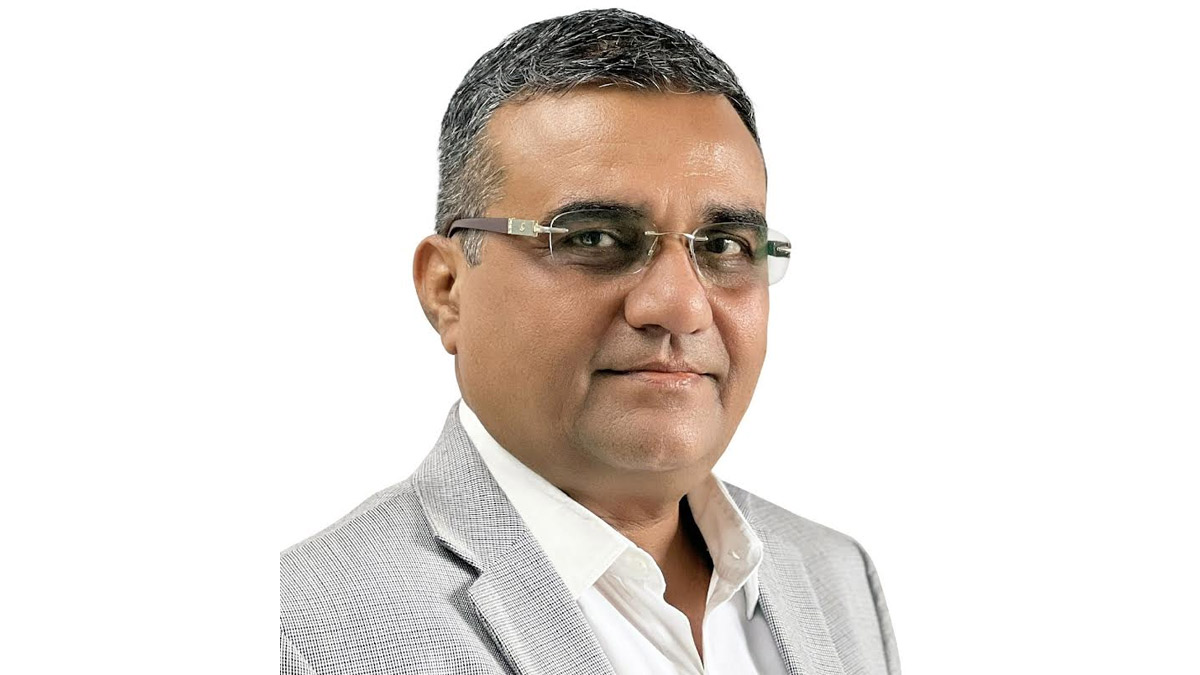
MUMBAI: A new chief, a fresh diagnosis and a sharper prescription for growth. Beacon Group has appointed Dr Rajesh Patel as its Group Chief Executive Officer, effective April 1, 2026, signalling a decisive push to scale its presence in the diagnostics and IVD space. Patel steps into the role with 36 years of experience across the healthcare and diagnostics industry, bringing a career shaped by leadership roles spanning sales, marketing, business development and operational strategy. His mandate is both expansive and precise: to steer the group’s overall strategic direction while tightening coordination across its three core entities Beacon Diagnostics, Vector Biotek and Biogeny Diagnostics.
In practical terms, that means driving cross-company synergies, accelerating market expansion and strengthening organisational capability areas increasingly critical as diagnostic players compete for scale in a fragmented yet rapidly evolving healthcare ecosystem. The group is positioning itself to capture unmet demand across chain laboratories, key accounts and standalone labs, segments that remain underserved despite growing diagnostic needs.
The appointment comes at a time when the In Vitro Diagnostics (IVD) sector in India is entering a more competitive and innovation-led phase, with companies focusing not just on product pipelines but also on service delivery, integration and customer-centric models. Beacon’s leadership appears to be betting that Patel’s execution-focused approach can help translate ambition into operational momentum.
Welcoming the appointment, Chairman Dr D K Joshi described Patel’s induction as a strategic move aligned with the group’s long-term vision, emphasising the role of leadership depth in navigating the next phase of growth.
For Beacon Group, the message is clear, in a sector where precision matters, leadership is the new differentiator—and this appointment is intended to set the tone for what comes next.






