MAM
22feet Tribal WW strengthens leadership with appointment of Anvita Arora and Shyam Nair

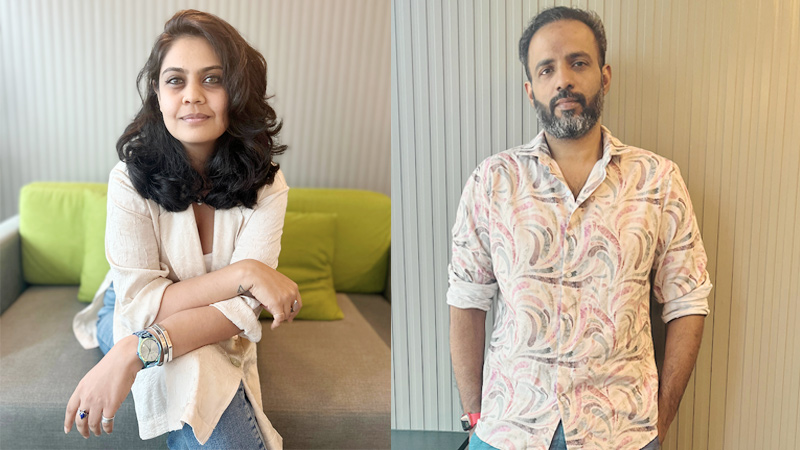
MUMBAI: 22feet Tribal Worldwide has announced the appointment of Anvita Arora as vice president & head of Mumbai and Shyam Nair as executive creative director. The announcement marks their return to the company after successful stints across top creative networks. Their journey at 22feet Tribal Worldwide comes full circle, now marked by broader perspective and a shared ambition to help shape the next phase of the agency’s growth.
Anvita and Shyam bring a sharp blend of storytelling, strategic thinking, and brand-building expertise over a combined 3-decade career span. Anvita’s unique experience across digital, content, and strategy at Yahoo, Ogilvy, Supari Studios, Kulfi Collective, and most recently, Creativeland Asia is a big plus. With leadership roles at VML, Lowe, and Creativeland Asia, Shyam has led impactful campaigns for brands like Disney Star, Netflix, and Spotify.
Commenting on the new leadership appointments, 22feet Tribal Worldwide president Vanaja Pillai said, “Over the past few years, we’ve seen strong growth and had the privilege of working with an ambitious set of brands that push us to raise the bar. Welcoming Anvita and Shyam again is not just about familiar faces returning; it’s about the energy, trust, and shared history they carry with them. Their return is a testament to the work we’re doing, the environment we’ve built, and the exciting road ahead for our clients and teams.”

Speaking on her new role, Anvita said, “I’ve always had a soft spot for 22feet Tribal WW. The people are sharp, the culture is electric, and the work has always had teeth. My primary goal is straightforward: to grow the business, expand the brands, and build teams that thrive on ideas and collaboration. What sets 22feet apart is its guts. It’s one of the few agencies that has stayed proudly digital while still thinking like a brand builder. I plan to take that legacy and push it further, creating work that doesn’t just land but lingers, work that clients back and audiences actually feel.”
“At 22feet Tribal WW, I believe we can do more than just making ads. We can craft stories that earn attention, move culture, and live beyond the brief. With the talent, the brands, and the drive to outdo ourselves, we can create work that’s built for the medium, not just the media plan. Because the best advertising doesn’t feel like advertising, it feels like something worth sharing,” added Shyam.





Brands
Origen Realty names Preeti Rai as president- sales & strategy
Veteran hire signals push into Gurugram market with growth ambitions

GURUGRAM: Origen Realty has appointed Preeti Rai as president for sales and strategy, as the company gears up to enter the competitive Gurugram property market.
The move brings in a seasoned industry hand with over two decades of experience across residential and commercial real estate. In her new role, she will lead the company’s sales operations and go-to-market strategy, with a focus on building a strong foothold in Gurugram and driving early momentum.
Origen Realty management said the appointment marks a key milestone in its expansion plans. Origen Realty management said the hire will help sharpen execution and strengthen the company’s sales-led growth strategy as it steps into a new market.
Preeti Rai said, “I look forward to being part of Origen Realty at a pivotal stage in its journey and contributing to building a strong presence in the Gurugram market.”
Before joining Origen Realty, she served as senior vice president for sales and marketing at Elan Group. Her career also includes stints at major developers such as DLF Universal Ltd, Today Homes and Infrastructure, Paras Buildtech Pvt Ltd and Ambience Infrastructure Ltd, where she built expertise across channel sales, leasing, and end-to-end deal execution.
Known for her focus on strategy and team leadership, Rai is expected to play a central role in shaping Origen Realty’s market positioning and sales ecosystem in the region.
As Gurugram’s real estate market continues to attract fresh investments and new entrants, Origen Realty’s latest leadership hire signals its intent to compete with a clear, sales-driven playbook.






