iWorld
Youth engagement initiative #PowerOf18 unveils latest research findings on youth in Tamil Nadu

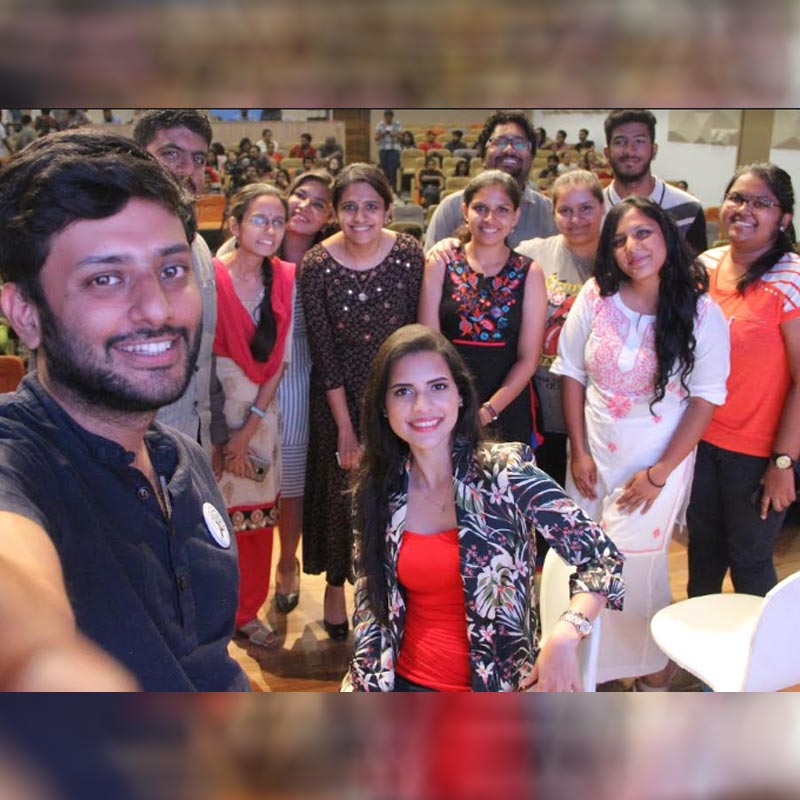
MUMBAI: Twitter is about serving the public conversation, highlighting what’s happening in the world and enabling people to talk about it right now. As part of its youth engagement initiative #PowerOf18, Twitter India unveils new research findings today specific to the youth sentiment in Tamil Nadu on social media and the elections at the Asian College of Journalism in Chennai. Panellists Sudarshan Ramabadran (@sudarshanr108), Senior Research Fellow and Administrative Head, Center for Soft Power, India Foundation and Convenor, Tamil Nadu Young Thinkers Forum, and Arun Krishnamurthy (@ArunEFI), Indian environmental activist with Environmentalist Foundation India, join Twitter at the #PowerOf18 college dialogue session, sharing their perspective on what it means to turn 18 and the importance of voting in the upcoming elections.
Embeddable Tweet: https://twitter.com/ACJIndia/status/1103206766290976769?s=19
Survey findings

Twitter is where people can serve the public conversation; two in three (66.9%) of the youth on Twitter in Tamil Nadu surveyed believe that they are contributing to the public debate by posting on the platform. More than half (58.4%) of the Twitter users surveyed will actively engage with and raise concerns to the government on issues that affect them or their community, versus 30.8% of those not on the platform. In addition, 57.8% of the youth in Tamil Nadu surveyed use Twitter to express their opinions and be heard, while 56% will use Twitter to gather support for a cause or movement.
Across the board, the population in India is politically active and the survey finds on average 98% of Tamil Nadu youth indicate that they would vote in the upcoming elections. This is the highest proportion of youth voter interest in comparison with all other states surveyed in the country. In comparison, Twitter users (99.4%) surveyed were more likely than those not on the platform (94.9%) to vote in the upcoming elections.
Over 85% of Tamil Nadu youth surveyed will turn to social media to find out what’s happening in India and around the world, according to the study’s findings. The rising importance of social media for information consumption is reinforced as Tamil Nadu youth surveyed rank social media platforms as the most important source for understanding what’s happening in India and around the world, in comparison to all other mediums including newspapers, TV, and public events.
This study[1] is part of a larger nationwide survey conducted with 4,274 youth respondents from India between 24 September – 19 October 2018. The survey methodology qualifies the respondents as minimally secondary literate, aged between 18 – 35 years old. India is expected to have 34.33% share of youth (15 – 34 years old) in total population by 2020, according to the Ministry of Statistics and Program Implementation.
University Dialogues
Beyond the survey results, Twitter India invited Sudarshan Ramabadran, Senior Research Fellow and Administrative Head, Center for Soft Power, India Foundation and Convenor, Tamil Nadu Young Thinkers Forum, and Arun Krishnamurthy, Indian environmental activist with Environmentalist Foundation India to join in a panel discussion about the power of youth today and the importance of expressing their voice through voting, to be a part of the #PowerOf18 Dialogue sessions. The sharing session saw:
Embeddable Tweet link:https://twitter.com/Rish_Bhat/status/1103276451384553472
Embeddable Tweet link: https://twitter.com/Rish_Bhat/status/1103264045778391040
Embeddable Tweet Link: https://twitter.com/ThatUnitedLady/status/1103241662678032386
Embeddable Tweet Link: https://twitter.com/pusharma53/status/1103268657730187265
Embeddable Tweet Link:https://twitter.com/Rish_Bhat/status/1103253300109991936
Embeddable Tweet link: https://twitter.com/sick_smasher/status/1103243738917339138
Embeddable Tweet link: https://twitter.com/LilMissMathew/status/1103240545265082373
#PowerOf18 Content Curation Partners
In order to effectively represent the diversity of issues, Twitter India has also identified key content partners to curate useful electoral information and offer different perspectives that will help the youth of India who are getting ready to vote see every side of the public conversation. Some of these partners include fact-checker @BOOM_Live, BBC India’s regional handles @BBCTamil, @BBCNewsPunjabi, among others.
Embeddable Tweet: https://twitter.com/TwitterIndia/status/1097471168917860352
Embeddable Tweet: https://twitter.com/TwitterIndia/status/1096301303112785920
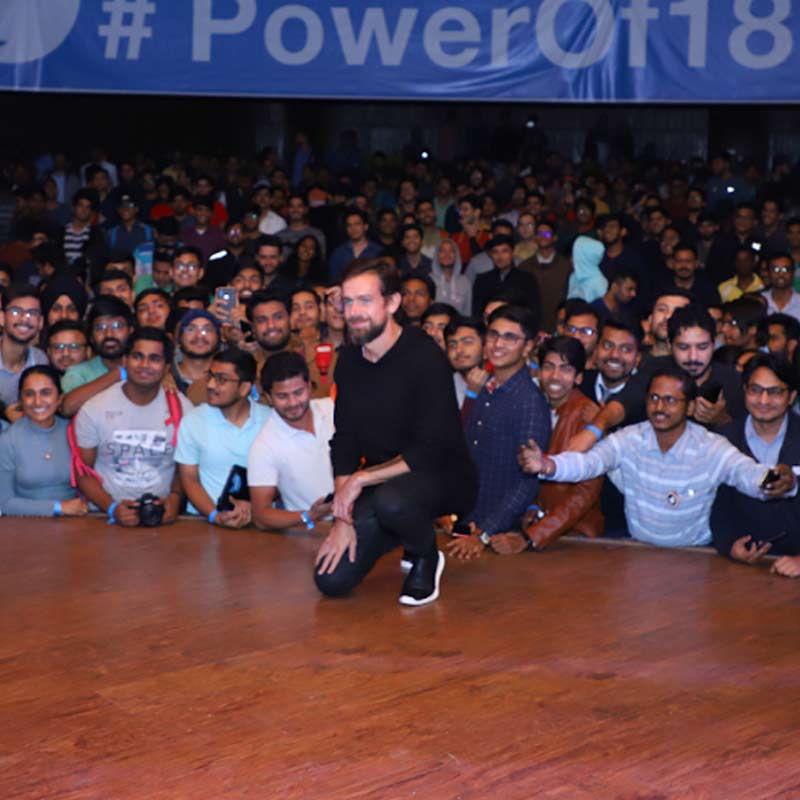
The #PowerOf18 campaign is aimed at encouraging more youth in India to participate in civic engagement, understand the significance of their right to vote and contribute to public debate on Twitter. The campaign launch is marked by an emoji activated by the hashtag #PowerOf18 available now until June 2019.
Follow #PowerOf18 and @TwitterIndia to be a part of the conversation and community.

Gaming
India’s broadcasters say no to Fifa World Cup 2026
Fifa has slashed its asking price by 65 per cent but India’s broadcasters are still not buying

MUMBAI: The world’s biggest sporting event cannot find a single taker in the world’s most sports-mad nation. Fifa’s television rights for the 2026 World Cup remain unsold in India, and the clock is ticking loudly.
To shift the property, world football’s governing body has already swallowed hard and cut its asking price from $100m to $35m, bundling in the 2030 edition as a sweetener. It has not worked. Indian broadcasters have looked at the offer, done the sums and quietly walked away.
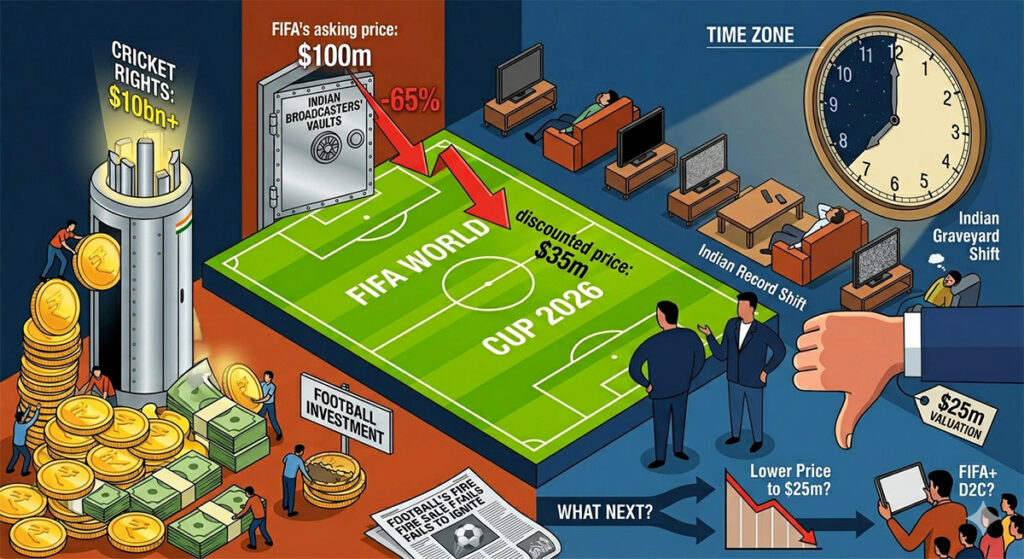
The reasons are brutally simple. The 2026 tournament, co-hosted by the United States, Canada and Mexico, kicks off in a time zone that turns India’s primetime into a graveyard shift. Most matches will air between midnight and 7am IST, a scheduling catastrophe for advertisers chasing mass reach. The 2022 Qatar edition was a gift by comparison, with matches dropping neatly into Indian evenings. North America offers no such luxury.
The market itself has also changed beyond recognition. The merger of Star India and Viacom18 into JioStar has gutted the competitive tension that once sent sports rights prices soaring. Where rival bidders once slugged it out, there is now a single dominant buyer, and it is in no hurry. JioStar has valued the rights at roughly $25m, a full $10m below Fifa’s already-discounted floor price. That gap has so far proved unbridgeable.
Broadcasters are also nursing a ferocious cricket hangover. Between 2022 and 2023, Indian media houses committed well over $10bn to cricket rights alone, covering IPL, ICC events and BCCI domestic fixtures combined. After a binge of that scale, appetite for a football package that delivers a fraction of the ratings, in the dead of night, is close to zero.
The economics of football broadcasting make the maths even harder. Cricket, with its natural breaks every few overs, is an advertiser’s paradise. Football offers a 15-minute halftime and precious little else. Recovering a nine-figure rights fee from a single half-hour ad window is a stretch at the best of times. These are not the best of times: the Indian government’s tightening grip on real-money gaming and gambling advertising has vaporised a category that once underwrote the economics of big sporting events.
Nor is the World Cup an anomaly. Indian Super League valuations have cratered. English Premier League rights have softened across successive cycles. The cooling of football as a broadcast commodity in India is structural, not cyclical.
With the tournament opening on 11th June, Fifa is running out of road. It may yet blink and meet JioStar at $25m. Or it may go direct, streaming the entire tournament on its own platform, Fifa+, or cutting a digital deal with YouTube, and hoping that a generation of Indian football fans finds its way there without a broadcaster to guide them.
Either way, the beautiful game’s Indian chapter is looking decidedly ugly.






