iWorld
The Format that changed TV forever In India and across The Globe Turns 20!

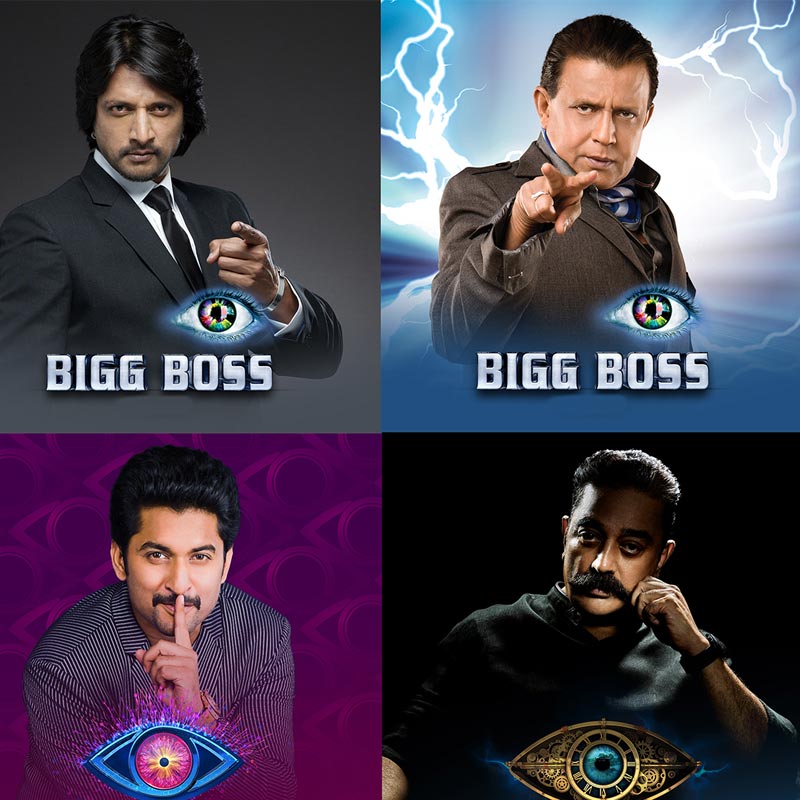
MUMBAI: Big Brother, (aka Bigg Boss in India) – the original reality format – celebrates its landmark 20th birthday today. On the 16th September 1999, nine Housemates moved in a purpose-built house in the Netherlands, equipped with 24 cameras and no contact with the outside world to be watched 24/ 7 by Big Brother. A cultural phenomenon was born, and the TV revolution aired its first ever episode that night on Dutch Broadcaster Veronica, part of RTL.
Since its launch, Big Brother has taken the world by storm, with 471 series of 28,391 episodes commissioned in 60 markets and airing pan regionally in 80 since its launch. 7,153 housemates from around the globe have spent 35, 143 days in the house and there have been 5, 035 evictions.
Twenty years since its worldwide debut, Big Brother is enjoying one of its best years yet and is constantly being renewed internationally with 22 productions in 18 markets confirmed to air in 2019.

In India Bigg Boss has conquered audiences, in Hindi, Kannada, Bangla, Telugu, Marathi, Tamil and Malayalam. With 30 seasons under its belt Globally Endemol Shine India is the only one in history of the franchise who has produced the Big Brother format (Bigg Boss) in multiple languages for different broadcasters. Bigg Boss has now been produced in India in 7 languages and today produces more than 600 episodes in a 365-day calendar year.
With huge stars such as Salman Khan, Kamala Hassan, Nagarjuna, Mohanlal, Mahesh Manjrekar and Sudeep as hosts, an interesting mix of contestants and an amazing creative and production team, the show continues to garner huge TRPs and driving in viewers every season.
Talking about the completion of 20 years of Big Brother globally, Abhishek Rege, CEO, Endemol Shine India said, “Big Brother is undoubtedly the most popular non-scripted show across the globe entertaining viewers from all strata of society. In India too, the show has been well received and has garnered a huge fan following. The ongoing appreciation for the franchise across the globe and in India, no matter the language, is testament to the effort of the creative and production teams at Endemol Shine globally and our understanding of geographies and of local audiences.”
Engaging audiences with interactivity
Big Brother is more interactive and immersive than ever, whether it be viewer polls, making decisions for tasks or else the weekly evictions which are the bedrock of many global schedules. Big Brother stands out in the way it engages the audience to be part of the show, and earlier this year saw 202 million votes cast in Brazil in a single eviction.
Innovating with technology
Big Brother has always thrived on changes in the tech and TV landscape and fans have more access to the show’s content than ever before, whether it be watching episodes on YouTube in Spain where the series had a dual strategy to produce the programme for linear and online or streaming on a broadcaster’s SVOD or AVOD platform in markets like the US, Canada and Finland.
The show is innovating with tech within productions too. Big Brother Poland was the first version of the reality hit to be filmed in a real-life existing house. This has been followed by the recent relaunch in Finland, where the house was located in the heart of Helsinki in REDI shopping mall. These new types of productions are only possible because of advanced technology and state of the art cameras which allow the show to be produced in innovative ways. It also furthers the creative freedom for the producers with fully connected houses enabling access to rooms to be limited or to give housemates certain privileges such as access to the fridge or even the coffee machine. Existing locations also have created a truly authentic environment for relationships to develop.
Sustainability
And the format is rolling our green initiatives too, in Germany the production team of VIP series saved an estimated 12,000 coffee cups after switching to reusable bamboo cups and all groceries for the House were sourced locally.
In Finland, the new house will be made with recycled materials and with water scarcity a significant issue in India, the production has installed waste water recycling, as well as placing water restrictions for housemates and one of the regional versions even features an empty swimming pool to make a point about the limits.
None of us know what the next twenty years will bring, but one thing for sure, the world is watching.
Big Brother in numbers
1. 7,153 people have entered the Big Brother house of which 517 were from Bigg Boss India so far)
2. There have been 5,035 evictions of which 372 were in Bigg Boss India so far
3. 28,391 episodes of Big Brother have aired globally of which 2942 were in Bigg Boss India
4. Over 35,143 days have been spent in the house of which 2908 were in Bigg Boss India
5. There have been 471 series to date, making 471 Big Brother winners 30 of which were in India
6. 3,000 people applied via telephone for the first ever series in the Netherlands
7. There were 24 cameras in the original Big Brother house in the Netherlands. The most recent version in Finland has 51, whereas in Italy they shoot with an astounding 100+ cameras. India used 89 cameras in the BB Hindi S12
8. The oldest housemate to enter the Big Brother house is Lionel Blair who at 85 joined Celebrity Big Brother in the UK. 75-year-old Jerry MacDonald who came third in the US series 10 in 2008
9. Julie Chen Moonves is the longest serving Big Brother host, having presided over the US show for 19 years since its launch in 2000
10. 1 baby has been born in the Big Brother house; this took place in the Netherlands in 2005
11. The longest uninterrupted television broadcast of Big Brother lasted 8, 763 hours from 2nd March 2004- 1st March 2005 in Germany
12. A record 202 million votes were cast in one eviction in Brazil in March this year. These second highest being Bigg Boss Tamil with 19, 59, 37, 000 votes
13. 7 versions of Big Boss in 7 different regional languages (Marathi, Tamil, Bengali Telugu, Hindi, Kannada, Malayalam) have aired in India.
14. Big Brother has 62.5 million digital followers.
15. There have been 7.3 billion lifetime video views
16. 59 couples met in the House.
17. 5 marriages have taken place within the House of which 2 were from Bigg Boss India
18. 12 children have been born from Big Brother romances.
19. Since launch Big Brother has been commissioned in 60 countries, some of which aired pan-regionally taking the show to 80 countries.
20. An estimated 12,000 single use coffee cups were saved when the production of Big Brother VIP in Germany switched to reusable bamboo cups.






iWorld
Parineeti Chopra hosts new parenting series Mom Talks on Zee5 and Bullet
Celebrity parents share honest stories in 9-episode show launching 4 April 2026.

MUMBAI: Parineeti Chopra is stepping into a brand-new role not on the big screen, but as the warm, relatable host helping parents navigate the beautiful chaos of raising children. Bullet microdrama and Zee5 have announced the launch of Mom Talks, a fresh content-led IP hosted by the popular actress. The 9-episode series brings together celebrity parents including Imran Khan, Neha Dhupia, Vikrant Massey & Sheetal, and Gauahar Khan & Zaid Darbar to share candid, real-life perspectives on everyday parenting.
Positioned as a high-engagement format, Mom Talks taps into the growing demand for authentic and credible parenting content. It also offers seamless, contextual integration opportunities for brands. The series is backed by a strong lineup of partners including Johnson’s Baby, GSK, Aveeno Baby, Mini Klub, Titan Eye+ and Cordelia Cruises.
Bullet microdrama app, co-founder & chief business officer Azim Lalani said the show exemplifies how content is evolving towards more rooted, sustained engagement. “It’s about bringing content that people come back to, while creating a natural space for brands to be part of the narrative,” he noted.
Mom Talks creator Bullet head of AVOD & partnerships Munaf Merchant explained the core idea, “We wanted to build a safe, honest, one-stop destination for parents seeking real answers to everyday questions.”
The first episodes will stream for free on ee5 AVOD starting 4 April 2026, with new episodes dropping every Friday and Saturday. The series will also be available on the Bullet microdrama app.
Speaking about their association, Peeyush Unikkat from Johnson’s Baby highlighted the brand’s focus on supporting modern parenting journeys, while Aakash Mehta from GSK emphasised the show’s role in making important health conversations more relatable for new parents.
In a digital space often filled with filtered perfection, Mom Talks promises something refreshingly real honest conversations, celebrity insights, and practical wisdom, all wrapped in Parineeti Chopra’s engaging presence. For Indian parents, this could be the parenting series they’ve been waiting to binge.






