iWorld
Subedaar puts Indian original cinema on the global map with record-breaking Prime Video debut

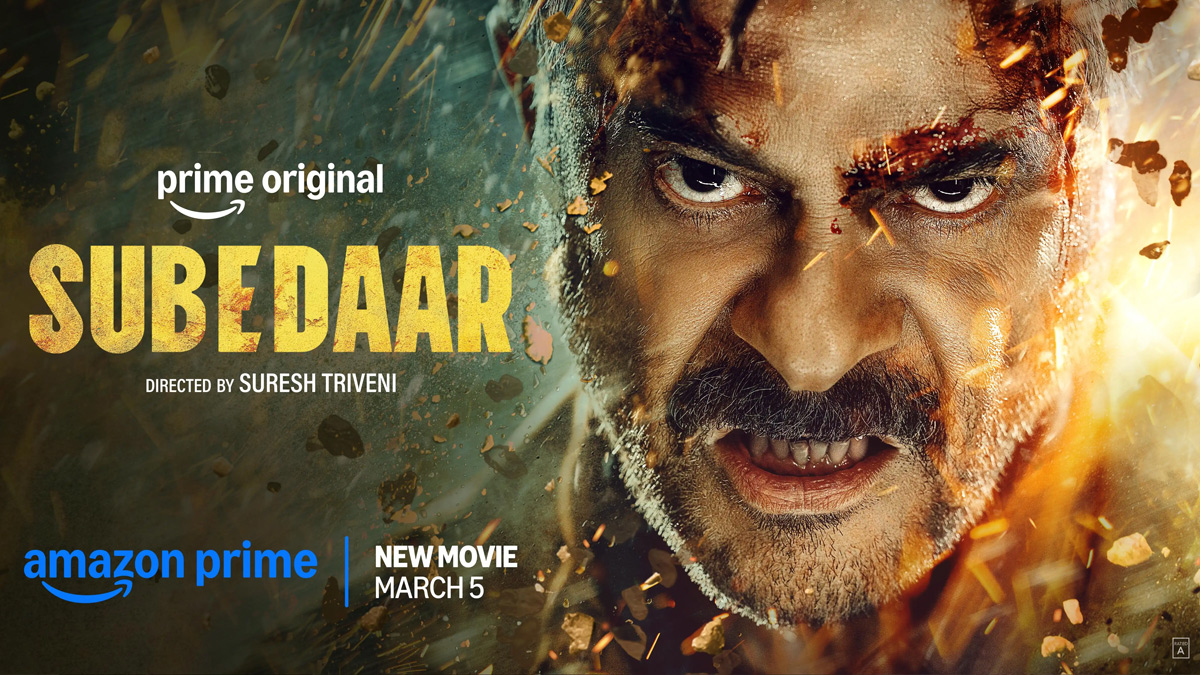
MUMBAI: Prime Video has a runaway hit on its hands. Subedaar, the gritty action drama starring Anil Kapoor, has stormed to become the most-watched Indian original movie on the platform in its opening weekend, cracking the Top 10 across 31 countries and landing in 91 per cent of India’s pin codes within days of its March 5 premiere.
The film, a visceral, emotionally-charged story of a retired soldier, Subedaar Arjun Maurya, wrestling with civilian life amid crime and corruption, has struck a nerve. Directed by Suresh Triveni and co-starring Radhikka Madan, Mona Singh, Saurabh Shukla, Aditya Rawal, Faisal Malik, and Khushboo Sundar, the film is already being hailed as a showcase for what Indian original storytelling can achieve on the world stage.
“Subedaar’s success is a reflection of the growing scale and global resonance of Indian storytelling,” said Nikhil Madhok, director and head of originals at Prime Video India. “The film’s emotional narrative, its rooted portrayal of a soldier confronting his toughest battles beyond the battlefield, has struck a chord. Anil Kapoor delivers an acting masterclass, while Suresh Triveni’s solid direction and great performances from the ensemble cast have resulted in love and appreciation from customers across the world.”

Kapoor, 62, has been here before, but rarely at this altitude. Written by Triveni and Prajwal Chandrashekar, with dialogues by Triveni, Saurabh Dwivedi, and Chandrashekar, the film is a production by Opening Image Films in association with Anil Kapoor Film & Communication Network (AKFCN), produced by Vikram Malhotra, Kapoor, and Triveni.
Subedaar streams exclusively on Prime Video in Hindi, Tamil, and Telugu across India, and in over 240 countries and territories worldwide.
For Prime Video, the numbers tell the real story: one weekend, one film, a global footprint, and a very loud signal that Indian original cinema is no longer just travelling well. It’s arriving.






Gaming
India’s broadcasters say no to Fifa World Cup 2026
Fifa has slashed its asking price by 65 per cent but India’s broadcasters are still not buying
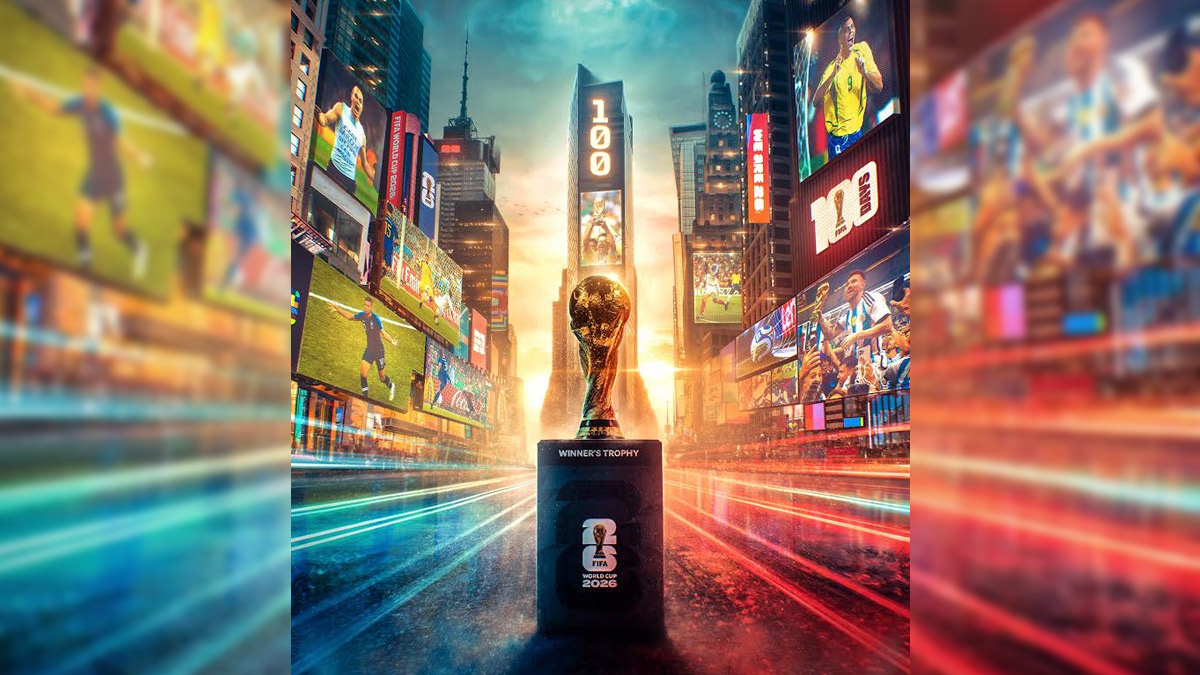
MUMBAI: The world’s biggest sporting event cannot find a single taker in the world’s most sports-mad nation. Fifa’s television rights for the 2026 World Cup remain unsold in India, and the clock is ticking loudly.
To shift the property, world football’s governing body has already swallowed hard and cut its asking price from $100m to $35m, bundling in the 2030 edition as a sweetener. It has not worked. Indian broadcasters have looked at the offer, done the sums and quietly walked away.
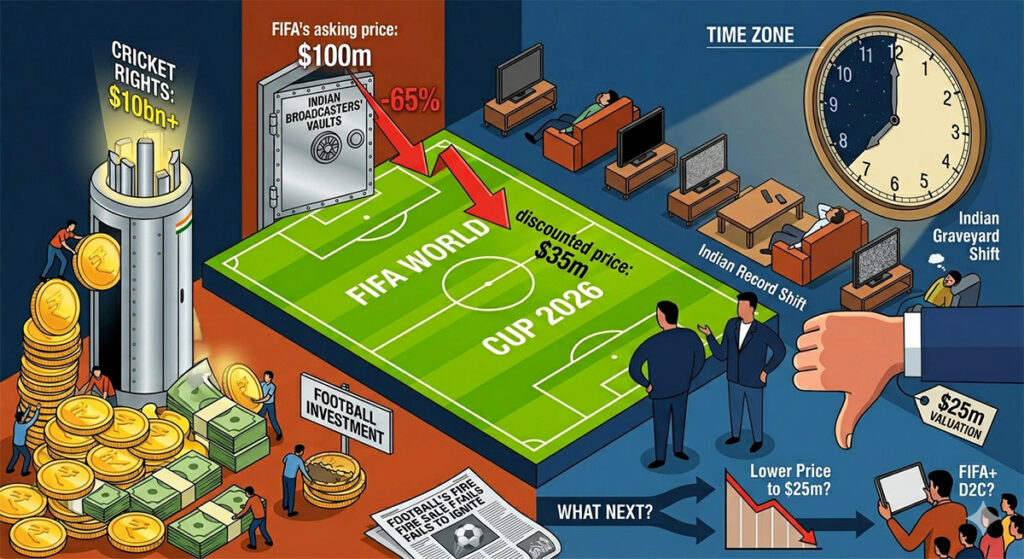
The reasons are brutally simple. The 2026 tournament, co-hosted by the United States, Canada and Mexico, kicks off in a time zone that turns India’s primetime into a graveyard shift. Most matches will air between midnight and 7am IST, a scheduling catastrophe for advertisers chasing mass reach. The 2022 Qatar edition was a gift by comparison, with matches dropping neatly into Indian evenings. North America offers no such luxury.
The market itself has also changed beyond recognition. The merger of Star India and Viacom18 into JioStar has gutted the competitive tension that once sent sports rights prices soaring. Where rival bidders once slugged it out, there is now a single dominant buyer, and it is in no hurry. JioStar has valued the rights at roughly $25m, a full $10m below Fifa’s already-discounted floor price. That gap has so far proved unbridgeable.
Broadcasters are also nursing a ferocious cricket hangover. Between 2022 and 2023, Indian media houses committed well over $10bn to cricket rights alone, covering IPL, ICC events and BCCI domestic fixtures combined. After a binge of that scale, appetite for a football package that delivers a fraction of the ratings, in the dead of night, is close to zero.
The economics of football broadcasting make the maths even harder. Cricket, with its natural breaks every few overs, is an advertiser’s paradise. Football offers a 15-minute halftime and precious little else. Recovering a nine-figure rights fee from a single half-hour ad window is a stretch at the best of times. These are not the best of times: the Indian government’s tightening grip on real-money gaming and gambling advertising has vaporised a category that once underwrote the economics of big sporting events.
Nor is the World Cup an anomaly. Indian Super League valuations have cratered. English Premier League rights have softened across successive cycles. The cooling of football as a broadcast commodity in India is structural, not cyclical.
With the tournament opening on 11th June, Fifa is running out of road. It may yet blink and meet JioStar at $25m. Or it may go direct, streaming the entire tournament on its own platform, Fifa+, or cutting a digital deal with YouTube, and hoping that a generation of Indian football fans finds its way there without a broadcaster to guide them.
Either way, the beautiful game’s Indian chapter is looking decidedly ugly.






