Gaming
Reckoning and GodLike Esports to take India to Pokémon Unite Asia 2026
Two top Indian teams clinch spots in Japan’s Asia Champions League showdown

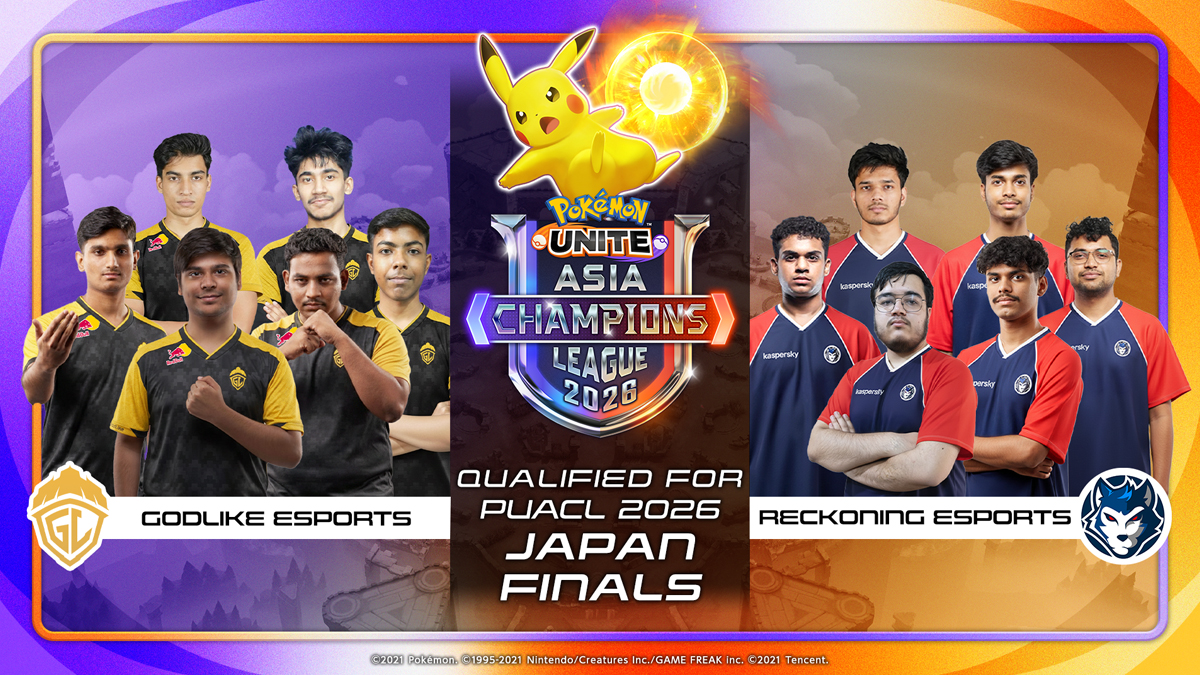
MUMBAI: India’s Pokémon Unite scene is set to shine on the global stage as Reckoning Esports and GodLike Esports secure their places at the Pokémon Unite Asia Champions League 2026 in Japan.
Reckoning Esports booked India’s primary slot by winning the India League, a $20,000 online tournament featuring ten of the nation’s top esports outfits. The league spanned five action-packed matchdays before culminating in a nail-biting King of the Hill Playoff. In the grand final, Reckoning edged past GodLike Esports 3–2, denying the fan favourites the title.
Reflecting on the victory, Reckoning Esports captain Jeet “Swifty” Kundra said, “Winning after such a long season means a lot. The format tested our consistency and mental strength, and the grand final showed just how close the competition is. Representing India in Japan is an honour, and we can’t wait for the challenge.”

GodLike Esports bounced back in style via the Pokémon Unite Winter Tournament 2026, an open-qualifier event giving teams from across India a shot at glory. They stormed through the single-elimination bracket and clinched a 3–0 win in the grand final, securing India’s second slot at the Asia Champions League.
Commenting on the comeback, GodLike Esports captain Om “Scepter” Gore said, “Losing the India League final was tough, but it drove us to come back stronger. The Winter Tournament let us focus on clean, confident play, and qualifying for the PUACL feels incredible. We’re determined to make India proud on the world stage.”
GodLike Esports founder & CEO Chetan “Kronten” Chandgude added, “This is a huge moment for Indian esports. Our team’s dedication has earned them the right to represent India, and we’re excited to showcase our talent to the world.”
The Pokémon Unite Asia Champions League 2026 takes place at Yokohama Buntai, Japan, on 28–29 March. Reckoning and GodLike will be among 16 teams vying for the championship and a share of the $200,000 prize pool.




Gaming
Interio by Godrej partners with FAU-G Bharat League 2.0 Finals
Furniture brand showcases ergonomic gaming chairs at major Mumbai esports event.
MUMBAI: Interio by Godrej has levelled up its game, this time by giving India’s competitive gamers a comfortable place to sit while they dominate the leaderboard. The leading furniture brand from Godrej Enterprises Group collaborated with Dot9 Games for the FAU-G Bharat League 2.0 Finals held in Mumbai. The offline tournament brought together over 100 competitive players for intense esports action.
As part of the partnership, Interio by Godrej showcased its specially designed ergonomic gaming chair, engineered to support long hours of gameplay with superior posture support, comfort, and overall wellbeing. Players got to experience the chairs first-hand during the high-intensity matches.
The event was graced by movie superstar and OG Khiladi Akshay Kumar, who felicitated the winners, adding star power and highlighting the growing mainstream appeal of esports in India.
Interio by Godrej head of marketing communications Reshu Saraf said the collaboration was driven by the evolving needs of India’s gaming community. “Players are investing significant time and skill into their setups. We wanted to show how thoughtful furniture design can enhance the overall gaming experience without compromising on comfort,” she noted.
Dot9 Games co-founder & CEO Deepak Ail added that comfort and physical wellbeing are becoming essential for sustained performance in competitive gaming. “Interio by Godrej’s gaming chairs added real value to the experience at the finals,” he said.
Beyond the event, Interio extended exclusive discounts on the gaming chairs to FAU-G players across its database to improve accessibility for the community.
This partnership reflects Interio by Godrej’s strategy to design products that respond to modern lifestyle shifts while strengthening its presence in India’s fast-growing esports ecosystem.
When gamers spend hours locked in battle, the right chair can mean the difference between victory and back pain. Interio by Godrej has clearly understood the assignment and delivered a comfortable win for players and the brand alike.






