iWorld
Digital Media Asia meet in Malaysia to explore new avenues of digitisation of media

NEW DELHI: Online and social media, tablet and mobile publishing, and digital business innovations are among the main subjects coming up for discussion at the forthcoming Digital Media Asia in Kuala Lumpur this month.
Participants include Business Blogging CEO Kiruba Shankar from India; Canada’s Globe and Mail Digital News Strategy director Anjali Kapoor; Google Strategic Partner Lead Parin Mehta; Singapore’s InmobiVP and GM of the Japan, Asia Pacific brand business Phagun Raju; and Berita Satu Media Holdings, IndonesiaCEOSachin Gopalan.
 |
The meet has been organised from 12 to 14 November by WAN-IFRA Asia Pacific which will be represented among others by its chief operating officer Thomas Jacob.
The meet will also see an Inverted Media Workshop, Digital Media Asia Expo, a creative ad campaign contest, Opennews.hack Asia and the Digital Media Asia awards.

About 300 media executives representing over 115 organisations from 31 countries are expected. Digital Media Asia is the largest conference on new media in Asia for news publishers. Thirty speakers from leading news publishing companies in Asia and worldwide – such as FT, Apple Daily, Metro, SPH, Wall Street Journal, Globe & Mail, The Economist, Mainichi Shimbun – as well as online pure players like Google, Senatus, Microsoft, Coconuts Media, Yahoo will share inspiring case studies and innovative ideas with the audience.
Topics covered at Digital Media Asia include paid content and the implementation of paywalls, online video monetisation, digital and mobile advertising, tablet publishing, big data, diversifying revenue streams, start-ups and publishers.
Other speakers include The Economist Digital, UK, VP Advertising Audra Martin; The Straits Times Editor Warren Fernandez; Head of Tablet Editions, Metro, UK, James Cadman; The Wall Street Journal Hong Kong Asia Digital Editor Adam Najberg; Naoki Onodera, Head of Digital Publications, Mainichi Shimbun; Alan Soon, Head of Audience and Managing Editor SEA, Yahoo!; Graham Hinchly, Engineering Manager, FT Lab, FT, UK; Christina Lo Man Ki, Deputy Editor-in-Chief, Apple Daily, HK; Sue Brooks, Director of Video Transformation, AP, UK; Geoff Tan, Senior VP, Head of Strategic Marketing, SPH; Dan Sloan, Editor in Chief, Nissan Global Media Centre, Japan; Todd Forest, Executive Producer APAC, Microsoft Online Media; JV Rufino, Director of Mobile, Philippine Daily Inquirer; and Eamonn Byrne, Business Director, The Byrne Partnership, UK.




iWorld
Prime Video bets big on India with global originals, films and franchise expansion
Execs highlight scale, travelability and new IP bets as India anchors global strategy
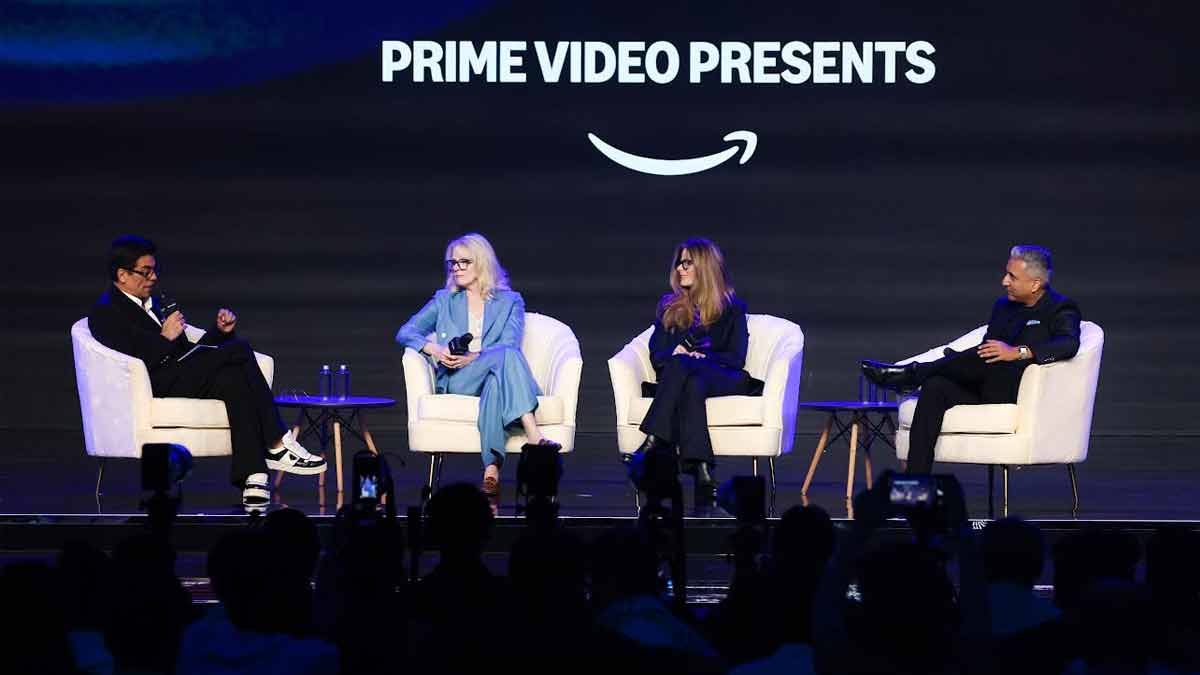
MUMBAI: At Prime Video Presents 2026, the message was clear and confident. India is not just part of the plan, it is central to it.
In a lively fireside chat hosted by filmmaker Karan Johar, Kelly Day, vice president of prime video and amazon mgm studios international, Nicole Clemens, vice president of international originals, and Gaurav Gandhi, vice president for Apac and Anz, laid out an ambitious roadmap. Think bigger stories, wider reach and a sharper focus on building franchises that travel.
Kelly Day, a regular visitor to India, set the tone early. Calling the country “one of the most important markets globally”, she pointed to the sheer scale and diversity of audiences as a driving force behind Prime Video’s growth. Indian Originals, she said, are not just local hits but global engines powering subscriptions and engagement.
That global appeal is already visible. According to Clemens, around 25 percent of viewership for Indian content now comes from outside the country. Shows rooted deeply in local culture are finding fans worldwide, proving that specificity, when paired with universal themes, travels well. From gritty dramas to sharp thrillers, Indian storytelling is increasingly crossing borders with ease.
Clemens, who joined recently to lead international originals, was particularly upbeat about India’s creative range. She highlighted a growing slate of over 100 shows in development and production, with more than 60 percent returning for multiple seasons. For her, the formula is simple. Authentic stories, told well, resonate everywhere.
Adding to the buzz, she teased new and returning titles, alongside a fresh superhero universe, the Kalyug Warriors. It signals a push into new genres while doubling down on familiar fan favourites.
If content is king, distribution is the clever courtier. Day outlined Prime Video’s layered business model in India, which blends subscription, rentals, add on channels and ad supported viewing through Amazon MX Player. The idea is straightforward. Give viewers choice, whether they want premium, free or pay per view.
India, she noted, has also become a testing ground for innovation. Tiered pricing, mobile only plans and language diversity have all been sharpened here before being exported to other markets. In many ways, the India playbook is now influencing global strategy.
For Gaurav Gandhi, the next chapter is about scale with intent. He outlined four priorities. Making Prime Video more accessible, pushing Indian content globally, building stronger franchises and supercharging the films business.
On films, the platform is moving beyond licensing into co productions and now theatrical releases in partnership with amazon mgm studios. These films will eventually stream on Prime Video, creating a full circle from cinema halls to living rooms across 240 countries.
Franchise building remains another key pillar. With hits like The Family Man, Mirzapur and Panchayat already enjoying multi season success, the focus is now on creating the next wave of enduring IP. Newer titles are already lining up for second seasons, signalling a steady pipeline.
What stood out through the conversation was a shared belief. Streaming in India is still in its early innings, and the runway is long. With a mix of local flavour and global ambition, Prime Video is betting that stories from India will not just stay at home, but travel far and wide.
Or as the executives seemed to suggest, the world is watching and India has plenty more to show.







