iWorld
Blush and ITC Vivel collaborates with Pad Man present

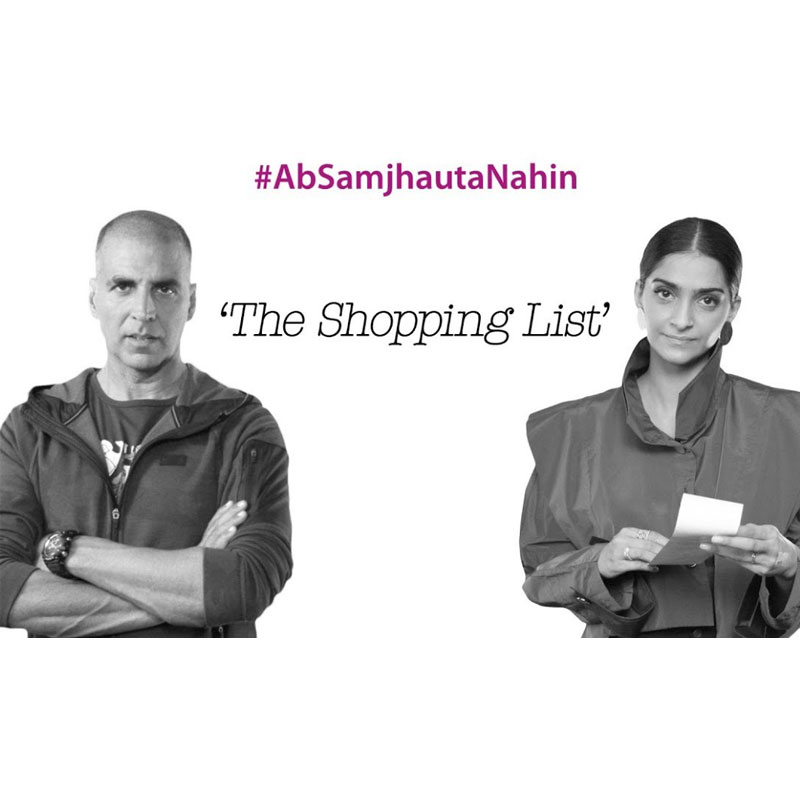
health at immense risk during menstruation. From using mud & ash to dirty clothes, menstrual hygiene takes a backseat due to financial constraints and inaccessibility to clean products.
Culture Machine’s digital channel ‘Blush’ along with ITC’s Vivel collaborated with the cast of Pad Man to create a video titled ‘#AbSamjhautaNahin – The Shopping List’. An eye opening, spoken word piece, listing alternatives to sanitary pads that women in most parts of the country resort to during periods. What may seem like an innocuous list of household items on a shopping list for some, is unfortunately a de facto substitute to hygienic sanitary napkins for a majority of women in India. Right from old & dirty rags to unsafe objects like ash, coconut husk and hay, Sonam Kapoor & Akshay Kumar bring attention to the grave situation of menstrual hygiene in the country. The video concludes with the lead actors requesting viewers to donate a minimum of Rs. 400 to The Vatsalya Foundation in order to facilitate a year-round availability of sanitary pads to women in various parts of the country.
Rooted in its core brand philosophy Ab Samjhauta Nahin, Vivel, continues to empower and educate women to challenge stereotypes and help enable self-action. It firmly believes that no one should have to compromise on their dignity or be discriminated against. Vivel actively stands in support of equality and believes that for a more equal life, awareness and education is the first step to empowerment. This is reflected in the recent launch of www.absamjhautanahin.com, a website designed for a simplified understanding of laws and rights that women should be aware of. Vivel Ab Samjhauta Nahin is working relentlessly towards women empowerment with its continued support to organisations like Apne Aap Women Worldwide fighting to end sex trafficking of women and girls and Azad Foundation to help empower women feminist leaders at the grassroots level.

Culture Machine’s digital channel ‘Blush’ that stirred a debate with the release of a video around First Day of Period in the past says, “Blush Originals is reviving the conversation on menstruation. But this time, the purpose is much larger, and the canvas, bigger. We’d like to take the conversation beyond metros and air-conditioned offices. Vivel with its brand philosophy of Ab Samjhauta Nahin enables purpose and a deep rooted conviction to make changes at the grassroots level. This collaboration brings together some of the most influential voices to take the conversation about menstrual hygiene, methods of managing menstruation, cost of sanitary pads, ease of availability, taboos and habits, lifestyle choices and overall well-being to the masses. Conversations that lead to awareness, awareness that leads to knowing one’s rights, knowing that leads to action – and there’s only one action, that needs to be achieved: a perfect menstrual health card for this country.”
The Vatsalya Foundation, Director, Ms. Swathi Mukherjee, comments, “Inaccessibility to sanitary pads is one of the primary reasons for young girls and women to drop out of schools and work, respectively. The Vatsalya Foundation is focused on needs of our young women. It encourages a performance based livelihood with a dual purpose of enabling access and empowering women through financial independence. We are glad that menstrual hygiene is now set to become mainstream with a feature film focused on the issue and brands like Vivel supporting the initiative. With the funds raised through this video, we will be purchasing and distributing Sakhi Pads to underprivileged women.”
Video link: https://www.youtube.com/watch?v=ah25qCdEpG8
Donation link on Ketto: https://www.ketto.org/fundraiser/absamjhautanahin




Gaming
Nodwin Gaming partners with Runestone for esports data and integrity solutions
South Asian esports leader joins forces with Czech tech firm to enhance tournament operations.
MUMBAI: Nodwin Gaming has just levelled up its game by bringing in a specialist to keep the scoreboard honest and the fans fully engaged. The leading South Asian esports and gaming company has announced a strategic partnership with Runestone, a Prague-headquartered esports technology firm specialising in real-time data and engagement solutions for tournament organisers and publishers.
The collaboration aims to strengthen competitive integrity, improve operational oversight, and deliver more interactive viewing experiences across Nodwin’s properties. It will initially focus on the Nodwin Clutch Series for Counter-Strike 2, a Tier 2 tournament that provides emerging teams with consistent competitive opportunities and helps build the talent pipeline.
The latest edition of the series recently concluded with Big defeating ECSTATIC 2–1 in the grand final of the $50,000 online event.
Nodwin Gaming chief business officer at MENA and global head of data monetization Teemu Koski said, “Integrity and transparency are fundamental to sustainable esports ecosystems, especially in Tier 2 competition where the next generation of talent emerges. Runestone’s expertise complements our experience in building scalable esports IPs.”
Runestone head of partnerships Michael Schwartz added, “Nodwin Gaming has built one of the most dynamic esports ecosystems across emerging markets. We’re thrilled to collaborate on supporting tournaments with greater transparency, deeper fan interaction, and scalable tools.”
Both companies are exploring opportunities to extend the partnership across additional titles, including mobile-first competitive ecosystems, and to develop new products for publishers, tournament operators, and event promoters.
In the rapidly growing world of esports, where fair play and fan excitement are equally crucial, Nodwin Gaming and Runestone are teaming up to ensure every match is not only competitive but also transparent and engaging. This alliance could well become a game-changer for Tier 2 tournaments across South Asia and beyond.







