iWorld
“3-day India Mobile Congress 2018 concludes; showcasing the latest and the best in digital communications technologies, products, services, and applications; and establishing the future horizons for the digital communications sector in the country”: Manoj

India Mobile Congress(IMC) 2018 – a marquee event which provided a peep into the exciting future in the rapidly evolving area of digital communications – ended today, with participants and organisers promising to be back next year. This year’s event, with its’ theme of “New Digital Horizons – Connect. Create. Innovate.”, established the IMC as a regular platform for global and local stakeholders in the sector to collaborate in the cause of exploring opportunities and leveraging possibilities, with specific focus on South and South-East Asia.
Addressing members of the press and media on the last day of IMC 2018, Minister of State (Independent Charge) for Communications, Shri Manoj Sinha said – “Having participated in the World Mobile Congress in Barcelona earlier this year, I can assure you that IMC 2018 was no less – in terms of substance, scale, and style. The IMC is just a two-year old baby, and it has already acquired a personality of its’ own. It will now be an important annual event on everyone’s calendar.”
The mega 3-day event was inaugurated on October 25 by Shri Manoj Sinha,Minister of State (Independent Charge) for Communications, in the august presence ofShri Suresh Prabhu, Minister for Commerce & Industry and Civil Aviation; Shri Ravi Shankar Prasad, Minister for Electronics & Information Technology and Law & Justice, and Shri Hardeep Singh Puri, Minister of State (Independent Charge) for Housing & Urban Affairs. Also gracing the inaugural function were captains of the telecom industry – Shri Mukesh Ambani, Chairman, Reliance Industries; Shri Kumar Mangalam Birla, Chairman, Aditya Birla Group; and Shri Sunil Bharti Mittal, Chairman, Bharti Enterprises.

The IMC 2018 conference and exhibition was held over a total area of more than 50,000 square-metres, with more than 5,000 delegates in attendance. Delegations from 20 countriesparticipated in the event, which saw more than 300 companies showcasing their latest and best technologies, products, services, and applications. According to the organisers, more than 50,000 curious visitors attended the various sessions and viewed the futuristic solutions on display at the exhibition stalls.
An extremely relevant addition at this edition of the IMC was the presence of high-level ministerial delegations from several BIMSTEC and ASEAN countries. Hon’ble Ministers from the European Commission, Cambodia, Myanmar, Nepal, and Lao PDR led their respective delegations, and participated in plenary sessions which were focused on the specific needs, challenges, and opportunities applicable to member countries of these regional forums. The presence of the high-level delegations also offered them an opportunity for bilateral meetings with their Indian counterparts, where topics of mutual interest were discussed, and possibilities of strengthening cooperation were explored.
Among the companies whose participationcontributed to the success of IMC 2018 were global and local giants such as Samsung, Intel, Ericsson, Nokia, Cisco, NEC, Accenture, KPMG, E&Y, Facebook, Huawei, Sterlite, Vodafone Idea, Reliance Jio, Airtel, and BSNL. Several exhibition stalls set up by these companies attracted crowds of interested visitors, while leaders from the companies enriched the discourse through their participation in the various plenary sessions. The exhibition stalls covered a variety of interesting possibilities, hinged around 5G, Internet of Things, Augmented and Virtual Reality,Artificial Intelligence, Robotics, Smart City Solutions, Fintech, Health-Tech, Autonomous Cars, and Cyber Security, amongst others.
An interesting feature of this edition of the IMC was the focused attention on the critical Start-ups ecosystem. More than 200 start-ups marked their presence at the event, with their booths displaying ideas and innovations which seek to leverage the potential of digital communications to create and meet ever-changing consumer needs – in areas such as artificial intelligence, integrated services, healthcare, pharma, security, safety, food, sports, social networking, travel, education, and disaster management, among others. As Shri Manoj Sinha, while inaugurating the simultaneous release of 250 start-up applications at the IMC 2018 today, said – “The sheer volume and quality of what I see here is amazing. Who knows, we may right now be releasing the WhatsApp and Google Maps of tomorrow!”
The event was also noteworthy for some very remarkable announcements which clearly established the direction of the Indian digital communications industry over the next several years. The Government of India announced the commitment of the industry to rollout One Million WiFiHotspots in the Country by December 2019. The National Frequency Allocation Plan (NFAP) 2018 was also unveiled at the event. NFAP 2018 frees up a total of 605 MHz spectrum in the 5-GHz band for Wi-Fi services. Several spectrum bands for Short Range Devices and Ultra WideBand Devices have been made license exempt, benefitting the public as well as industry. As Smt.Aruna Sundararajan, Secretary (Telecom) and Chairman, Telecom Commission, Government of India said – “These initiatives provide an excellent launchpad for achieving the goals such as Broadband for All, which are outlined in our recently released National Digital Communications Policy (NDCP) 2018.”
In his concluding remarks, the Minister added – “Our Government, under the leadership of the Hon’ble Prime Minister Shri Narendra Modi, remains committed to make the digital communications sector a core part of our national infrastructure. The initiatives and reforms we have announced here will provide a strong boost to employment generation and digital economic activity – especially in the rural and semi-rural areas of the country. We are determined to succeed in our endeavours, in partnership with industry, academia, regulators, and startups.”
Shri Sinha thanked the Department of Telecommunications and the Cellular Operators Association of India for designing and successfully organising a best-in-class event.
Follow updates on #IMC2018
For more information please visit us atwww.indiamobilecongress.com
For more updates please visit:
Twitter: @exploreIMC
Instagram: @exploreIMC
Facebook: http://www.facebook.com/IndiaMobileCongress
YouTube: https://goo.gl/UcZhCP






iWorld
Asha Bhosle, the unforgettable voice that sang a thousand emotions
The melody that defined generations has fallen silent, but her songs will echo forever.
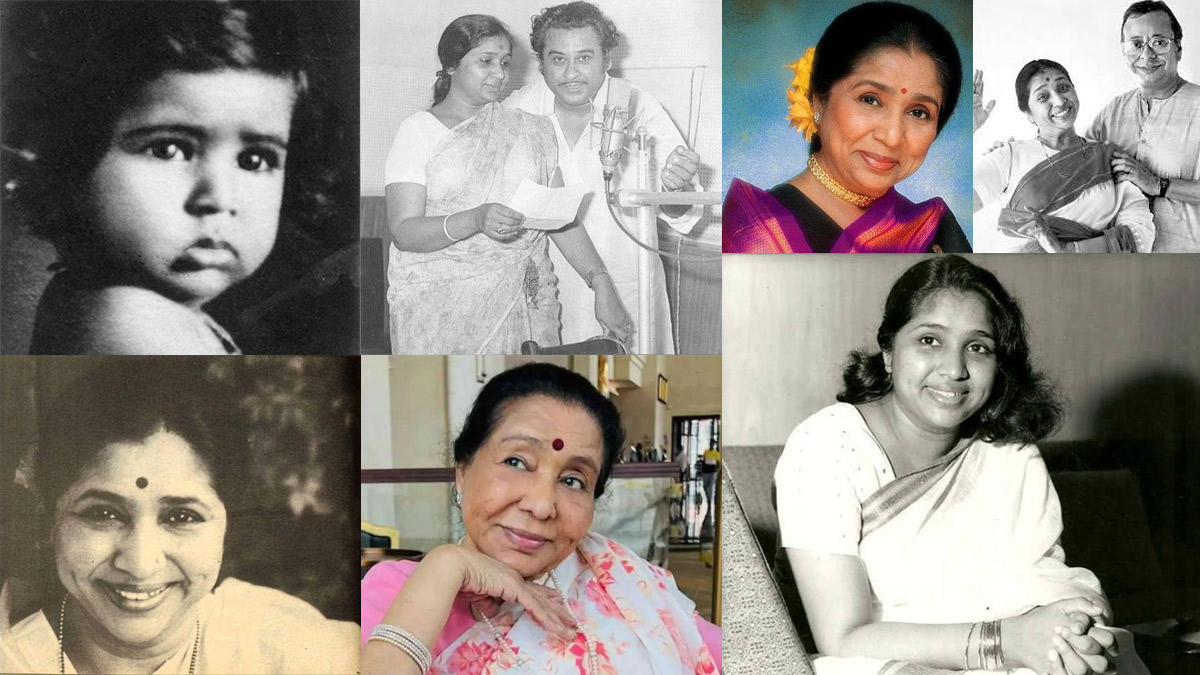
MUMBAI: The voice that once lit up countless silver screens and brought rhythm to millions of hearts has stilled. Legendary singer Asha Bhosle, one of the most versatile and prolific vocalists in Indian film music, passed away at the age of 92 in Mumbai on Sunday. She was admitted to Breach Candy Hospital on Saturday night after suffering cardiac and respiratory issues and had reportedly been unwell for several months.
Her son, Anand Bhosle, confirmed the news on Sunday afternoon. The last rites will be performed on Monday.
Born in 1933 into the illustrious Mangeshkar musical family, Asha began her journey in the golden era of Hindi cinema. She recorded her first film song at the age of nine in 1943 and, by the 1950s, had already carved a distinct space for herself in Bollywood. While her elder sister Lata Mangeshkar often took the more melodic, heroine-centric numbers, Asha quickly became the go-to voice for energetic cabaret tracks, dance numbers, and later, the full spectrum of emotional expression.
The 1950s–60s: Rise of the Cabaret Queen In the early decades, Asha was frequently typecast for “item songs” and Western-style numbers. Yet even within those constraints, she delivered unforgettable hits such as “Aaja Aaja” from Teesri Manzil and “O Haseena Zulfon Wali” from the same film. Her playful, sassy delivery gave these tracks a magnetic energy that still feels fresh today.
The 1970s: Peak Versatility This was the decade that cemented her legendary status. Songs like “Dum Maro Dum” (Hare Rama Hare Krishna), “Piya Tu Ab To Aaja” (Caravan), “Chura Liya Hai Tumne” (Yaadon Ki Baaraat), and “Yeh Mera Dil” (Don) became cultural touchstones. Asha proved she could swing from seductive to soulful with equal ease, working with almost every major composer of the era.
The 1980s: Emotional Depth and Ghazals After marrying composer R.D. Burman in 1980, Asha explored more nuanced, introspective territory. Her National Award-winning performances in Umrao Jaan (“Dil Cheez Kya Hai”) and Ijaazat (“Mera Kuch Saamaan”) showcased a matured, velvety voice capable of profound emotion. These tracks remain among the most cherished ghazals in Indian cinema.
The 1990s–2000s: Global Collaborations and Reinvention Even as newer voices emerged, Asha refused to fade. She collaborated internationally with the Kronos Quartet and released experimental albums. Later in her career, she lent her voice to younger composers and continued performing live, often sharing the stage with her granddaughter Zanai Bhosle.
A Life Beyond the Microphone Asha’s personal journey was as dramatic as her filmography. At 16, she eloped with Ganpatrao Bhosle, her personal secretary. The marriage ended in separation in 1960 after they had three children. In 1980, she married R.D. Burman in a union that faced family opposition but brought creative synergy. RD passed away in 1994.
Throughout her life, Asha remained grounded, often crediting classical music and ghazals for keeping her voice sharp. In a 2023 interview, she admitted she rarely listened to contemporary film songs, preferring the timeless works of Bhimsen Joshi and classic ghazals to stay inspired.
Her seven Filmfare Awards and two National Film Awards are merely numbers; the true measure of her legacy lies in the thousands of songs that still play in homes, cars, and hearts across generations. From the foot-tapping energy of “Dum Maro Dum” to the haunting beauty of “Mera Kuch Saamaan”, Asha Bhosle gave Indian cinema a voice that was simultaneously bold, tender, playful, and profound.
The golden era has lost one of its brightest stars, but the music she created will continue to refresh souls for decades to come. As the final notes of her extraordinary journey fade, India bids farewell to a voice that truly defined an era.







