Cable TV
Change in provisions for bad debt reduces Ortel profits

BENGALURU: The Bibhu Prasad Rath led Ortel Communications Limited (Ortel) reported less than one tenth profit after tax (PAT) for the year ended 31 March 2017 (FY-17) at Rs 1.43 crore (0.69 percent margin of Total Revenue or TIO) as compared to the Rs 11.93 crore (6.1 percent margin of TIO). Ortel reported 5.6 percent growth in total revenue at Rs 207.21 crore as compared to the Rs 196.29 crore for FY-16.
During 2017, the company has changed the basis of estimating the provision for doubtful receivables from retail customers. Because it has ventured into new geographies, the company has now made provision for doubtful retail receivables based on the management’s best estimate as compared to the previous practise of making provisions for receivables for more than 6 months. The company has provided for Rs 24.9 crore in FY-17 as compared to Rs 16 crore in FY-16. In its earnings presentation, the company has shown a longer period for receivable days for 2017 at 115 days as compared to 61 days in the case of 2016.
Other factors that affected the company’s profitability in FY-17 were lower Average Revenue per User (APRU) for Ortel’s cable (Rs 147 in FY-17 as compared to Rs 151 in FY-16) as well as broadband businesses (Rs 375 in FY-17 as compared to Rs 398 in FY-16).

Further, the company’s broadband bandwith cost more than doubled to Rs 17 crore in FY-17 from Rs 8.32 crore in the previous year which Ortel says is a result of higher intercity carrying costs for expansion of digital services.
Ortel’s cable subscriber base in FY-17 increased to 7,50,471 from 6,28,710 in FY-16. Broadband subscriber base in FY-17 increased to 73,087 from 72,482 in FY-16.
Ortel’s revenue growth was due to 22 percent growth in Cable TV revenues in FY-17 to Rs 159.6 crore from Rs 130.5 crore in FY-16 while Broadband revenues reported a growth of 7 percent at Rs 35.3 crore in FY-17 from Rs 32.9 crore in FY-16. EBIDTA for fiscal 2017 was 55.1 crore as compared to Rs 70.3 crore in the previous year.
Total expenditure for FY-17 increased 13.5 percent higher at Rs 205.78 crore as compared to Rs 181.30 crore in FY-16. Programming cost increased 2.5 percent in FY-17 to Rs 38.45 crore as compared to Rs 37.51 crore in FY-16. Employee Benefits Expense in FY-17 increased 9.2 percent to Rs 24.56 crore from Rs 22.50 crore in FY-16.
Company speak:
Ortel CEO Rath said, “Second half of FY2017 has been a challenging period for the Company with key operating parameters performing below our expectations. However, I am happy to share that we have reported some improvement during Q4 and the management’s thrust in the coming quarters will be to significantly enhance the overall operational performance.
We have sustained the positive EBITDA momentum in the Non-Odisha Markets. As we consolidate our new subscriber base in relatively new states like Andhra and Telangana and improve key metrics, we hope to continue delivering similar results.
We have consciously slowed inorganic acquisitions as we look to first demonstrate the strength of owning and controlling the ‘last mile’ from the existing subscriber base. So on the back of our exceptional ‘last mile’ business model, we anticipate a marked improvement in financial and operational performance in FY18.”







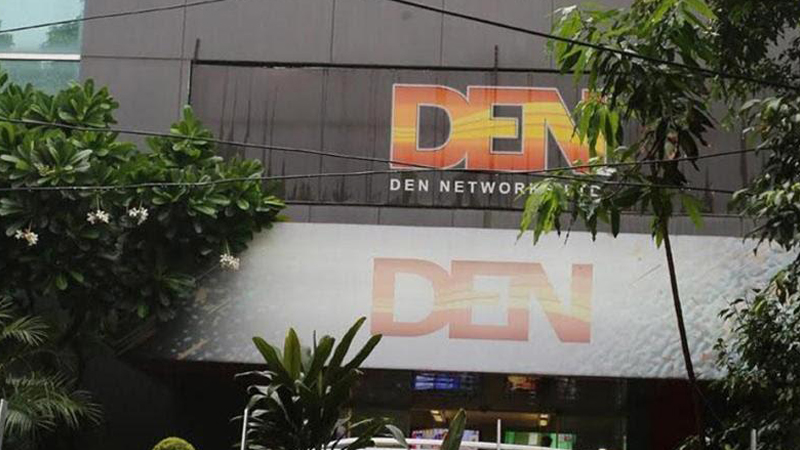
MUMBAI: When margins wobble, liquidity talks and in Q3 FY25-26, cash did most of the talking. Den Networks Limited closed the December quarter with consolidated revenue of Rs.251 crore, marginally higher than the previous quarter but down 4 per cent year-on-year, even as profitability stayed resilient on the back of strong cash reserves and disciplined cost control.
Subscription income softened to Rs.98 crore, slipping 3 per cent sequentially and 14 per cent from last year, while placement and marketing income offered some cheer, rising 15 per cent quarter-on-quarter to Rs.148 crore. Total costs climbed faster than revenue, up 7 per cent QoQ to Rs.238 crore, driven largely by higher content costs and operating expenses. As a result, EBITDA dropped sharply to Rs.13 crore from Rs.19 crore in Q2 and Rs.28 crore a year ago, pulling margins down to 5 per cent.
Yet, the bottom line refused to blink. Profit after tax stood at Rs.40 crore, up 15 per cent sequentially and only marginally lower than last year’s Rs.42 crore. A healthy Rs.57 crore in other income helped cushion operating pressure, keeping profit before tax at Rs.48 crore, broadly stable quarter-on-quarter despite the tougher cost environment.
The real headline-grabber, however, sits on the balance sheet. The company remains debt-free, with cash and cash equivalents swelling to Rs.3,279 crore as of December 31, 2025. Net worth rose to Rs.3,748 crore, while online collections accounted for 97 per cent of total receipts, underscoring strong cash discipline across operations, including subsidiaries.
In short, while Q3 showed signs of operating strain, the financial backbone remains solid. With zero gross debt, steady profits and a formidable cash war chest, the company enters the next quarter with flexibility firmly on its side proving that in uncertain markets, balance sheet strength can be the best growth strategy.