Executive Dossier
“Television is a family-oriented medium and should remain so”

|
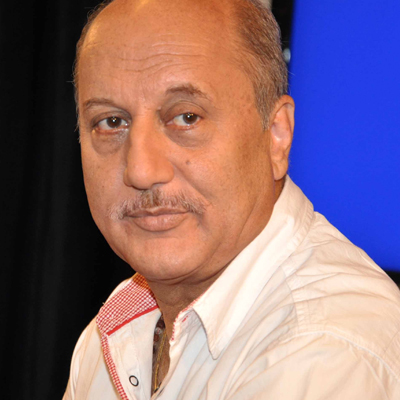
The newest chairman of the Central Board of Film Certification, better known as the Censor Board, has designs for television. Anupam Kher, a versatile actor , chairman of the National School of Drama and now head of the Censor Board, plans to bring television in India under censorship rules. The ‘growing menace of vulgarity’ on television is my first concern, he says.
Kher takes over from ‘acting’ censor board chief and former Bharatiya Janata Party MP Arvind Trivedi who had chipped in when Vijay Anand resigned in July 2002 under controversial circumstances.
A brilliant actor who has won many accolades for his performances in films like  Vickey Lalwani caught up with him at Swati Studios in Goregaon (East) where he was shooting for Creative Eye Productions’ 3 D Plus film Abra Ka Dabra. |
|||
|
How and why did you decide to take up the post as Censor Board chairman? Well, I have achieved so much from the film industry. It’s time I gave something back. Not just to the film industry, but to society and the country as well. |
|||
|
So, how do you plan to shuttle your time between acting, the NSD and censorship? |
|||
|
Considering the limited time period, will it be possible to monitor the movies? You might be faced with a situation where a filmmaker gets away by saying ‘it is integral to my script’, ‘obscenity lies in the eyes of the beholder’, etc? We should be revising the Cinematograph Act. It was last revised in 1991. We need to classify the films into U, U/A and A categories. Plus, I even want cinema theatres to come under the new Cinematograph Act. We should be drafting a policy, which will bring cinema halls under its purview. Most cinema halls are allowing kids in for films which have an ‘A’ certificate, thereby defeating the entire purpose of certification. There is a dire need of policing at the theatres. Else we might have to release certain films in only a selected group of cinema halls that take pains to ensure that no under-18 guy or girl is sent in. The entire system needs to be revamped. |
|||
|
Is just regulating the cinema halls your main concern? |
|||
|
|||
|
What makes you say that? On television, you are fed so many things which you don’t want to see. Consider a situation where a child is surfing the channels. What happens when one of the vulgar music videos are flashed before him? Doesn’t he get transfixed? Isn’t that a question for concern? Have you seen some of the music videos? Atrocious. I understand that the new generation wants racy stuff, but that does not imply that one misuses the freedom of expression. Don’t the makers of these videos have any responsibility towards society? Young minds are very impressionable. I have interacted with children on the show Say Na Something to Anupam Uncle (Sab TV) and I understand their psyche. Television is a family-oriented medium and should remain so. People in metros may be liberal both in terms of thought and system, these videos therefore might have an adverse effect on them. But consider a young girl from Muzzafarnagar seeing such stuff. The effect is going to be embarassing. |
|||
|
You have decided police television. Are you going to do something about the adult films screened by some channels and cable operators? |
|||
|
What about television serials? |
|||
|
And what about surrogate advertising of liquor on television? |
|||
|
So what about the flashy film promos? |
|||
|
Anything else, sir? |
|||



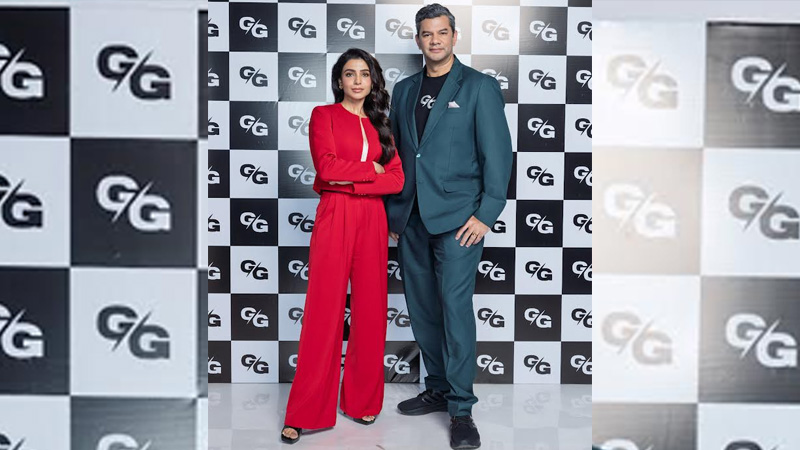
MUMBAI: Game faces on, pressure high India’s gaming ambitions are levelling up. Good Game, billed as the world’s first as-live global gaming reality show, has officially launched in India with a bold mission: to crown the country’s first Global Gaming Superstar.
Blending esports with mainstream entertainment, the show brings together competitive gaming, creativity and on-camera performance in a format that tests more than just joystick skills. Contestants will be judged on gameplay, screen presence and their ability to perform under pressure, reflecting how gaming has evolved from pastime to profession and pop culture currency.
Fronting the show are three high-profile ambassadors: actor and entrepreneur Samantha Ruth Prabhu, Indian cricket star Rishabh Pant, and gaming creator Ujjwal Chaurasia. The winner will take home Rs 1 crore ($100,000) among the largest prize pools for any Indian reality show along with the chance to represent India on a global stage.
Backed by a planned annual investment of up to Rs 100 crore, Good Game is also courting brand partners, promising a minimum reach of 500 million among India’s core youth audience. The creators position the show as a bridge between entertainment and interactive culture, offering long-format content, community engagement and commercial scale.
Auditions are now open to Indian citizens aged 18 and above, inviting amateur and professional gamers, creators and performers alike. Shortlisted candidates will be called for in-person auditions in Mumbai on 14 and 15 February, and in Delhi on 28 February and 1 March 2026.
With big money, big names and even bigger ambition, Good Game signals a shift in how India views gaming not just as play, but as performance, profession and prime-time spectacle.








