Executive Dossier
“My experiences with television have left me more fulfilled than the big screen” : Gurdeep Kohli

|
She has modelled for brands such as Ponds, ICICI, Baazee.com, Cadbury’s, Ariel and Nestle, before she was offered Pankaj Udhas’s music video Kya Mujhse Dosti Karoge. Her lovely big eyes, girl-next-door looks and a disarming smile got noticed almost immediately and it wasn’t long before she was offered to play the role of Dr Juhi Singh in Sanjivani- A Medical Boon. From then on there’s been no looking back for this Punjabi kudi, Gurdeep Kohli. Recently, we saw her in a cameo in Bhabhi, shortly she will appear in another cameo in Son Pari. indiantelevision.com‘s Vickey Lalwani caught up with this model-turned-TV actor at Cinevistaas’ studio in Kanjurmarg on a chilly evening. Excerpts:  |
|||
|
How did this model develop aspirations to become an actress?
|
|||
|
And you jumped in? Plus, there is so much of feedback we get from the viewers; whether it is in person on the roads or on the phone and mail. I am lucky that I have got to work with stalwarts like Rajiv Varma, Smita Jaykar and Vikram Gokhale; all these people gave me lots of useful guidance in my early days; their presence is so heartwarming that you can give nothing but your best.
|
|||
|
Working with senior actors can be tough… |
|||
|
What have you learnt from seniors like Mohnish Behl, Rajeev Varma, and above all, Vikram Gokhale? From Mohnish Behl, I have learnt how to underplay the character which is very important. Even if it’s the role of a vamp, there is no need to go over the top and start screaming and wailing. Else, an actor ends up looking like a caricature. Also, Mohnish has taught me a lot on how to modulate my voice, keeping with demands of the situation. Unfortunately, I have had very few scenes with Rajeev Verma. |
|||
|
Are you allowed to improvise? |
|||
|
|||
|
There are two theories about the acting craft. One is that you should always be truthful while acting and never lie. The other theory is the opposite which is that acting is the art of lying. Which theory do you believe in? I sit with the director and the assistant director and make the changes amicably. Having been Dr Juhi for some time now, I can visualise how her specific outputs in different scenes would appear on screen. Improvisation is a must. Recently, Shashank (Mohnish Behl) improvised on a scene and it took the scene to heights greater than the writer had conceived. |
|||
|
Is it so easy to sense and visualise? It’s not easy in this medium if you don’t sense and visualise. Like there are occasions where my face shot is taken while I am saying the dialogues, but the person to whom I am saying is not present. So I should know what he is likely to say and how he is likely to react if I want to keep the tempo of the scene going. Sensitivity is a basic requirement in a TV actor. Like I know that Juhi is a girl who has her emotions in check, she is a very controlled and subtle character. Her laughter is just a chuckle, her anger rarely leads to an outburst. Even her other emotions like disappointment and surprise are not required by words. For disappointment, she just needs to drop her shoulders. For surprise, she just needs to widen her eyes. |
|||
|
Was sensitivity the only thing that helped you to get into the skin of your character? With Shashank, I am softer. With Simran and her father, I have to be upfront because both play negative. Again here, Simran and her father are two different people. Considering her dad’s age, I cannot go beyond a certain level, I’d rather introduce a tone of sarcasm in my dialogues. But with Simran who is about my age and is ‘actually’ responsible for the mess I find myself in, I can meet her head-on sort of tit-for-tat. But of course, I can’t be as nasty and vocal as she is, because it would go against my character in the show. Modifications and caution is the key to ensure that one does not end up looking repetitive in every frame. |
|||
|
Which scenes do you prefer, romantic scenes or conflict scenes? |
|||
|
How do you alter to the requirement of the mood variations? |
|||
|
Do you sometimes feel that a particular shot has not gone well? |
|||
|
Change of directors. How do you cope up? |
|||
|
|||
|
Do you’ll have meetings which tell you how your character is going to shape up in near future? |
|||
|
Have there been scenes where you have disagreed, but you can’t do anything? |
|||
|
Playing the same character continuously, make the acting skills go unnoticed. Agree? |
|||
|
After playing such a positive role, do you think you’ll be considered for negative characters? |
|||
|
We have heard that you and Mihir Mishra don’t get along? |
|||
|
But how doesn’t it reflect on screen?
|
|||
|
The last few episodes had been shocking- like Juhi staying with Rahul’s wife in the same house. Do you identify with such a situation in real life? |
|||
|
Where does ‘Sanjivani- A Medical Boon’ go from here? |
|||



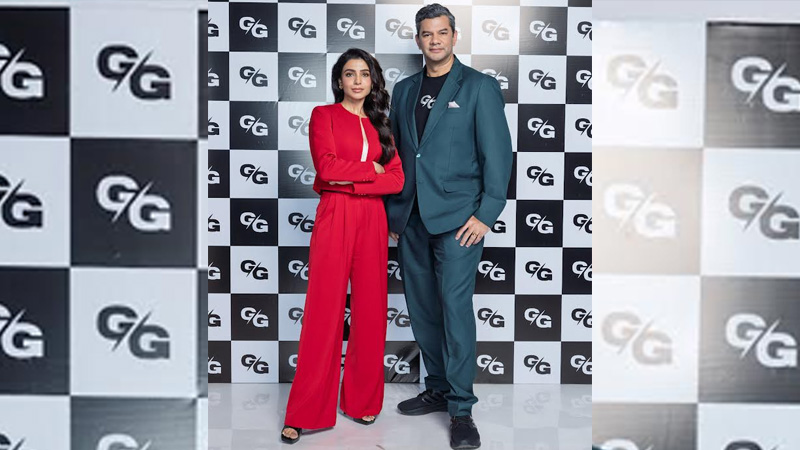
MUMBAI: Game faces on, pressure high India’s gaming ambitions are levelling up. Good Game, billed as the world’s first as-live global gaming reality show, has officially launched in India with a bold mission: to crown the country’s first Global Gaming Superstar.
Blending esports with mainstream entertainment, the show brings together competitive gaming, creativity and on-camera performance in a format that tests more than just joystick skills. Contestants will be judged on gameplay, screen presence and their ability to perform under pressure, reflecting how gaming has evolved from pastime to profession and pop culture currency.
Fronting the show are three high-profile ambassadors: actor and entrepreneur Samantha Ruth Prabhu, Indian cricket star Rishabh Pant, and gaming creator Ujjwal Chaurasia. The winner will take home Rs 1 crore ($100,000) among the largest prize pools for any Indian reality show along with the chance to represent India on a global stage.
Backed by a planned annual investment of up to Rs 100 crore, Good Game is also courting brand partners, promising a minimum reach of 500 million among India’s core youth audience. The creators position the show as a bridge between entertainment and interactive culture, offering long-format content, community engagement and commercial scale.
Auditions are now open to Indian citizens aged 18 and above, inviting amateur and professional gamers, creators and performers alike. Shortlisted candidates will be called for in-person auditions in Mumbai on 14 and 15 February, and in Delhi on 28 February and 1 March 2026.
With big money, big names and even bigger ambition, Good Game signals a shift in how India views gaming not just as play, but as performance, profession and prime-time spectacle.